Your Immune System Loves Color
It’s easy to slip into a routine of the same go-to foods, but your body benefits most when your meals are full of variety. Adding more color to your plate means adding more phytonutrients that support immunity, energy, and long-term health.
Take a look at your meals this week. Are you getting the full rainbow?
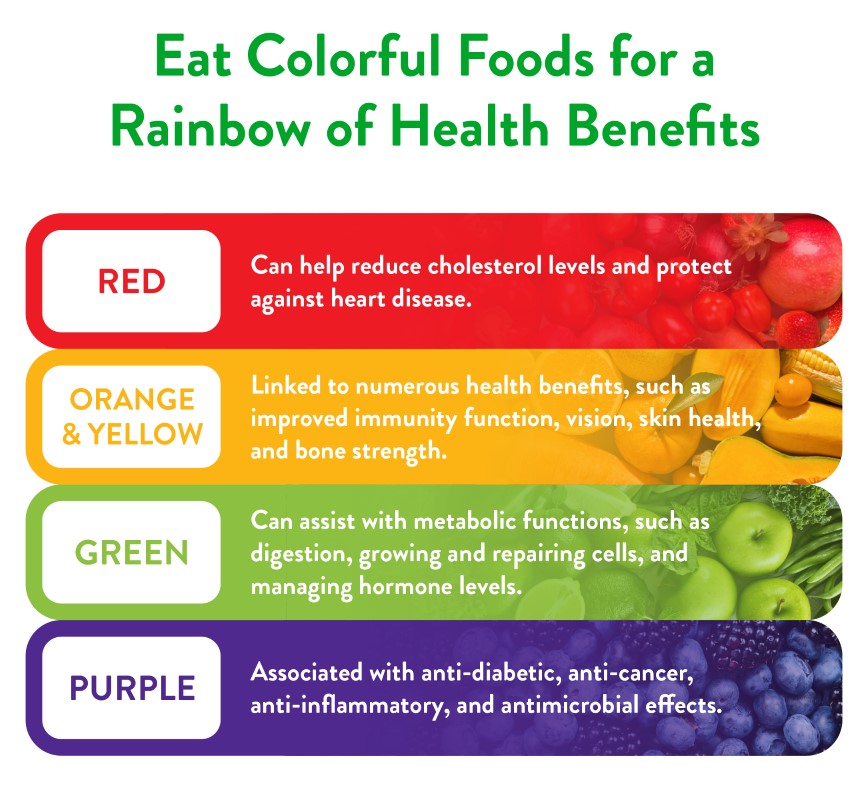
Health Effects by Color
Red: Red foods typically contain lycopene, a powerful antioxidant that can help prevent cell damage from swarming free radicals. Eating a variety of red foods, like apples, beets, strawberries, tomatoes, red peppers, and watermelon can also assist in reducing cholesterol and protecting against heart disease and different types of cancers.
Orange and Yellow: Foods displaying different shades of orange and yellow are often rich in carotenoids, a category of phytonutrients that includes beta-carotene and beta-cryptoxanthin, which are both linked to numerous health benefits, such as improved immunity function, vision, skin health, and bone strength. Pumpkins, squash, sweet potatoes, apricots, turmeric, carrots, and cantaloupes are all good sources of beta-carotene.
Green: There’s a lot of green foods out there, and incorporating a variety of them into your diet ensures that you will be intaking a number of important beneficial compounds. Cruciferous vegetables, like broccoli, bok choy, and Brussels sprouts, contain glucosinolates, which have been linked to improved regulation of metabolic function, stress response, and antioxidant activities. Other green fruits and vegetables, like spinach, kale, kiwi, artichokes, and herbs, are loaded with cancer-preventing properties.
Purple: Fruits and vegetables that display different shades of purple, magenta, and red are often excellent sources of anthocyanins, a category of flavonoid associated with anti-diabetic, anti-cancer, anti-inflammatory, and antimicrobial effects. Foods high in anthocyanins include: strawberries, blackberries, blueberries, plums, pomegranates, red cabbage, purple cauliflower, and black beans.
Want to see how colorful your meals really are?
Use this Eat the Rainbow Tracker to challenge yourself to add more vibrant variety to your plate!
Enjoy the article and more here!