8 steps: your heart-health checklist
Life’s Essential 8™: Pick one to start
Life’s Essential 8™ offers a checklist for good health. These steps are easier than you might think – maybe focus on just one this fall. When it comes to steps for healthier living, these 8 are great!
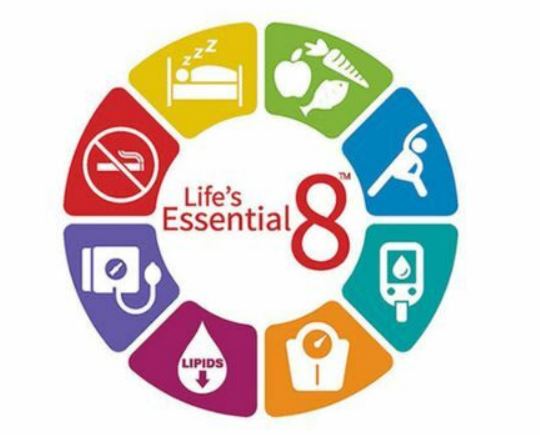
1. Eat Better
Aim for an overall healthy eating pattern that includes whole foods, lots of fruits and vegetables, lean protein, nuts, seeds, and cooking in non-tropical oils such as olive and canola.
2. Be More Active
Adults should get 2 ½ hours of moderate or 75 minutes of vigorous physical activity per week. Kids should have 60 minutes every day, including play and structured activities.
3. Quit Tobacco
Use of inhaled nicotine delivery products, which includes traditional cigarettes, e-cigarettes and vaping, is the leading cause of preventable death in the U.S., including about a third of all deaths from heart disease. Roughly 40% of U.S. children ages 3-11 are exposed to secondhand smoke.
4. Get Healthy Sleep
Most adults need 7-9 hours of sleep each night. Children require more: 10-16 hours for ages 5 and younger, including naps; 9-12 hours for ages 6-12; and 8-10 hours for ages 13-18. Adequate sleep promotes healing, improves brain function and reduces the risk for chronic diseases.
Learn how to get adequate sleep.
5. Manage Weight
Achieving and maintaining a healthy weight has many benefits. Body mass index, a numerical value of your weight in relation to your height, is a useful gauge. Optimal BMI is less than 25, but less than 18.5 is considered underweight. You can calculate it online or consult a health care professional.
Learn to lose or manage weight.
6. Control Cholesterol
High levels of non-HDL, or “bad,” cholesterol can lead to heart disease. Your health care professional can consider non-HDL cholesterol as the preferred number to monitor, rather than total cholesterol, because it can be measured without fasting beforehand and is reliably calculated among all people.
Learn how to control cholesterol.
7. Manage Blood Sugar
Most of the food we eat is turned into glucose (or blood sugar) that our bodies use as energy. Over time, high levels of blood sugar can damage your heart, kidneys, eyes and nerves. As part of testing, monitoring hemoglobin A1c can better reflect long-term control in people with diabetes or prediabetes.
Learn how to control blood sugar.
8. Manage Blood Pressure
Keeping your blood pressure within acceptable ranges can keep you healthier longer. Levels less than 120/80 mm Hg are optimal. High blood pressure is defined as 130-139 mm Hg systolic pressure (the top number in a reading) or 80-89 mm Hg diastolic pressure (bottom number).
Learn how to manage blood pressure.