Anchors for differentiating instruction in literacy
Literacy instruction is foundational for all academic and content learning, beginning in preschool and throughout one’s education. Why is literacy so important? Kori Annan, Nobel Peace Prize winner and Secretary General of the United Nations, said: “Literacy is a bridge from misery to hope. It is a tool for daily life in modern society, a […]
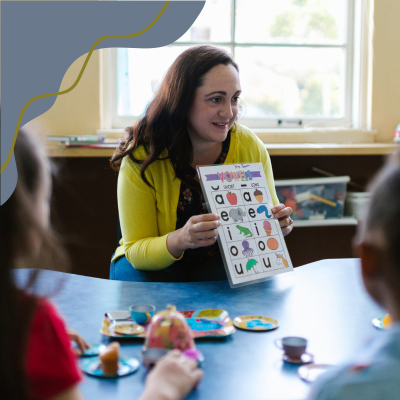
DYScover the other DYSorders related to Dyslexia: Dysgraphia and Dyscalculia
The definition of specific learning disorder (SLD) in the DSM-V (Diagnostic and Statistical Manual of Mental Disorders, fifth edition) states that a specific learning disorder is a disorder with impairments in mathematics, reading, or written expression (Dyscalculia.org, 2019, para. 7). If you were to replace those three keywords with three “dys” words, mathematics could be […]
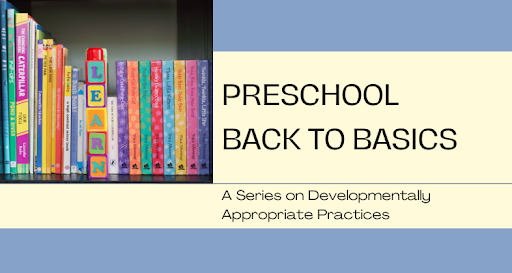
Preschool Back to Basics: Prepare for positive family engagement
Angela waved goodbye to her students as the last bus pulled away from Apple Grove Early Learning Center. She took a few deep breaths as she walked back to her classroom. Soon, Martina’s father and grandmother would arrive to discuss their child’s recent challenging behavior. Yesterday, Martina threw a wooden block across the room, narrowly […]
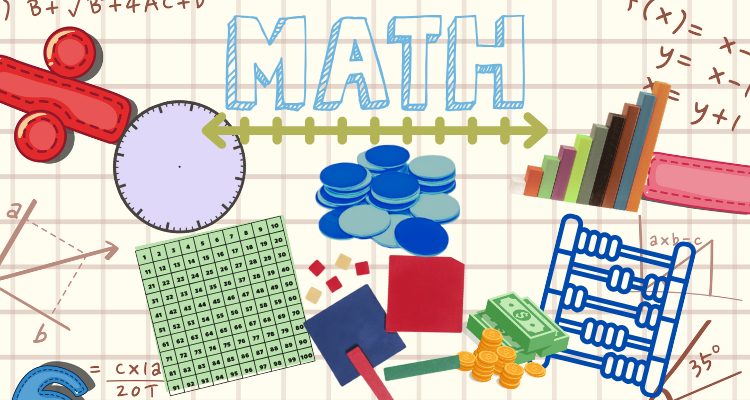
Writing: A tool for mathematical thinking
Writing in math classrooms plays a crucial role in helping students articulate their thought processes, communicate ideas effectively, and reflect on their learning. The 2023 Virginia Standards of Learning for Mathematics (Virginia Department of Education, 2023) emphasize the importance of critical thinking, problem-solving, and the application of mathematical concepts. By integrating writing into math instruction, […]

Supporting students with invisible disabilities
Invisible disabilities can significantly impact students in K–12 education, often presenting challenges that affect learning, social interaction, and emotional well-being. They are conditions such as dyslexia, ADHD, anxiety, or chronic illnesses that may go unnoticed but can hinder a student’s ability to engage in a traditional classroom setting. These challenges require proactive strategies from educators […]

Manipulatives and math aids in the mathematics classroom: Is there a difference?
Supporting all students in the mathematics classroom starts with the use of evidence-based Tier 1 instruction. For decades, that foundation has been the use of the Concrete-Representational-Abstract, or C-R-A, framework, which is supported by the research and studies of Jerome Bruner and Helen Kenney (Bruner & Kenney, 1965). The framework advocates for providing instruction to […]
Partnership in progress: How teacher-paraprofessional collaboration enhances student learning
Establishing an environment in early childhood classrooms that promotes effective teamwork and collaboration has been shown to significantly enhance student outcomes, particularly for those with complex needs. Exceptional education teachers are expected to collaborate with various providers to support the students they serve. Paraprofessionals play a crucial role as integral members of the educational team. […]
Transition planning and services
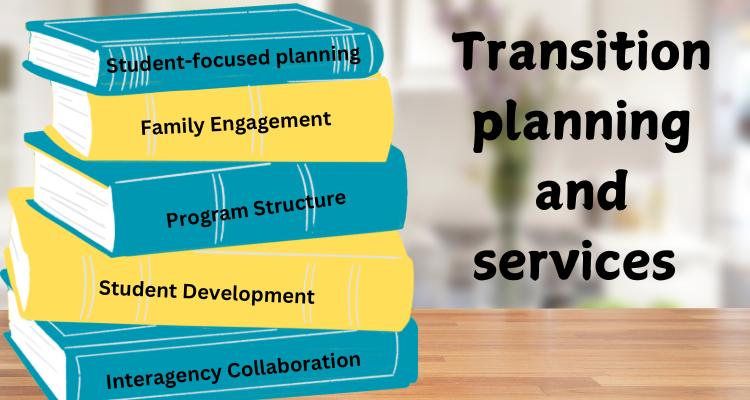
As a secondary educator, knowing when to start supporting students with disabilities on the post-secondary transition journey can be challenging. Do we begin in high school? Or, do we plan from the beginning with the end in mind? Morningstar and Clavenna-Dean (2018) wrote a book, Your Complete Guide to Transition Planning and Services, that guides […]
The communication catalyst: Empowering voices through the 4Ps of AAC
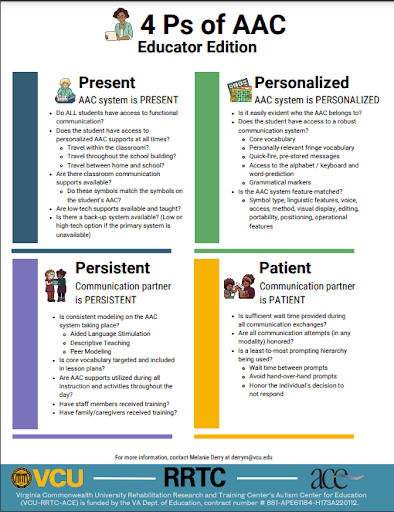
The world of Augmentative and Alternative Communication (AAC) has undergone a remarkable transformation over the past decade. We now have access to cutting-edge high-tech options and personalized access methods like eye gaze and head tracking. However, the challenge remains – many teachers and even some therapists aren’t equipped with the necessary experience and training to […]
Microteaching: A model for professional development
For every licensed educator, ongoing and continuous professional development (PD) is likely a requirement for recertification. Unfortunately, many educators do not buy-in to PD due to lack of choice, relevance, and the “sit and get” nature of many offerings (Kroeger et al., 2022). In their article, “Microteaching: An Opportunity for Meaningful Professional Development,” Kroeger et […]