Understanding and addressing the lasting impact of bullying
Current data highlight that bullying persists as a widespread and urgent issue that affects students’ sense of connection, emotional health, and academic achievement. The National Health Interview Survey, completed from July 2021 to December 2023, reveals that 34% of teenagers (ages 12-17) were bullied in the previous 12 months. This research highlights that bullying is […]

Welcome new T/TAC Program Specialists!
Sharron Haggett, Program Specialist, Assistive Technology and Intellectual Disabilities Sharron Haggett joins Virginia Commonwealth University’s Training and Technical Assistance Center with 25 years of experience in education. Her career has included roles as a paraprofessional, general education teacher, special education teacher, hospital education teacher, instructional specialist, assistive technology specialist, and educational consultant. Sharron earned a […]

Precorrection: A proactive strategy to improve student behavior
It’s November, and Ms. Connelly notices several students have difficulty following the morning arrival routine. They talk loudly as they enter the classroom and hang up their bookbags. The morning tasks listed on the whiteboard are not being completed because students are socializing with each other and taking longer to complete their work. Ms. Connelly […]

The power of small: Transforming instruction in small groups
Today’s educators face the ongoing challenge of providing high-quality instruction to increasingly diverse student populations. As classrooms grow more varied in terms of learning needs, language backgrounds, and abilities, teachers must seek effective strategies to ensure that every student receives meaningful, personalized instruction. One such strategy, small group instruction, has gained recognition for its ability […]

Back to basics: Designing Effective Classroom Environments
A well-designed classroom is the foundation for a high-quality early learning experience. The physical, social, and temporal features of the environment influence student engagement, independence, and social-emotional development (Rausch et. al., 2021). As we begin the school year, it’s the perfect time to revisit what makes a classroom truly work for young students. Start with […]
Leveled reading groups vs. Other grouping methods
What do research and data have to say about using leveled texts and grouping vs. other grouping strategies? For decades, elementary classroom teachers attempted to meet the broad literacy needs of their students by using leveled reading groups. Teachers would begin by assessing and grouping students with similar achievement levels and providing guided instruction in […]

Mental wellness and schools
Mental health is an increasingly significant issue in the United States. It is estimated that 59.3 million adults experience mental illness. However, only 45.3% receive mental health care (Mental Health America, 2024). Forty-five percent of youth ages 10 to 24 report having struggled with their mental health in the past two years (Surgo Health, 2024). […]
How to support families to prevent the summer slide in reading
In January 2025, the National Assessment of Educational Progress released reading and mathematics test scores for Grades 4 and 8, revealing a statistically significant decline in reading performance between 2022 and 2024 (National Assessment of Educational Progress, (n.d.); Schwartz, 2025). These data raise an urgent question: How can educators support students and their families during […]

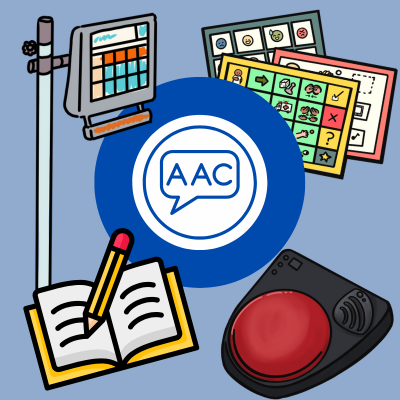
The earliest intervention: Augmentative and Alternative Communication
Augmentative and Alternative Communication (AAC) has often been seen as a last resort for individuals with complex communication needs (CCN). Many people think there’s a specific order of tools to try before moving on to high-tech AAC systems. However, things are changing with the rise of iPads, user-friendly communication apps, and a wealth of research […]
Ensuring students’ voices are heard: An evidence-based practice to actively engage students in transition planning
Students go through multiple transitions in life; some can be easy, while others can be tough. One fact remains true: the path to adulthood is not seamless, whether students transition to work, college, or training; it requires planning and preparation. An individual education program (IEP) does just that for a student with disabilities! The transition […]