The power of play: Building connections across early childhood settings
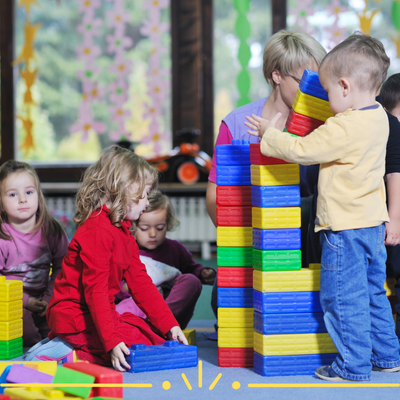
During the formative early childhood years, the classroom serves not only to teach letters and numbers but also functions as an important environment for developing essential life skills, especially social-emotional growth. One of the most effective mechanisms for fostering this growth, widely recognized in early childhood research and practice, is play. Play is not just a break from learning; it is how young children learn, explore the world, and build the critical abilities they need to navigate social interactions and manage their own emotions. This is especially true and impactful in inclusive early childhood settings that welcome and support students with differing abilities.
Play is a naturally motivating activity that allows children to explore and deepen their understanding of the world around them. In this energetic environment, they nurture important social and emotional skills. When children engage in play, they learn to share, negotiate rules, and work cooperatively toward shared objectives, laying the foundation for relationships (NAEYC, 2022). Additionally, play serves as a safe space for emotional regulation, allowing children to identify emotions such as frustration or empathy and practice coping strategies through imaginative play or peer interactions (Bredikyte & Brandisauskiene, 2023). The inherent rules of play, such as waiting for one’s turn, strengthen executive functions, including impulse control and attention.
For students with differing abilities, play is an important, non-threatening way to practice skills that may be challenging in more structured, adult-led activities. Because play is naturally adaptable, educators can tailor experiences to a child’s unique developmental stage without highlighting their differences. This intrinsic motivation encourages continuous participation and practice, both of which are essential for mastery. Achieving things in play, such as solving a difficult puzzle or starting a game with a peer, enhances self-esteem and nurtures a sense of competence. Ultimately, play is a key element of social inclusion, offering opportunities for meaningful friendships to form among all children (Arda Tuncdemir, 2025).
To fully realize these benefits, educators must be purposeful and proactive in their facilitation. A purely “hands-off” approach is rarely enough; instead, a framework for supported play is required. This framework begins with environmental design, creating diverse, physically accessible centers that cater to a range of interests. Skillful observation allows teachers to intervene intentionally, perhaps by modeling social scripts or integrating individualized communication supports (NAEYC, 2020). Peer-mediated interventions, in which children are strategically paired to encourage positive interactions, foster an environment of acceptance and shared understanding. By recognizing play as the cornerstone of development, educators can create equitable spaces where every child builds the social-emotional foundations necessary for lifelong well-being.
Ultimately, play is more than a classroom activity; it’s the heart of early development and a vital way to promote true equity in inclusive education. When educators focus on play-based strategies, they bridge developmental gaps and give students of all abilities the chance to build emotional resilience, self-regulation, and genuine social bonds. The key takeaway is that when play is thoughtfully designed and well-supported, the classroom becomes a warm, welcoming space where diversity is celebrated, and every child gains the social-emotional skills needed for a bright, successful future.
Resources
Division for Early Childhood. (2023). Practice improvement tools. Early Childhood Technical Assistance Center. https://ectacenter.org/decrp/
Grisham-Brown, J., Hemmeter, M. L., & Pretti-Frontczak, K. (2017). Blended practices for teaching young children in inclusive settings (Second edition.). Brookes Publishing.
Sandall, S., & Schwartz, I. (2024). Building blocks for teaching preschoolers with special needs (4th ed.). Paul H. Brookes Publishing (available through link to T/TAC at VCU’s library)
Webinar: Not Just Cute: How Powerful Play Drives Development in Early Childhood, with author Amanda Morgan
References
For more information, contact Adrienne Quarles-Smith ([email protected]), Program Specialist, T/TAC at VCU.
Categories Early Childhood Special Education