Mental wellness and schools
Mental health is an increasingly significant issue in the United States. It is estimated that 59.3 million adults experience mental illness. However, only 45.3% receive mental health care (Mental Health America, 2024). Forty-five percent of youth ages 10 to 24 report having struggled with their mental health in the past two years (Surgo Health, 2024). Given the significant number of adults and youth facing mental health challenges, it is not surprising that these issues can affect the educational environment. Seventy-one percent of superintendents, 62% of educators, and 54% of parents report concern regarding the impact of mental health issues on students (Huddle Up, 2025). Mental health issues within the educational setting impact the entire school environment, including teacher retention, teacher-student relationships, and students’ social, emotional, behavioral, and academic well-being.
As academic pressures and social challenges continue to rise, incorporating comprehensive mental health supports within educational systems is not merely advantageous but crucial for promoting students’ and educators’ overall well-being and success. However, addressing these mental health needs is challenging due to systemic barriers such as provider shortages, insufficient funding, inadequate staff training, and environmental obstacles like stigma and educator burnout (Huddle Up, 2025). Nevertheless, schools are pivotal in addressing mental health challenges. There is a growing acknowledgment that they should serve as the primary setting for mental health support (Weist et al., 2018).
“Young people spend approximately 15,000 hours in schools by age 18, so schools are a significant partner to the mental health system, invested daily in cultivating each child’s social-emotional health and skills for coping with stress and adversity. Schools are a vital component of the mental health system for ensuring that all youths in the United States have access to a comprehensive array of mental health supports and for remedying many of the limitations of existing mental health systems that are not truly accessible for too many students” (Hoover & Bostic, 2021, p. 46)
In addition, adolescents are 21 times more likely to seek mental health support within their schools as opposed to their communities (Guo et al., 2017). Inseparable’s 2025 School Mental Health Report Card states that offering mental health support within schools, where children spend a significant portion of their time, helps students develop resilience and coping skills. It facilitates earlier connections between students with mental health concerns and their families to necessary care. School-based support enhances short-term and long-term student outcomes and mitigates barriers such as transportation and cost, often hindering access to community-based care. For many students, schools serve as the primary venue for accessing mental health services. In recent years, states have increased school mental health support; the latest data show that these efforts yield positive results (Inseparable, 2025).
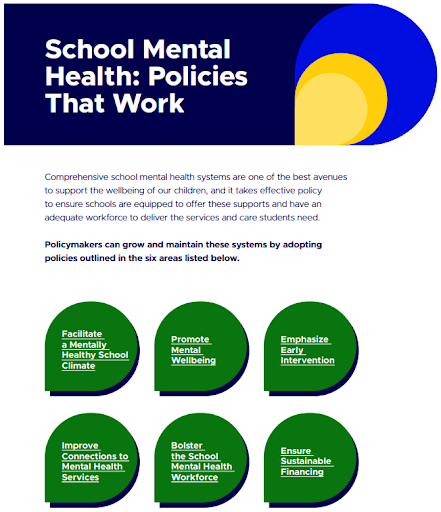
The 2025 School Mental Health Report Card promises to overcome identified barriers and increase the necessary support available to staff and students to improve mental wellness. Six areas to assist in growing and maintaining the systems needed to support mental wellness practices are outlined in the report:
1. Facilitate a mentally healthy school climate.
2. Provide mental well-being.
3. Emphasize early intervention.
4. Improve connections to mental health services.
5. Bolster the school mental health workforce.
6. Ensure sustainable financing
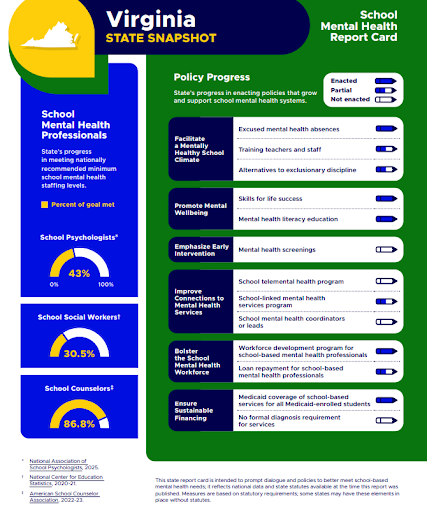
Specific examples from states successfully implementing strategies in each area and each state’s current performance report are included. Educators looking to grow effective mental health support systems within their division and/or school are encouraged to explore the 2025 School Mental Health Report Card further.
References
Inseparable. (2025). School Mental Health Report Card.
Surgo Health. (2024). Explore outcomes. Surgo Youth Mental Health Tracker.
Weist, M.D., Eber, L., Horner, R., Splett, J., Putnam, R., Barrett, S., Perales, K., Fairchild, A.J., & Hoover, S. (2018). Improving multitiered systems of support for students with “internalizing” emotional/behavioral problems. Journal of Positive Behavior Interventions, 20(3), 172–184.
For more information, contact Whitney Jones, ([email protected]), Program Specialist T/TAC at VCU.
Categories Behavior, Inclusive Practices