Supporting students with invisible disabilities
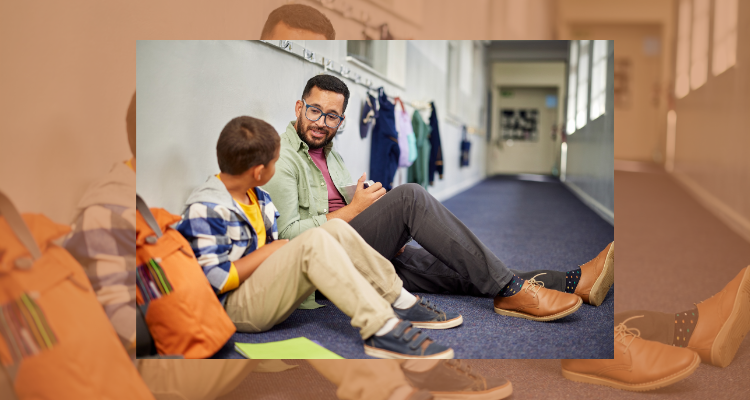
Invisible disabilities can significantly impact students in K–12 education, often presenting challenges that affect learning, social interaction, and emotional well-being. They are conditions such as dyslexia, ADHD, anxiety, or chronic illnesses that may go unnoticed but can hinder a student’s ability to engage in a traditional classroom setting. These challenges require proactive strategies from educators […]
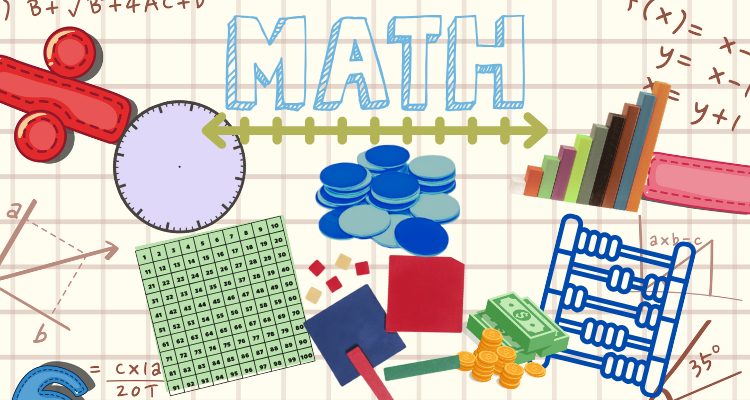
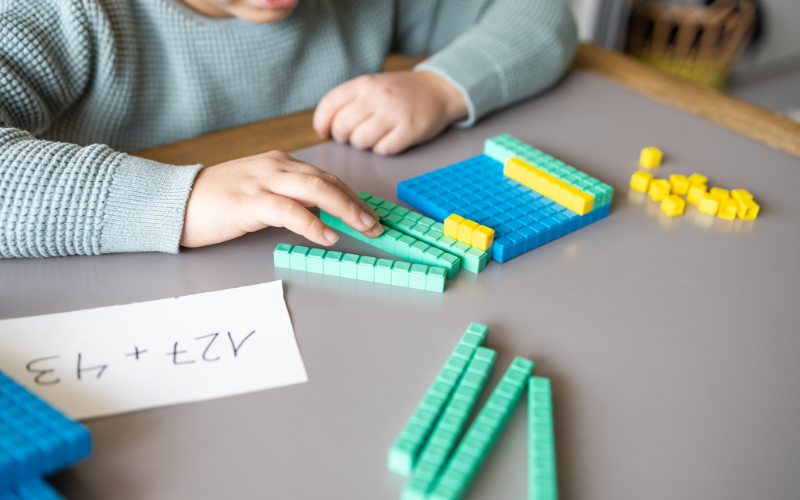
Manipulatives and math aids in the mathematics classroom: Is there a difference?
Supporting all students in the mathematics classroom starts with the use of evidence-based Tier 1 instruction. For decades, that foundation has been the use of the Concrete-Representational-Abstract, or C-R-A, framework, which is supported by the research and studies of Jerome Bruner and Helen Kenney (Bruner & Kenney, 1965). The framework advocates for providing instruction to […]
Providing scaffolded supports to increase student success
Take a minute to think about how an adult helps a child learn to ride a bike. He doesn’t put her on the bike and say, “There you go! Ride the bike!” Instead, he scaffolds the support in order to help her learn to ride her bike independently: The adult knew a gap existed between […]

Myths and facts about assistive technology: New guidance
Assistive technology (AT) offers a multitude of benefits across all age groups by fostering independence, supporting inclusion, facilitating friendships, and leading to improved overall quality of life. For young children, it facilitates opportunities for play, learning, friendships, and development by providing tailored educational tools, enhancing communication skills through augmentative and alternative communication, and enabling access […]
Using your mathematics community to develop students’ mathematical identity and mathematical agency
In the November 2023 edition of this digital newsletter, we discussed the prevalence of math anxiety among our students as young as elementary school. We shared that the 2012 PISA study revealed as many as 59% of 15 and 16-year-olds expressed worry about the mathematics classroom; and this anxiety can begin as early as first […]

Purposeful play in math classrooms
Mathematics play has gained prominence in educational discourse as a catalyst for fostering curiosity, critical thinking, and a love for the subject. It introduces an element of joy, experimentation, and discovery into the learning process. Playful learning environments benefit cognitive development, neuroplasticity, social adaptation, and achievement of learning goals in young children (Cohrssen et al., […]
Switch it up! Check out these awesome switches in the AT lab
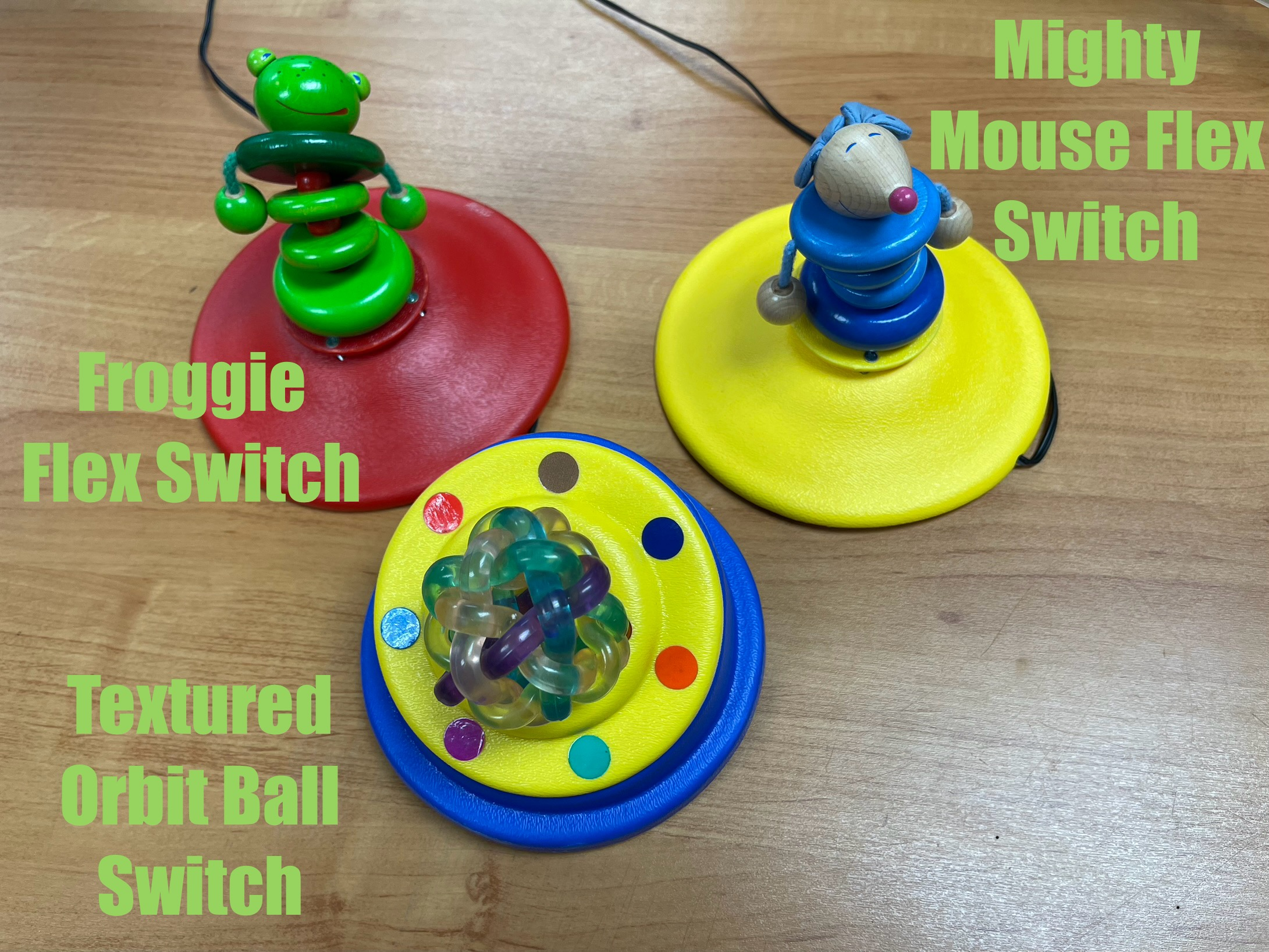
Pedal switches, Makey Makey, and Bluetooth OH MY! The Assistive Technology lab has a variety of switches available for school and early intervention teams to check out. Pair them with any switch-activated device, and your students will be ecstatically able to interact with their environment. Are you looking for something that will give a sensory […]
Why aren’t students using the strategy I taught them?
We all know to teach strategies using explicit instruction or gradual release of responsibility (“I do, we do, you do together, you do alone”), which provides scaffolds and builds learner fluency while incrementally increasing student responsibility for the learning (Dawson & Guare, 2012, 2018; Fisher & Frey, 2011, 2021; Fisher, Frey, & Lapp, 2012; Fisher, […]

The Assistive Technology Lab is open for business
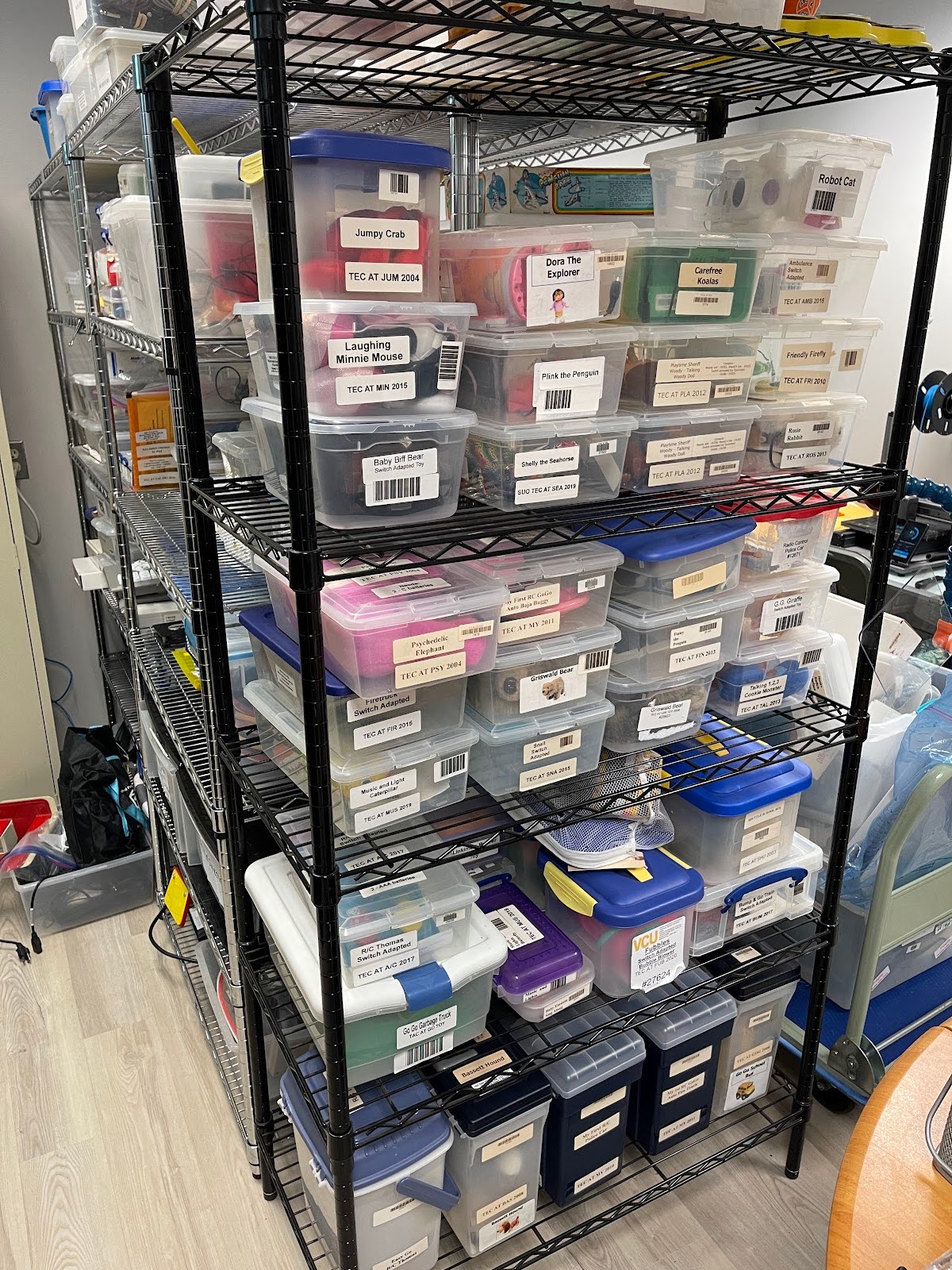
We’re back! The Assistive Technology (AT) lab is now open in our new location on Staples Mill Road in Richmond; parking is free. As always, we have many devices that can be checked out to school teams in Regions 1 and 8. The device categories include Augmentative and Alternative Communication, play, leisure activities, computer access, […]
Scaffolding for impactful instruction
Explicit Instruction features a continuum of supports, or scaffolds, where students are guided through the learning process while the responsibility for learning is gradually released from the teacher to the students. Although the concept of scaffolding hearkens back to 1976, (Puntambekar, 2022), Douglas Fisher and Nancy Frey (2023) continue to find the concept of scaffolding […]