The Sustainable Video Strategy: 5 Simple Steps for Faculty
Video can be a powerful teaching tool. It gives faculty opportunities to explain complex ideas, demonstrate processes, model their thinking, establish instructor presence, and connect with students in ways that text alone cannot. But creating effective instructional video takes time. Recording is only the beginning. Faculty may also need to edit, caption, upload, organize, and […]

TILT Your Assignments!
Picture two versions of the same assignment prompt posted to your Learning Management System: Both versions assign the exact same work.Yet, the student experience couldn’t be more different because version B removes the unnecessary guesswork that often holds students back. This is the core of Transparency in Learning and Teaching (TILT), an easy pedagogical framework […]

Creating Accessible Slides at VCU: Choosing the Right Tool and Workflow
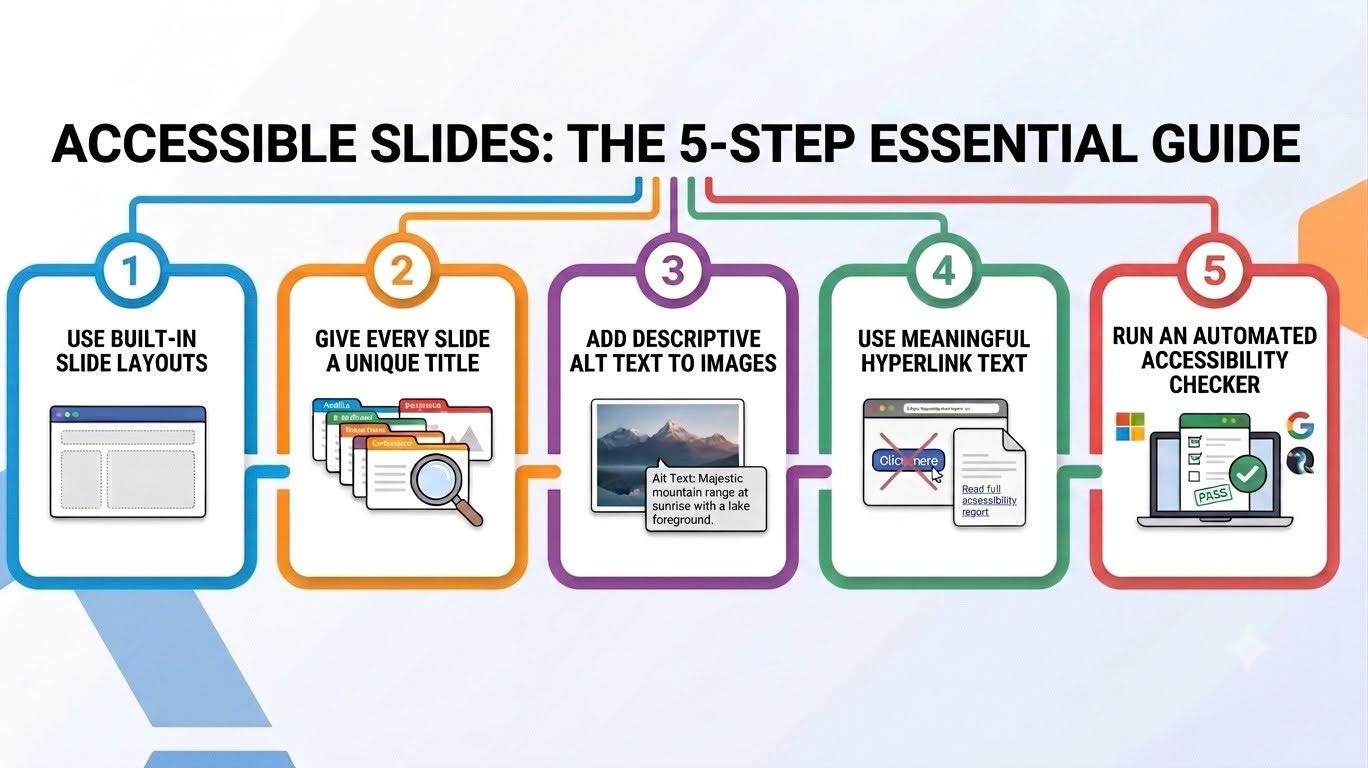
Figure 1: The 5-Step Essential Guide to Accessible Slides. Slide decks often become more than visual aids. Students may use them as study guides, references for recorded lectures, or downloadable course materials. Building accessibility into a presentation from the beginning makes the content easier to navigate and understand, reducing the need for extensive remediation later. […]
PDF, PowerPoint, or Canvas Page: Choosing Course Content Formats
When we think about accessibility, the conversation often starts with fixing what already exists by adding alt text, checking color contrast, captioning videos, remediating PDFs, or running an accessibility scan in Canvas. But one of the most helpful accessibility decisions happens even earlier. What format should this content be in? Before uploading a file to […]

Discovering (Google) Gemini Canvas
If you’re like me, you’ve probably been using AI over the last year to help refine emails for clarity or brainstorm lesson plans. Exploring AI tools is definitely a journey of discovery. It takes some time to test what works, but it’s incredibly rewarding when you find the ones that click. Recently, I started experimenting […]

Peerceptiv: Let’s Talk New Features
Peerceptiv is a peer review tool that allows instructors to facilitate structured peer review for assignments, presentations, and group projects. With a wide variety of configuration options, instructors can create customized learning experiences that fit their course goals. Peerceptiv supports several assignment types, including: How Does It Work? Students upload a variety of assignment types, […]
Hybrid Course Design Revisited
With so much current attention focused on AI and accessibility, it may seem odd to revisit hybrid course design. But high-quality hybrid teaching remains one of the most flexible and effective approaches for supporting student learning and engagement. Hybrid courses blend synchronous face-to-face instruction with asynchronous online learning experiences. At VCU, hybrid courses intentionally combine […]

Learn more about Adobe Express and Adobe Acrobat this June
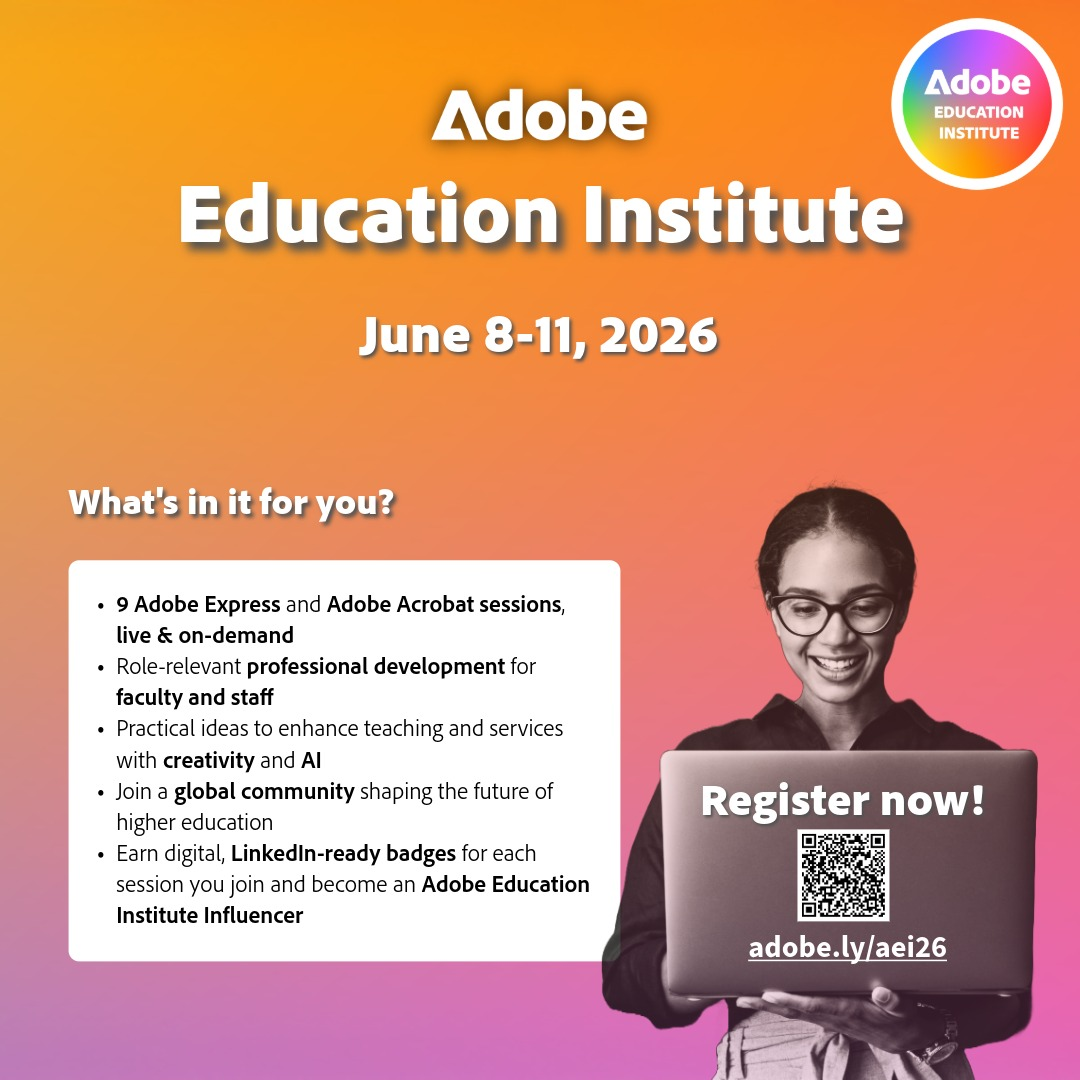
We are excited to announce that the Adobe Education Institute (AEI) is back from June 8th to 11th, and all faculty and staff are invited. The Adobe Education Institute is a free, virtual professional development global conference designed to support faculty and staff in enhancing teaching, learning, and digital skills. This year’s event has more […]
The Conversation Is Unsettled: Hosting an AI Common Book Event
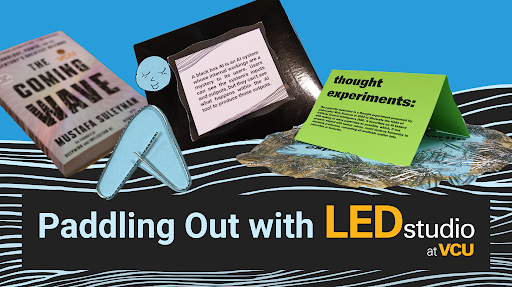
When the VCU Common Book was announced for the 2025-2026 school year as a book on AI, “The Coming Wave” by Mustafa Suleyman, I pitched that our department, LEDstudio, host an event for faculty to dive into that topic. I had really enjoyed participating in the book club style gatherings that Massey Cancer Center hosted […]
The Power of Storytelling: Why Stories Stick
Why Do Stories Stick? You may remember sitting through training sessions, lectures, or presentations packed with useful information only to forget most of it by the next day. But tell us a story and something different happens. We do not just remember information, we remember experiences. Like the overwhelmed first-year teacher trying to manage a […]