The hidden correlation: How assistive technology shapes student behavior
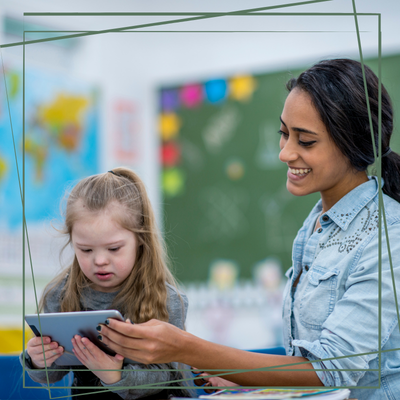
In the field of special education, Assistive Technology (AT) is frequently viewed through a purely functional lens: a tool to help a student see, hear, write, or communicate. However, there is a profound, often-overlooked relationship between the implementation of AT and a student’s behavioral presentation. Understanding this relationship requires careful consideration to ensure accessibility options are appropriate, functional, and least restrictive, while also recognizing the psychological and environmental shifts that occur when a student’s accessibility changes.
The most significant positive relationship between AT and behavior is found in communication. For many students, behaviors such as aggression, screaming, or self-injury may function as forms of communication. When students cannot effectively express their needs, behavior may become their primary way of communicating By providing Augmentative and Alternative Communication (AAC) solutions, we provide a “voice.” As a student’s ability to successfully communicate effectively increases, their tendency toward undesirable behaviors decreases. In this context, AT acts as a direct, even unintentional, behavioral intervention, reducing a student’s frustration and increasing their ability to be heard and understood.
Beyond AT/AAC supports for communication, accessibility extends to include instructional design, technologies, and social-emotional supports. Research consistently indicates that when schools proactively remove barriers across these domains, student engagement increases and challenging behaviors decrease (Lane et al., 2007).
Instructional accessibility is a central factor in shaping classroom behaviors. Universal Design for Learning (UDL) emphasizes multiple means of representation, engagement, and expression to ensure that students can access content and demonstrate understanding in varied ways (CAST, 2018). While consistent routines are important, so is flexibility in designing and delivering instruction. When instruction relies mainly upon lecture and text-based knowledge acquisition, students who experience attention difficulties, language-processing challenges, or gaps in prior knowledge are more likely to disengage. This disengagement often manifests as disruptive behavior, withdrawal, or noncompliance. In contrast, accessible instructional practices, such as UDL, reduce frustration and cognitive overload, both of which are key predictors of behavioral challenges. Research indicates that frustration resulting from inaccessible instruction is a significant predictor of behavioral challenges, while flexible instructional approaches reduce problem behaviors by increasing student autonomy and motivation (Rao et al., 2014).
Physical and environmental accessibility also has a substantial impact on student behavior. Classroom factors such as overcrowding, excessive noise, poor lighting, and inflexible seating arrangements can contribute to sensory overload and heightened stress. Environmental psychology research suggests that students who experience physical discomfort or sensory overload exhibit increased impulsivity, aggression, and avoidance behaviors (Barrett et al., 2015). Conversely, accessible classroom designs that promote comfort, movement, and sensory regulation support conditions that promote positive student behavior.
Technological accessibility further influences student engagement and behavioral outcomes. Assistive technologies, such as text-to-speech, speech-to-text, word prediction, alternative input modalities, and captioned instructional media, can improve a student’s ability to access and produce content more effectively. When students are provided with appropriate technology supports, academic frustration decreases, and task persistence improves, resulting in fewer off-task behaviors (Okolo & Bouck, 2007). Without these tools, students may act out or disengage to avoid tasks they perceive as inaccessible or unattainable.
Social and emotional accessibility is equally critical in shaping behavior. While AAC supports individual communication, it is equally important to teach peers and communication partners how to understand and respond to AAC users. Additionally, offering multiple modalities for social communication helps ensure communication occurs in natural and socially appropriate ways. When we go to a movie theatre, we use gestures, whispers, or a written note to communicate. Imagine the embarrassment, and frustration, if an audible speech-generating device is the only communication option in that setting. Along the same theme, assistive technologies that support a student’s executive functioning skills, self-advocacy, and autonomy, can greatly improve social and emotional well-being.
In summary, research highlights a strong connection between student behavior and accessibility across many domains. Behavioral challenges are not always matters of discipline or student choice but are frequently responses to inaccessible environments. By intentionally designing accessible learning and social environments, educators can foster positive behavior, enhance academic outcomes, and promote equity for all students.
References
Link to CAST. (2018). Universal design for learning guidelines version 2.2.
Link to Okolo, C. M., & Bouck, E. C. (2007). Research about assistive technology: 2000–2006. What have we learned? Journal of Special Education Technology,22(3), 19–33.
Rao, K., Ok, M. W., & Bryant, B. R. (2014). A review of research on Universal Design for Learning: The past, present, and future. Journal of Special Education Technology, 29(3), 1–14.
For more information, contact Sharron Taylor-Haggett ([email protected]), Program Specialist, T/TAC at VCU.
Categories Assistive Technology, Autism Spectrum Disorder, Early Childhood Special Education, Inclusive Practices, Intellectual Disabilities