From programs to systems: Reframing advanced tiers through implementation science
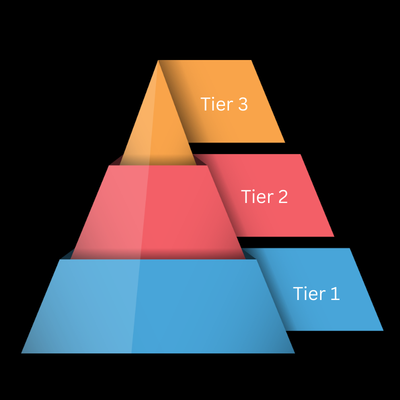
Many schools are actively working to strengthen their Tier 2 and Tier 3 supports; however, teams frequently report feeling overwhelmed by the numerous interventions, tools, and processes required. This challenge often arises because schools treat each intervention as an isolated initiative. Implementation research indicates that the primary focus should be on constructing the Advanced Tiers system as a whole, rather than on implementing individual programs in isolation (Fixsen et al., 2005; National Implementation Research Network [NIRN], n.d.a).
Advanced Tiers can be conceptualized as a well-designed roadway system. Interventions function like vehicles–they are effective only when the underlying infrastructure, such as roads, signage, and traffic patterns, is clearly established. A robust system enables interventions to operate efficiently, whereas an unclear or inconsistent system hinders even the most effective interventions (Center on PBIS, 2026).
An effective Tier 2 and Tier 3 system possesses several essential characteristics. First, it is accessible and understandable for staff, ensuring clarity regarding student entry into supports, progress monitoring, and decision-making processes. Second, it is feasible, with routines that align with the school’s schedule and staffing resources. Third, it is measurable, allowing leaders to assess whether the system functions as intended (NIRN, n.d.d). Together, these features form a coherent, aligned infrastructure that supports consistent, equitable implementation and promotes student success.
The SISEP Center identifies three categories of support that help schools develop robust systems. These supports include building staff capacity, establishing school structures and data routines that support implementation, and preparing leaders to address logistical challenges and shifts in mindset (NIRN, n.d.b).The focus of these supports is not on perfecting a single program, but rather on streamlining and sustaining the entire Tier 2 and Tier 3 process.
It is important to recognize that systems develop incrementally rather than all at once. Schools frequently attempt to implement interventions before establishing the necessary foundational structures. A more effective approach involves first assessing needs, followed by establishing appropriate structures, supporting staff during initial implementation, and striving for long-term consistency (NIRN, n.d.c). Adopting this stepwise process enhances both manageability and effectiveness.
In summary, Advanced Tiers should be understood as a coordinated system rather than a collection of discrete programs. This system enables students to receive timely, consistent, and effective support. Prioritizing system development provides a sustainable, impactful framework for implementing interventions.
References
Link to Center on PBIS. (2026). Tier 2 district‑level systems guide. University of Oregon.
Fixsen, D. L., Naoom, S. F., Blase, K. A., & Wallace, F. (2005). Implementation research: A synthesis of the literature. University of North Carolina at Chapel Hill, FPG Child Development Institute, National Implementation Research Network.
Link to National Implementation Research Network. (n.d.a). Active implementation frameworks. SISEP Center.
Link to National Implementation Research Network. (n.d.b).Implementation drivers. SISEP Center.
Link to National Implementation Research Network. (n.d.c). Stages of implementation. SISEP Center.
Link to National Implementation Research Network. (n.d.d). Usable innovations. SISEP Center.
For more information, contact Kristen O’Sullivan, Ed.D. ([email protected]), Program Specialist, T/TAC at VCU.
Categories Behavior, Inclusive Practices, Math, Reading