Decide, act, believe! Promoting self-determination for students
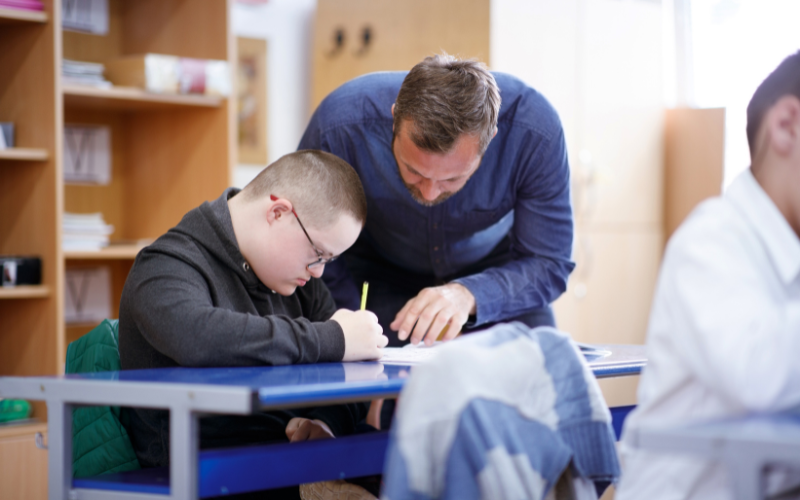
Soft skills such as navigating interpersonal relationships, time management, problem-solving, and decision-making are essential for all students. These skills are part of self-determination, “acting or causing things to happen as a person sets and works toward goals in their life” (Raley et al., 2023, p.403). Self-determination predicts positive classroom and post-school outcomes and improves access to general education, employment, and participation in community activities (Shogren et al., 2015). It is critical for every student, though considerable research has focused on the ability of students with disabilities to develop these skills.
The Self-Determination Inventory System guides students, teachers, and parents in creating a cyclical plan to teach students from 13-22 years old how to select meaningful goals, make a plan to work toward those goals, and adjust the plan as they develop a new understanding (Raley et al., 2023). The Self-Determination Inventory: Student Report (SDI: SR) consists of an accessible assessment for students and an assessment for parents. Following the assessment, students receive a snapshot summarizing their current self-determination capacity for three actions: Decide (choosing goals), Act (making a plan to achieve their goals), and Believe (believing in their ability to achieve their goals). The snapshot is a helpful tool for students, parents, and teachers to co-develop academic, career, or other goals. The Self-Determined Learning Model of Instruction (SDLMI) is an evidence-based intervention that uses the SDI: SR information to promote collaboration and engagement in planning academic, community, and post-school goals for students with disabilities. The assessment can serve as a guide to developing meaningful, self-identified areas of growth and direct the student to goal-aligned opportunities and experiences with the support of their Individualized Education Program team.
Explicit instruction related to self-determination is rarely presented in general education classes, although core content standards of most states include objectives closely aligned with self-determination (e.g., goal-setting, problem-solving, and decision-making). Raley et al. (2018) found that the SDLMI was effective in use with various populations of students with and without disabilities and in multiple contexts (e.g., one-to-one, small group, and whole-class instruction). The SDLMI integrates well into the general curriculum because it guides students into acting as causal agents in any content area. Students with varying levels of self-determination are supported in taking responsibility for their goals rather than relying on teachers to manage student accountability. The free online assessment and SDLMI teacher guide listed in the resources can help you learn more about implementing this learning model with your students.
Resources
- The Self-Determined Learning Model of Instruction (SDLMI) Teacher’s Guide
- Self-Determination Inventory: Student Report (SDI: SR)
References
Raley, S. K, Hagiwara, M., Shogren, K. A, & Matusevich H. (2023). Empowering transition-age students to use self-determination assessment to lead IEP goal development. Teaching exceptional children. 55(6), 402–411. doi:10.1177/00400599211066914
Raley, S. K., Shogren, K. A., McDonald, A. (2018). How to implement the self-determined learning model of instruction in inclusive general education classrooms. Teaching exceptional children, 51(1), 62–71. doi:10.1177/0040059918790236
Shogren, K. A., Wehmeyer, M. L., Palmer, S. B., Rifenbark, G. G., & Little, T. D. (2015). Relationships between self-determination and postschool outcomes for youth with disabilities. The Journal of Special Education, 48(4), 256-267. https://doi-org.proxy.library.vcu.edu/10.1177/0022466913489733
University of Kansas Center on Developmental Disabilities. (2022, May 10). Assessments. Self-Determination. https://selfdetermination.ku.edu/homepage/assessments/
For more information, contact Jennifer Askue-Collins, ([email protected]), Program Specialist T/TAC at VCU.