Sensory-friendly classroom contexts
Sensory processing is the relationship between the nervous system, sensory input interacting with our senses, and the patterns formed by a person’s response. Common processing patterns within our seven senses (i.e., sight, sound, smell, taste, touch, vestibular, and proprioceptive) are sensory sensitive, sensation avoidance, low registration, and sensation seeking. These create various possible responses and needs to sensory stimuli (Stearns, 2022).
As the new school year begins and teachers set up their classrooms, consider the design, decor, layout, and environment that impact the students’ sensory experiences. We know that as many as 16% of school-aged children have sensory processing patterns that differ from the sensory needs of their neurotypical peers (Mills et al., 2016). Students having difficulties navigating sensory experiences may demonstrate disruptive or unwanted behaviors, struggle with social participation during classroom activities, and experience decreased engagement in academic tasks (Chia-Ting & Parham, 2014).
Students engage within a classroom’s physical, social, cultural, and temporal contexts. Creating sensory-friendly environments within these contexts alongside sensory-friendly instruction and opportunities for sensory diet-type activities further enhances students’ abilities to succeed (Stearns, 2022).
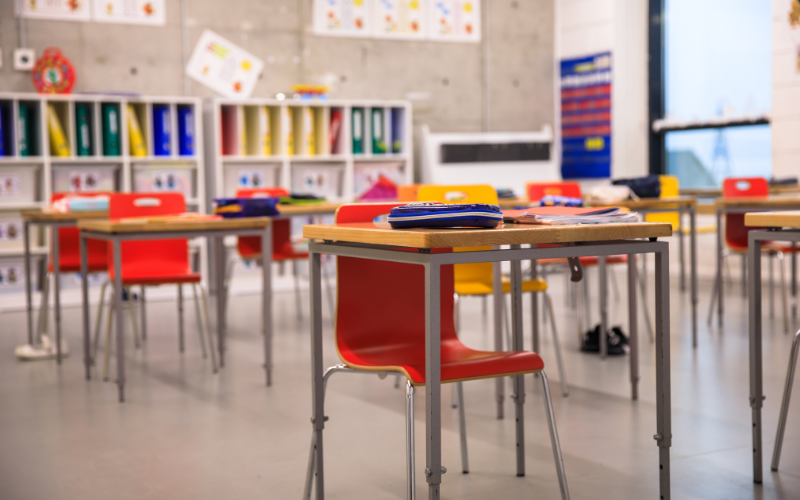
The physical context is the physical space, furniture, layout, lighting, air quality, and temperature of the learning environment. Sensory practices include:
- Ergonomic furniture
- Flexible seating options
- Access to natural light
- Ambient non-overhead lighting
- Limited wall decor
- Student work on display
- Cooler temperatures
Use soft surfaces, provide visual negative space, keep supplies accessible to all, allow for traffic/workflow, and be mindful of the sensory input of sounds, light, and visual stimuli that can be overwhelming and distracting (Stearns, 2022).
The social context is the space between interactions made from the various components and class members and how they interact, communicate, and relate to one another (Obaki, 2017). Social practices include:
- Group/pair work
- Peer tutoring
- Social and emotional lessons and routines
- Relationship building between class members
- Incorporating family members
Create social practices that become routine on how students work with a partner, assign roles in group work, and offer or ask one another or an adult for help. Establish problem-solving and peer monitoring practices to build better relationship skills (Stearns, 2022). Explicitly discuss individual differences and acceptance.
The cultural context is the environment created by teachers and students that establishes norms and expectations and decides what items and behaviors are appropriate. Is the classroom a safe space to take risks, make mistakes, and collaborate? How do class members act and communicate with one another (Kane, 2016). Cultural practices include:
- Explicit daily expectations, routines, and procedures
- Use of instructional routines
- Encourage practices for self-regulation
Establish norms around problem-solving, asking for help, making mistakes, using fidget tools, and flexible seating. Design a collaborative work culture with access to a calming space and incorporate sensory diet activities (Stearns, 2022).
The temporal context is a classroom environment’s consistent schedule, timing, and pacing. Temporal practices include:
- Consistent timing and pace of the daily schedule and routines
- Consistent timing of transition practices
- Avoidance of rushing or speeding up activities
Incorporate regular and balanced activities of play versus learning and schedule movement and mindfulness activities throughout the school day. Input that is unexpected or occurring at a different pace increases distractions and discomfort for the learner.
Why is a sensory-friendly classroom so important? Explicitly designed classrooms and developed routines provide predictability and allow students to engage in their environment with less sensory overload. Minimizing sensory distractions alongside a functional environment yields better student engagement. The increased engagement promotes desirable, on-task behaviors and improved outcomes. (Stearns, 2022).
References
Chia-Tin, S., & Parham, L. D. (2014). Validity of sensory systems as distinct constructs. The American Journal of Occupational Therapy: Official Publication of the American Occupational Therapy Association, 68(5), 546–554. https://doi.org/10.5014/ajot.2014.012518
Kane, K. (2016, August 12). Back to school: Why creating classroom community is so important. National Association for the Education of Young Children. https://www.naeyc.org/resources/blog/why-creating-classroom-community-so-important
Mills, C., Chapparo, C., & Hinitt, J. (2016). The impact of an in-class sensory activity schedule on task performance of children with autism and intellectual disability: A pilot study. British Journal of Occupational Therapy, 79(9), 530-539. Doi:10.1177/0308022616639989
Obaki, S. O. (2017). Impact of classroom environment on children’s social behavior. International Journal of Education and Practice. 5(1). 1-7. Doi: 10.18488/journal.61/2017.5.1/61.1.1.7
Stearns, K. (2022). Creating a Sensory Friendly Classroom (Publication No.) [Doctoral dissertation, University of North Dakota]. https://commons.und.edu/cgi/viewcontent.cgi?article=1565&context=ot-grad
For more information on creating sensory-friendly classroom environments and practices, contact Kristen O’Sullivan ([email protected]), Program Specialist, T/TAC at VCU.