Support student learning with routines
Students learn content more deeply when the thinking and self-regulation skills behind learning are intentionally developed. Before we focus on advanced strategies, it is crucial to establish classroom systems that prepare students to engage, persist, and think independently. Two powerful levers for doing this are structured routines and executive function supports. Predictable routines help students […]

Bumper stickers and explicit instruction
In his memoir, Matthew McConaughey talks about bumper stickers, quick-hit lines that try to sum up something bigger, something true (McConaughey, 2020). In education, we have our own, “I do, We do, You do.” It sounds good, rolls off the tongue, and feels like wisdom on a teacher-lounge fridge magnet. But like a real bumper […]
From guidance to independence: The power of scaffolding in the classroom
Scaffolding is an essential instructional strategy that helps bridge the gap between what students currently know and what they are capable of with guidance. Originating from Vygotsky’s (1978) zone of proximal development, scaffolding involves providing temporary supports that enable learners to perform tasks they could not accomplish independently. As students gain understanding and confidence, these […]

Wait! There are different types of wait time?
It seems like every year we wonder about teacher talk versus student talk. Am I talking too much during instruction? Are all of the students engaged in opportunities to respond? As teachers, coaches, and administrators, we often reflect on whether instruction is student-centered. Sometimes it feels like we’re doing everything right, but the students still […]

Revisiting the homework dilemma
Teachers often revisit the question at the beginning of the school year: Is homework an unnecessary burden or is it a valuable pedagogical practice? The debate has persisted for decades with little change in public opinion or the amount of homework assigned. According to Dr. Harris Cooper, professor of psychology and neuroscience at Duke University, […]

The power of small: Transforming instruction in small groups
Today’s educators face the ongoing challenge of providing high-quality instruction to increasingly diverse student populations. As classrooms grow more varied in terms of learning needs, language backgrounds, and abilities, teachers must seek effective strategies to ensure that every student receives meaningful, personalized instruction. One such strategy, small group instruction, has gained recognition for its ability […]

Using the TPRY strategy “To Pry” open models
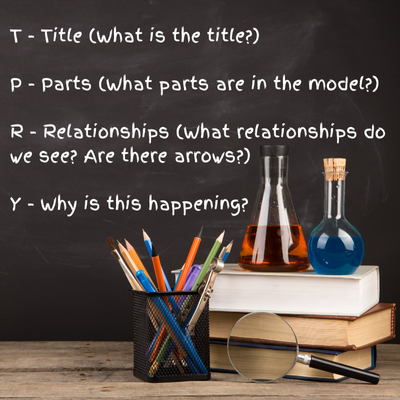
Have you been thinking about science instruction lately? Are you wondering how to help students “to pry” open visuals like diagrams, graphs, and tables? TPRY is the cognitive strategy you are looking for! TPRY is a learner-owned mnemonic strategy that captures the Next Generation Science Standards (NGSS) practice of Developing and Using Models. Although it […]
Beyond the PD: How coaching supports implementation after a professional development
Professional development (PD) is the primary way in which knowledge, skills, and information are shared with teachers. The general approach to PD involves initial training; teachers are expected to take the presented information back to their respective classrooms and implement it, often with little to no follow-up (Saunders et al., 2021). This traditional model of […]

We’re growing! New assistive technology materials to inspire learning!
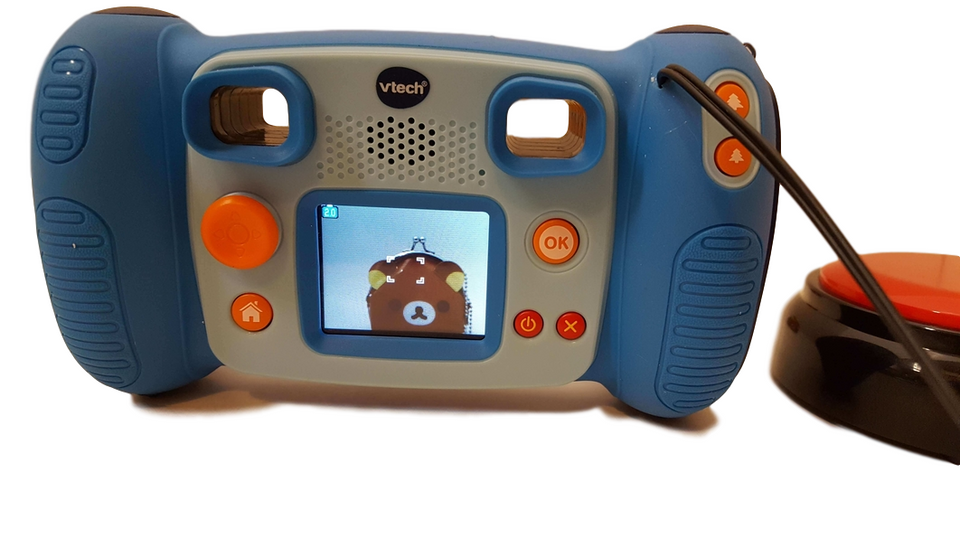
We have been listening to you! Based on your requests, we have curated more assistive technology (AT) devices for you to trial with your students of all ages. Check out these materials that were added to our library recently! Lights, Camera, Action!!! For the culinary artists in your classroom Switches, switches, and more switches!! Choosing […]
Understanding SRSD: A game-changer for teaching writing
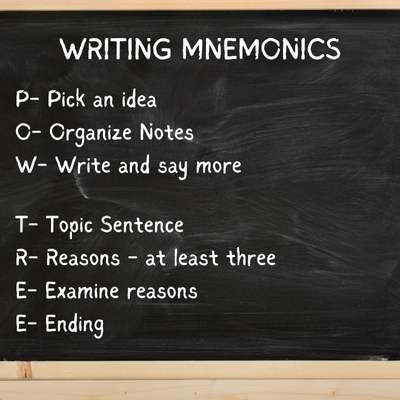
Imagine a classroom where even reluctant writers feel empowered to express their ideas. That is the promise of the Self-Regulated Strategy Development (SRSD) model—an approach that combines writing strategies and self-regulation to transform how students learn to write. Originally designed to support students with disabilities, SRSD has been effective for writers of all levels, helping […]