Wright Center Graduate Students Win Honors at VCU’s 20th Annual Women’s Health Research Day
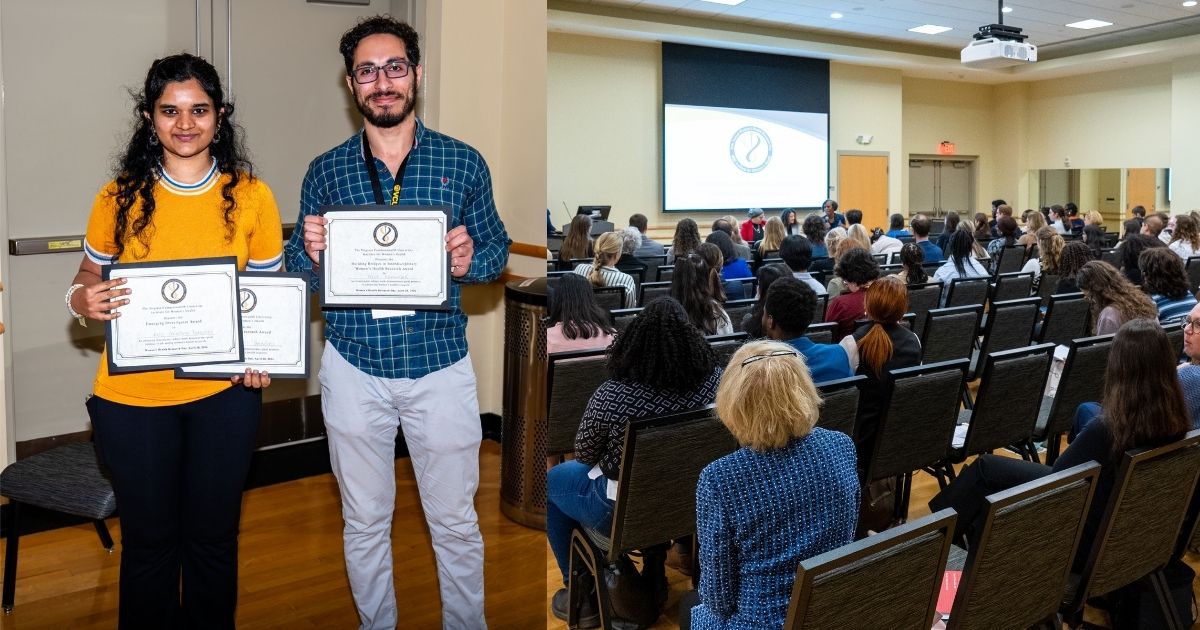
Two graduate students from the VCU C. Kenneth and Dianne Wright Center for Clinical and Translational Research were among the top honorees at the 20th Annual Women’s Health Research Day. The event, hosted by the VCU Institute for Women’s Health on April 28, 2026, centered on the theme “Midlife Matters: Integrating Menopause Research, Innovation, and Impact.”
A Double Win for Breast Cancer Research
Gowtami Aishwarya Panguluri, a Ph.D. student at the Wright Center, achieved a rare “double win,” taking home both the Basic Sciences Research Best Poster Award and the Emerging Investigator Research Award.
Panguluri’s research, titled “Pubertal AGE exposure reprograms mammary fibroblasts through RAGE-MYC signaling: Implications for Women’s Breast Cancer Risk,” explores how early-life dietary exposures to Advanced Glycation End Products can mechanistically influence long-term Breast Cancer risk.
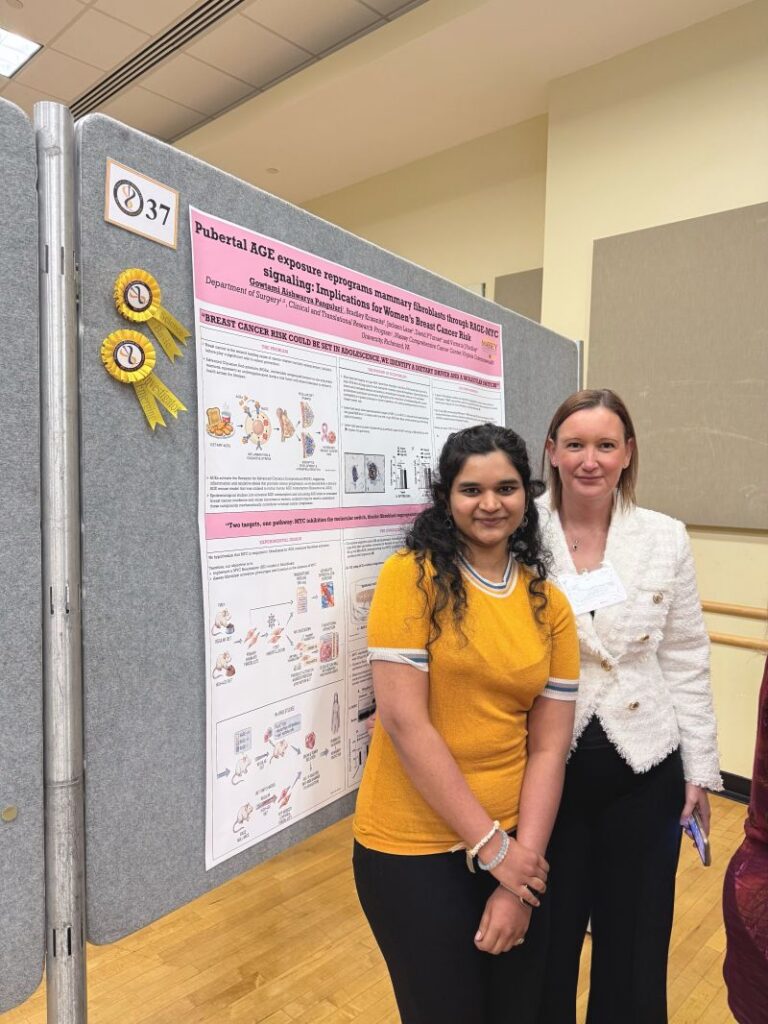
Working under the mentorship of Victoria Findlay, Ph.D., Panguluri’s study bridges the gap between basic molecular biology and population-level health outcomes. Her poster emphasizes mammary fibroblasts, structural support cells in breast tissue, as the site where AGE exposure leaves a lasting biological imprint. She shows that these cells, once exposed to AGEs, retain an activated state and actively encourage cancer-related cell movement through a receptor called RAGE (the cellular “docking station” that AGEs bind to in order to exert their effects). Critically, she identifies MYC, a gene known to drive cancer growth, as a key downstream player in this process, required for AGE-exposed fibroblasts to promote the migration and invasion of epithelial cells, the type that give rise to most breast cancers. She also validated these findings in an animal model, demonstrating that stromal RAGE, the version of this receptor found in the tissue surrounding cells, is required for tumor development in the mammary gland.
“Two targets, one pathway,” Panguluri said. “Stromal RAGE shapes the pro-tumorigenic microenvironment, and MYC is the downstream effector required for fibroblast-driven epithelial migration with dietary AGEs as a modifiable exposure, opening the door to intercepting breast cancer risk before a tumor ever forms.”
Building Bridges with Big Data
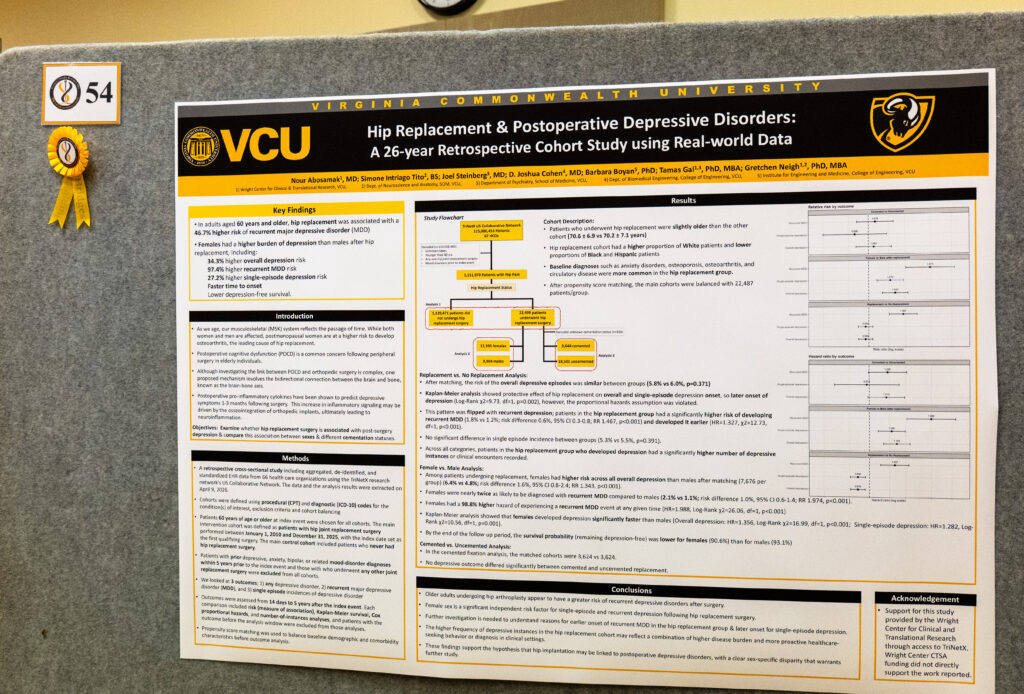
Nour Abosamak, MD, a Ph.D. student mentored by Wright Center Director of Health Informatics Tamas Gal, Ph.D., received the Building Bridges in Interdisciplinary Women’s Health Research Award, given to the poster that best demonstrates interdisciplinary collaboration in women’s health research.
The award-winning poster, “Hip Replacement & Postoperative Depressive Disorders: A 16-year Retrospective Cohort Study using Real-world Data,” utilized the power of the Wright Center’s TriNetX research network to analyze over 115 million patient records. narrowing the scope to 22,499 surgical patients aged 60 and older, the team uncovered an increased risk of major depressive disorder among those who underwent hip replacement.
Key Findings included:
- Adults 60 and older undergoing hip replacement face a 46.7% higher risk of recurrent major depressive disorder.
- Female patients showed a significantly higher prevalence of postoperative depression compared to males.
“This is a prime example of the utility of TriNetX,” Gal said. “By leveraging standardized, de-identified electronic health records from healthcare organizations, our students can uncover significant health disparities and clinical risks that might otherwise remain hidden in smaller datasets.”

The study was the result of a collaboration between two Wright Center graduate students. The project was initiated by Simone Intriago Tito, a first-year Clinical and Translational Sciences (CTS) doctoral student, during her research rotation with Gretchen Neigh, Ph.D., MBA. Seeking to expand the study’s scope through advanced informatics, Intriago Tito reached out to Abosamak, whose expertise in TriNetX and bioanalytics were invaluable throughout the project. Their collaboration—bridging initial clinical inquiry with complex data analysis—was so integrated that both are expected to serve as co-first authors on the forthcoming manuscript. The interdisciplinary project also included contributors from the Dept. of Neuroscience and Anatomy, the VCU College of Engineering, and the Wright Center’s Collaborative Advance Research Imaging (CARI) program.
Mentorship and the Future of Women’s Health
Gretchen Neigh, Ph.D., MBA, the Wright Center’s director of education and mentoring, noted that the success of these students reflects the center’s commitment to fostering well-rounded investigators.
“Seeing our students recognized at this level is a testament to the rigorous, collaborative environment we strive to create at the Wright Center,” she said. Neigh, who is also the director of translational research for the Institute of Women’s Health, continued, “Our students are demonstrating how collaborative, interdisciplinary translational science can tackle complex issues in women’s health, from the cellular level to large-scale population health.”
About Women’s Health Research Day
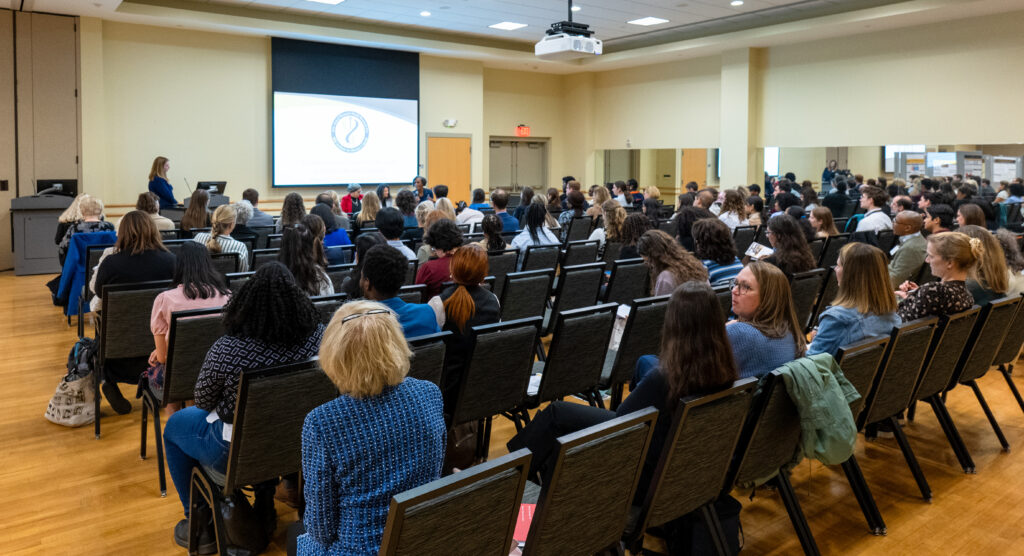
Now in its 20th year, Women’s Health Research Day is a premier symposium at VCU designed to celebrate and promote research activities dedicated to the health of women. The 2026 event featured a symposium at the Larrick Student Center on the MCV Campus, providing a platform for students, faculty, and clinicians to share a diverse array of research spanning the spectrum of women’s health throughout the lifespan.
For more information on the Wright Center’s training and informatics resources, visit cctr.vcu.edu.
Categories Education, Mentorship, Research