From Richmond to Philadelphia: how a Wright Center KL2 scholar became a national leader in periodontal research
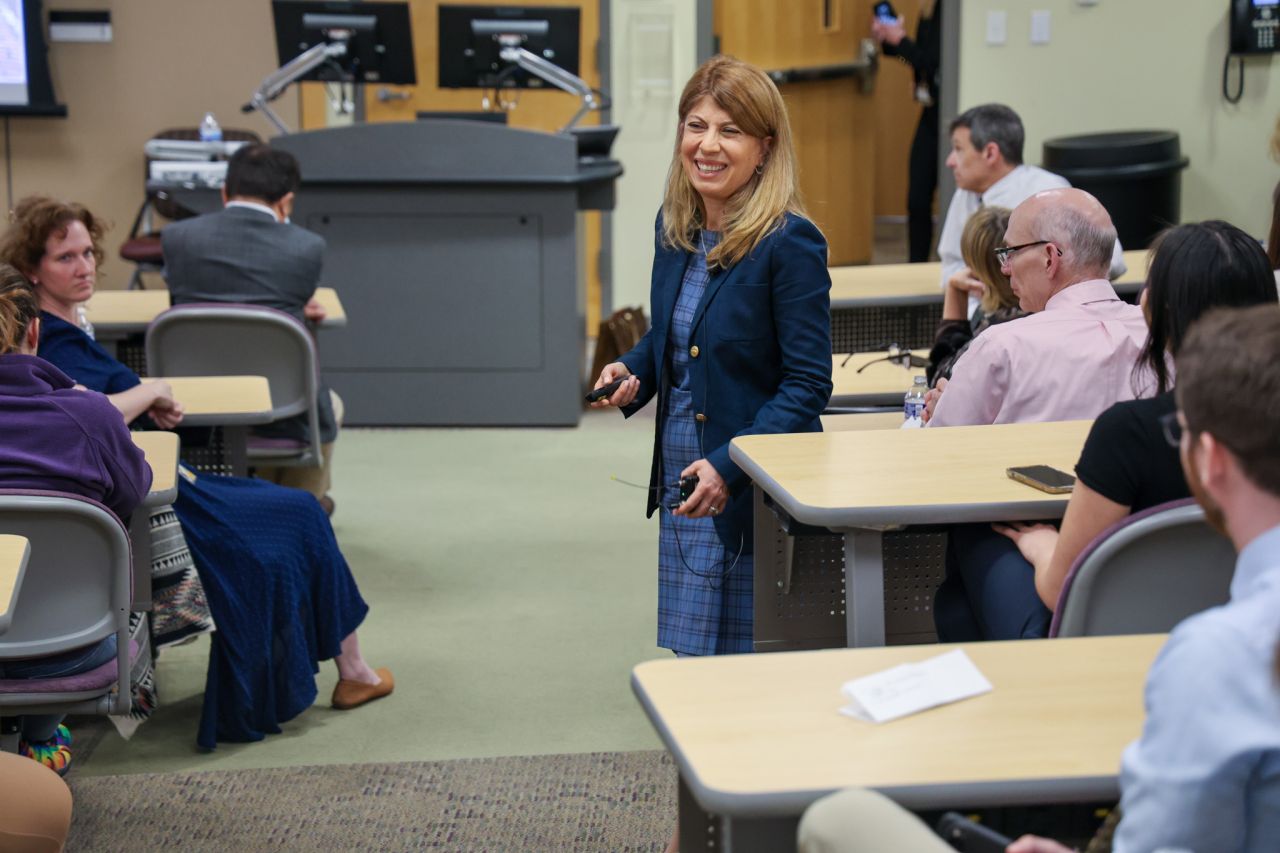
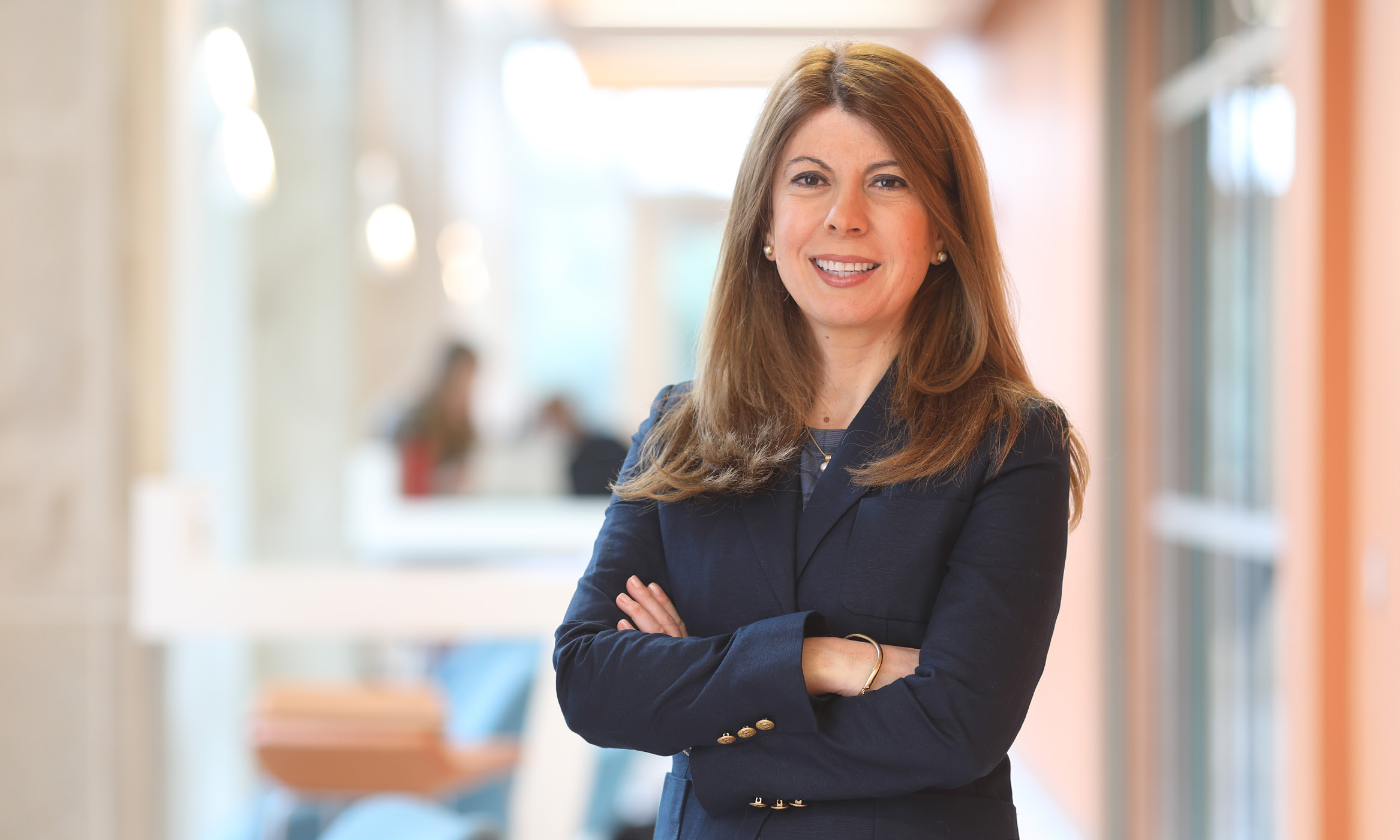
Now a leader at the University of Pennsylvania, S. Esra Sahingur, D.D.S., M.S., Ph.D. continues to carry the lessons and community of VCU’s Wright Center in her heart.
When S. Esra Sahingur, D.D.S., M.S., Ph.D., returned to VCU’s School of Dentistry in spring 2025 to deliver the keynote address at the School of Dentistry’s Research Day, she found herself unexpectedly emotional. It had been exactly two decades since she first walked through those doors as a new faculty member — a clinician-scientist balancing the competing demands of clinical care, laboratory research, and raising two young children while carving out a place in academia as an immigrant. The path forward was anything but certain.
“It was very emotional to come back,” she recalled. “I always had very good memories. I love VCU.”
Today, Sahingur serves as Associate Dean of Graduate Studies and Student Research at the University of Pennsylvania’s School of Dental Medicine, where she also holds a faculty appointment in the Department of Periodontics. She is a Diplomate of the American Board of Periodontology, Fellow of The Hedwig van Ameringen Executive Leadership in Academic Medicine® (ELAM®) program and a widely published researcher whose work has appeared in the field’s most prestigious journals with several papers making the covers of those publications. But in tracing the arc of her career, she returns again and again to her time at VCU’s C. Kenneth and Dianne Wright Center for Clinical and Translational Research, where she was a KL2 Scholar from 2013 to 2015.
“The Wright Center is always very close to my heart,” she said. “It’s not only about my academic career, but also personally. I always had a very positive relationship there; the mentorship, the friendship, and the camaraderie shaped my career and touched me both personally and professionally.”
The Bridge Between Bench and Bedside
The KL2 program — similar to the K12 award the Wright Center administers today — is funded by the National Institutes of Health through the National Center for Advancing Translational Sciences (NCATS). It provides early-career faculty with protected research time, salary support, and mentorship, all with the goal of helping young clinician-scientists cross the difficult gap between promising junior researcher and independently funded investigator.
In 2013, Sahingur made a big leap forward in crossing that gap. She was an inaugural recipient of the Wright Center’s Endowment Fund and that same year, she was awarded the KL2 grant, providing critical funding and support at a pivotal moment in her career.
For Sahingur, the timing was critical. “It is always tough to be a clinician-scientist in a clinical department; you are essentially divided into two parts,” she said. “You can’t be 100% in the clinic with your colleagues, but you also cannot be in the lab 100% of the time like our PhD colleagues.”
The awards through the Wright Center changed that equation. The grants gave her protected time away from some departmental responsibilities, funding to hire a postdoctoral researcher, and — perhaps most importantly — the institutional signal that her work was worth believing in.
“This K award helped me continue pushing,” she said, recalling the early frustrations common to junior faculty. “It gave me an incentive to know that people believed in me. I’m not alone in this.”
Two years after completing her KL2, she was awarded a $1.9 million NIH R01 grant — becoming the first Wright Center KL2 Scholar to receive a Research Project Grant from the NIH. A second grant of nearly $2 million followed soon after.
Building Bridges Across Disciplines
Beyond the funding and protected time, Sahingur emphasizes the community that the Wright Center built — the cross-disciplinary relationships that, she says, fundamentally changed how she approaches science.
“I was very fortunate to be with people who really cared and truly wanted to collaborate,” she said. Those connections led to joint grant proposals spanning the medical school, dental school, and engineering, even if some of those early efforts weren’t immediately funded.
“You learn how to communicate, how to carry yourself, and how to be open to the ideas of others,” she said. “You learn to listen and collegially come up with a final product. Even when we didn’t agree, navigating those situations was important for building my career.”
Those relationships didn’t end when Sahingur left Richmond. She is still in touch and collaborating with colleagues from various schools at VCU.
Following the Data: From Oral Inflammation to Cellular Aging
At VCU, Sahingur’s research centered on understanding the immune and inflammatory pathways that drive periodontitis — a chronic form of gum disease affecting nearly half of American adults. Periodontitis is not just a dental issue – it is linked to cardiovascular disease, diabetes, pregnancy complications and neurological and liver diseases. Her early NIH-funded work focused on TLR9, an immune receptor that, when activated by oral microbial DNA, can trigger runaway inflammation and bone loss.
In the years since, her research has followed the data — sometimes to unexpected places.
“I’ve been following the data and staying open-minded,” she said. “And stunned, honestly.”
That path has led her to one of biomedical research’s most exciting new frontiers: cellular senescence, the process by which damaged cells stop dividing but linger in tissues, quietly stoking inflammation. In aging populations, these so-called “ghost cells” (also known as zombie cells) accumulate faster than the immune system can clear them, accelerating tissue dysfunction — including in the gums and surrounding bone.
“It doesn’t take many dysfunctional cells to disrupt the entire environment—it’s a bit like a few disruptive elements in an otherwise healthy system. Even in small numbers, they can shift the balance, which is why preventing their persistence is so critical.”
In 2025, Sahingur and her team published a high-impact study in the Journal of Dental Research exploring how natural compounds called flavonoids — organic plant pigments now attracting interest from the broader aging field — may offer a way to selectively target the most harmful senescent cells without shutting down the senescence response entirely, which the body needs for wound healing and tissue repair.
In her paper, she demonstrated that an anti-senescence therapy, or “senotherapy,” consisting of an enzyme inhibitor called dasatinib and the natural flavonoid quercetin, successfully reduced these harmful cells, dampened inflammation, and mitigated periodontal bone loss in lab and animal models.
The work points toward a new therapeutic frontier: treating oral disease not just locally, but through the biology of aging itself.
“Inflammation and senescence are physiological processes, so we don’t want to shut them down entirely,” she said. That is why the research into the natural flavonoids is so promising: “we can hit those really bad actors without disrupting the system as a whole.”
Paying It Forward

Now in an administrative leadership role at the University of Pennsylvania, Sahingur has carried her experience as a mentored scholar into how she supports the next generation of clinicians and researchers.
“Leadership is not about yourself; it’s about making things right for the people who are depending on you,” she said. “Whether it’s students, trainees, faculty, or administrators, my responsibility is to make sure they’re growing and supported —because their success is the real measure of mine and that has been my philosophy.”
When asked what advice she would offer a current K Scholar navigating the pressures of early-career research, her answer was direct: don’t give up, choose your mentors carefully, and stay focused.
“Perseverance is essential,” she said. “But just as important is surrounding yourself with the right mentors—not those with the biggest titles, but those who are truly invested in developing people.”
In her case, she credits not only the Wright Center, but also the leadership within the VCU School of Dentistry and the Department of Periodontics for fostering a uniquely supportive and nurturing environment . “I was incredibly fortunate,” she said. “That level of support—and having leaders who genuinely cared about my development—made all the difference.”
Sahingur also urges early-career researchers to stay focused. “Build depth where you have data and a solid support system, secure that first grant, and then expand. Trying to do too much too soon can hold you back.”
More than a decade since Sahingur completed her KL2 and almost seven years after leaving Richmond for Philadelphia, those connections remain. “Everyone was supportive,” she said. “I always felt they had my back.”
“The science evolves, the questions change—but the impact you make on people is what lasts.” she adds.
“I’ve been fortunate to have people who believed in me at the right time—and that’s something I try to pass on every day.”
The Wright Center’s KL2 Scholar program — now known as the K12 Program — continues to support early-career clinical and translational researchers at VCU. For more information about the program, visit cctr.vcu.edu/education-and-training/kl2-program.
Categories Collaboration, Impact, KL2, Mentorship