Moving Beyond the Checklist: A New Roadmap for Evaluating the Heart of Team Science

Congratulations are in order for Dr. Debbie DiazGranados, Director of Evaluation and Team Science at VCU’s Wright Center, on the publication of her article, “Examining and Evaluating Team Science Competencies Through Sensemaking,” in the American Journal of Evaluation (December 2025).
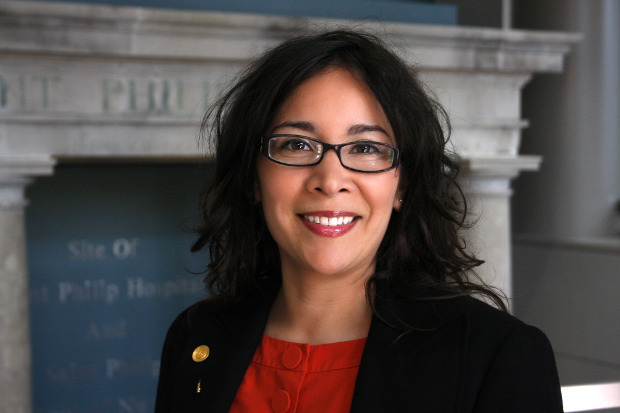
This work highlights the synergy within the Clinical and Translational Science Awards (CTSA) network and national experts in team science. The article is a successful collaboration between evaluation and team science experts at the VCU and Mayo Clinic CTSA hubs, as well as team science expertise from George Washington University.
A New Roadmap for Collaboration
Over the last 25 years, teams have become the gold standard for scientific discovery, bringing together diverse experts to solve problems no single person could tackle alone. However, while technical expertise is vital, the success of these teams depends on core “soft” competencies—such as communication, leadership, and collaborative problem-solving—that are notoriously difficult to measure.
Dr. DiazGranados and her colleagues are proposing a novel conceptual model for evaluating team science effectiveness by introducing a more dynamic way to look at these skills. “This work can provide a roadmap for how evaluators can move beyond static metrics to capture the dynamic, evolving nature of teamwork, leadership, and trust,” said Dr. DiazGranados.
To do this, the authors turn to the concept of “Sensemaking.” This is the active process where team members work together to build a shared understanding of the unknown. Rather than just following a script, teams “sense” their environment, interpret new information based on their past experiences, and turn those insights into action. This constant cycle of learning and adapting allows teams to build “frames of reference” that make them more agile and capable as their research evolves.
Rather than just checking boxes, this model helps evaluators look through different “lenses” to see the “art” of collaboration in action:
- Communication: How do team members actually share ideas?
- Leadership: How does the team navigate conflict when the plan changes?
- Trust and Affect: Is the environment supportive enough for people to take risks?
Why This Matters
For clinical and translational researchers, this isn’t just academic—it’s practical. Science is increasingly a team sport, often involving dozens of experts across different universities.
By applying a sensemaking framework, evaluators and mentors can move beyond rigid checklists to capture the nuanced, fluid interactions that actually drive successful collaboration. Ultimately, this framework serves as a vital tool for educators and facilitators as they train the next generation of “knowledge workers” to thrive in the complex, high-stakes world of modern science teams.
The C. Kenneth and Dianne Wright Center for Clinical and Translational Research at VCU is part of a premier national network of institutions dedicated to accelerating the transformation of scientific discoveries into lifesaving treatments for patients. This research was partially supported by the National Center for Advancing Translational Sciences (UL1TR002001 and UM1TR004360).
Categories Evaluation, Publications, Research