A Visionary’s Impact: Dr. Steven Woolf and the Pursuit of a Healthier Virginia

Virginia, a state rich in history and diverse communities, faces a complex landscape of public health challenges. But behind the scenes, dedicated researchers and community advocates are working tirelessly to translate data into meaningful action, shaping policies, and empowering communities to build a healthier future. We recently sat down with a leading figure in this effort, Dr. Steven Woolf, to discuss his impactful journey and vision for public health in the Commonwealth.
Dr. Woolf is the Director Emeritus and Senior Advisor for VCU’s Center on Society and Health and the C. Kenneth and Dianne Wright Distinguished Chair in Population Health and Health Equity. He has been an integral part of the Wright Center providing knowledge and resources to support the Wright Center’s mission of advancing science and foster partnerships that accelerate translational research for the betterment of human health.
Bridging the Gap: Dr. Woolf’s Research Informing Policy
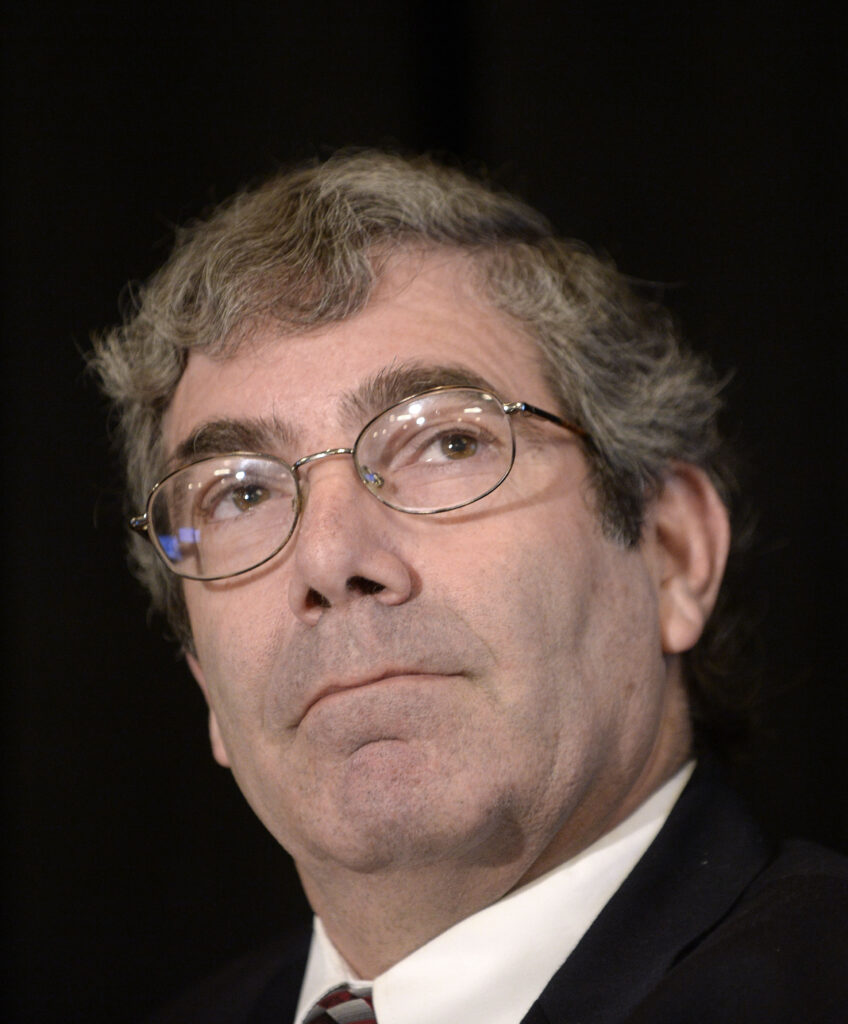
“Our philosophy has always been to meet Virginia policymakers where they are,” Dr. Woolf shared, reflecting on the mission he established when founding VCU’s Center on Society and Health in 2007. “We identify their prioritized policy questions and deliver data and scientific evidence in a format and language they find useful.” This pragmatic approach, spearheaded by Dr. Woolf, has been remarkably successful, fostering collaborations with state government, including cabinet-level officials, the General Assembly, and key agencies like the Virginia Department of Behavioral Health and Developmental Services.
The impact of Dr. Woolf’s research is tangible and far-reaching. The work of his center has provided crucial insights into critical issues facing Virginians:
- Opioid Epidemic: A team led by the Center on Society and Health’s interim director and colleague of Dr. Woolf’s, Dr. Derek Chapman, assessed the true costs of this crisis, providing policymakers with the data needed for targeted interventions.
- Behavioral Health: Chapman and Woolf led the development of a behavioral health index, a vital tool for the state’s community service boards to better understand and address mental health needs.
- Mortality Rates: Dr. Woolf documented the alarming rise in mortality rates among the state’s middle-aged White population, prompting a deeper examination of underlying factors.
- Youth Violence: Research conducted by Chapman and partners across VCU have contributed to efforts addressing the complex issue of youth violence, working towards safer communities for our young people.
Woolf’s work has been published in many journals including the Journal of the American Medical Associations (JAMA), New England Journal of Medicine, Lancet, and the American Journal of Public Health, and many others.
Deep Roots: Engaging with Virginia’s Communities
Beyond the halls of government, Dr. Woolf has made community engagement a cornerstone of his work, even publishing papers on what “authentic” engagement truly looks like. “Much of this has involved work with local residents, a focus of our work since 2011,” he explained. This dedication has brought his team into the heart of communities grappling with significant health gaps.
A powerful example of this engagement is Dr. Woolf’s collaboration with county health departments in five jurisdictions of Northern Virginia, supported by the Northern Virginia Health Foundation since 2016. “We conducted studies that raised public awareness about ‘islands of disadvantage’ in a region typically associated with affluence and good health,” he highlighted. The groundbreaking Health Places Index developed by Woolf and Chapman, a metric identifying neighborhood-level needs, has become an invaluable resource. County officials, regional planning commissions, local foundations, and advocacy organizations have used this data to make critical decisions on funding priorities, COVID-19 response plans, and housing assistance.
“Policymakers in this region now approach us for help in gathering data to address urgent questions,” Dr. Woolf proudly stated, “underscoring the unique role we play in bridging the worlds of research and policy.”
Nurturing the Future of Public Health
While Dr. Woolf has personally mentored young faculty who have gone on to become county and district health officers, he was quick to credit his colleague, Dr. Chapman, for his extensive work in training future public health professionals. A former official from the Virginia Department of Health, Dr. Chapman has mentored VDH staff and has been deeply involved in VCU’s MPH and PhD programs, which are shaping the next generation of public health leaders. VCU’s alumni are now serving communities across Virginia, other states, and even overseas, a testament to the quality of training provided.
Research at the Forefront: Addressing Emerging Challenges
Currently, Dr. Woolf’s research is focused on three pivotal areas:
- The U.S. Health Disadvantage: Exploring why Americans have poorer health outcomes compared to people in other high-income countries.
- State Policy’s Influence on Health: Examining the direct impact of state-level policies on population health.
- The Youth Mental Health Crisis: Addressing the urgent and growing mental health challenges facing young people today.
“I have always been more interested in getting this research into the hands of policymakers who can put it to use—and who do not read scientific journals,” Dr. Woolf emphasized. His commitment to communicating complex research to lay audiences and policymakers in accessible language and formats ensures that critical insights are not confined to academic circles but actively contribute to real-world solutions. This commitment extends to engaging with media outlets, whose coverage has been instrumental in broadening public awareness and attracting the attention of policymakers.
A Forward-Looking Vision: Impacting Population Health
“Throughout my career, I have tried to set my goals based on the relative impact of an issue on population health,” Dr. Woolf shared, highlighting his commitment to maximizing positive change. Looking ahead, a major focus for him will be the unique challenges presented by the recent developments of 2025, anticipating significant impacts on Virginia’s public health infrastructure, healthcare delivery for the underserved, and social services for populations that have traditionally been underserved due to federal policy decisions.
A longstanding focus of his career has been improving health outcomes for all Virginians, particularly those in communities that have historically faced greater barriers to well-being. “Continuing to address the complex societal and historical factors that influence health will require a delicate, nuanced approach in the current climate,” he acknowledged, underscoring his ongoing dedication to population health.
Dr. Woolf’s long-term vision is one of inspiration and legacy. “I hope that my work will offer an example of a user-oriented approach to research, policy development, and public service that may appeal to my colleagues in medicine and academia and to young people as they navigate their careers,” he expressed. Witnessing young researchers at national conferences employing more sophisticated methods and shaping policy in creative ways fills him with hope: “I take hope in knowing that the next generation of professionals in medicine and public health will include individuals with energy and passion to carry on this work and reach new heights.”
The Indispensable Value of Local Health Research
Finally, our conversation turned to the critical importance of local health research. “All communities face common challenges but every community is unique,” Dr. Woolf articulated. He stressed that research conducted in Northern Virginia holds limited relevance for communities on the Eastern Shore, and the key health issues in Hampton Roads are distinct from those in the Shenandoah Valley.
“The epidemiology of diseases, the availability of budgets and resources to address the health challenges, and the priorities of local residents vary across regions and communities,” he explained. This deep understanding underscores why local health research is so vital. “Communities and their leaders value local health research that takes account of these unique circumstances and feel invested in work that has involved people, organizations, and neighborhoods that they know. Research conducted elsewhere in the Commonwealth, much less in other states, is far less useful.”
The work of Dr. Steven Woolf and his dedicated team serves as a powerful testament to the transformative potential of research when it is deeply rooted in community needs and actively informs policy. His efforts are not just about collecting data; they are about building a healthier Virginia for all.
Publications of Dr. Woolf’s to highlight:
- Woolf SH, Haley A, Zimmerman EB, Krist AH. Authentic engagement of patients and communities can transform research, practice, and policy. Health Aff (Millwood). 2016 Apr 1;35(4):590-4 (PMID: 27044956) PMCID: PMC4868544.
- Woolf SH, Aron L, eds. U.S. Health in International Perspective: Shorter Lives, Poorer Health. National Research Council; Institute of Medicine. Washington (DC): National Academies Press (US); 2013. (ISBN-13: 978-0-309-26414-3).
- Woolf SH, Chapman DA, Sabo RT, Weinberger DM, Hill L, Taylor DDH. Excess Deaths From COVID-19 and Other Causes, March-July 2020. JAMA. 2020 Oct 20;324(15):1562-1564. doi: 10.1001/jama.2020.19545. PMID: 33044483; PMCID: PMC7576405.