Living History: The Ultimate Way to “Show, Not Tell”
This blog is by Richard Elliott Martin, M.A. in history May 2025.
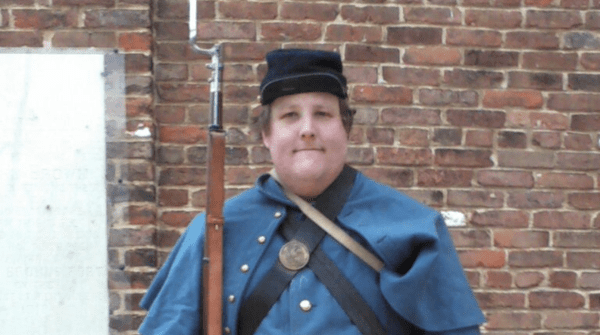
Is history a fact on a page, or is it a living, breathing thing? To me, the past is as real as the present is today, and the public historian’s role is to bring it to life. In the summer of 2021, I interned at Pamplin Historical Park & The National Museum of the Civil War Soldier in Petersburg, Virginia. While there, I learned to conduct tours and 1860s-period military demonstrations, including weapons firing and camp life presentations. In addition to these duties, I researched and archived letters and personal accounts of soldiers’ lives for the park’s Collections Department and provided guest engagement services. These experiences introduced me to the field of public history, and inspired me to pursue the Graduate Certificate in Public History beginning in Fall 2022.
To achieve a real grasp of the human past and tell its story accurately, one of the most powerful tools in a museum or historic site’s belt is living history. Distinct from the popular hobby of re-enacting historic battles, living history focuses on the day-to-day life of the average person in a historical era. When utilized in combination with artifact exhibits, presentations, and other aspects of a museum’s mission, it can bring guests into the world of the past through the senses. It can bring the past alive, make it touchable, hearable, and active. But it must be done thoughtfully, and the living historian must design his program to fit the needs of the audience.
As an undergraduate I became interested in interning at one of the many historic sites in the greater Richmond area. Pamplin Park preserves a mid-nineteenth century plantation, as well as trenches which were the site of significant fighting during the Civil War. I was fortunate to work with the Park’s Interpretation and Education department. Since the position included tours and costumed demonstrations, I jumped at the chance to dig into living history and educate the public about the experiences of common soldiers.

In fact, Civil War reenactments had been a hobby of mine since my teenage years. Enticed by the rural setting, feel of the wool uniform, sound of fire rifles and smell of the gunpowder, I had been joining the ranks of the modern-day Union and Confederate armies for years.
Thus, when I began to develop my presentation at Pamplin, I had a rich career as a reenactor to draw on, but I shadowed my coworkers to observe their presentation styles for the purposes of the museum. Two valuable lessons impacted my own work. First, audiences are most engaged in learning when people can make a personal connection to the subject. The presenter must be mindful of this and find ways to encourage audience participation. Anecdotes about troops from a person’s home state was a great way to break the ice, as was telling personal or family histories. Asking folks questions was also engaging. Second, after the introduction Pamplin provided an outline for employees to follow that could be adapted for audience needs.
Audiences often consisted of a number of people from different backgrounds, each with their own interests and questions which required me to be adaptable. Pamplin’s outline included discussion of items such as logistics, supplies, soldier’s motivations, and weapons technology, complete with a loading and firing demonstration. The latter was the most popular section of the presentation and comparing advances in 1860s weapons technology to that of modern computers demonstrated a key reason for the war’s high casualty rates- people are often slow to respond to innovations. Some guests asked questions about units or soldiers from their places of residence, and I loved answering them. Research was paramount.
The park’s presentation area included a reproduction of a Confederate winter encampment, complete with a four-man soldier’s cabin, a canvas tent, officer’s mess, and “Gideon,” the army’s wooden punishment and discipline horse. Nearby are original trenches which saw combat during the war. To supplement my presentation, I read personal accounts of the units which manned them in 1865, and also of prewar life on the original plantation.
Another duty which I particularly enjoyed was using ancestry.com to make Microsoft Excel spreadsheets of the names of soldiers who took part in the Union Army’s final assault on Petersburg. Focused on the men of the Sixth Maryland Infantry, I read scanned digitized images of original muster rolls which documented soldiers’ names, dates of enlistment and discharge, ranks, wounds received, work assignments and other data. In so doing, I enhanced the park’s understanding of the combat that took place in the area as well as my own skills in research and listmaking. Not to mention that it was particularly cool to discover the stories of hundreds of brave American soldiers.
One soldier’s story was already known to the park, and I had the additional duty of preserving and summarizing his correspondence for future researchers. In his letters home, Sgt. Andrew McCornack of the 123rd Illinois Infantry described army life in camp, his relationships with fellow soldiers, griped that he is not receiving mail from loved ones, and discussed the combat experiences which earned him the Medal of Honor. By transcribing the letters, I saw McCornack’s thoughts, actions and fears, and those of his comrades. This experience took me past the raw numbers of history and added a human element to my work.
The skills I learned at Pamplin will serve me well in the Certificate in Public History program at VCU. Through my internship, I honed my public speaking and research skills. And I gained four valuable insights: first, public records suggest the facts and data; second, personal accounts such as diaries and letters demonstrate who an individual was and illustrate their thoughts and actions; third, a presenter must refine their methods to effectively reach the public; and fourth, giving the guests the experience makes the past truly come alive. When synthesized together, these points make for an enjoyable experience for any visitor.
Categories Intern Insights