Surf Culture St. Augustine Part I: Oral History Research in North Florida’s Newest Surf Museum
This blog is by Claire Barnewolt, M.A. in History 2018.
(this post is the first of two about the opening of the Surf Culture Museum; see part II here)
In fall 2018, the St. Augustine Historical Society Research Library in North Florida, where I had conducted much of my thesis research, offered me a job as Assistant Librarian.
Several months after I began this new position, Executive Director of the Historical Society Magen Wilson came to me with an idea to begin interviewing the very first surfers we could find in the St. Augustine community. I had just taken custody of the oral history department, with the aim of organizing our current oral history tapes housed at the Research Library and recruiting and training volunteers to transcribe a backlog of oral history interviews covering twentieth century topics. Board members were conducting interviews with family friends, focusing on the local shrimping industry, World War II, and the Civil Rights struggle in St. Augustine. If we now were to focus on the history of surfing in town, something that grabbed the attention of local Flagler College students, tourists, and people who surfed or even enjoyed surf fashion, we could increase our museum demographic exponentially.

I felt comfortable conducting oral history interviews after completing Dr. John Kneebone’s graduate course on the subject and interviewing veterans in the Richmond area. I knew next to nothing, however, about surfing. This would change rapidly. I researched who would be good candidates for my first interviews and started with three people over three consecutive days: Mike “Booger” Boles (who ran a surf shop as a teenager in the 1960s), Smiley Sturgis (Booger’s closest friend and now-pastor), and Joe Boles (former mayor of St. Augustine and brother to Booger). I read up on these men, on the history and terminology of surfing, and on local surf spots and surf shops as much as I could before meeting with them. I soon realized, however, that the best information I would get in a small town such as St. Augustine was going to come straight from my conversations with the surfers themselves.
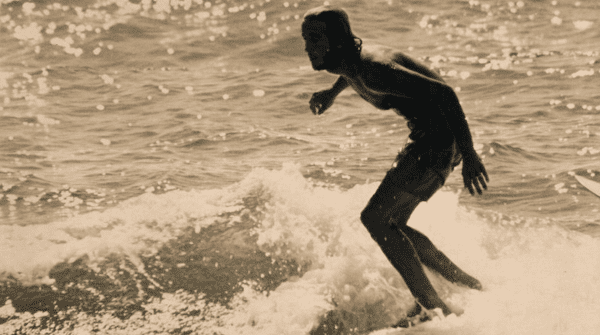
Throughout 2019 the volume of surf interviews grew. Between Magen and myself we have collected almost fifty oral history interviews. Convincing surfers to sit down with us is not always easy. We have had to earn a name for ourselves in the tight-knit surf community. Those interviews we have managed to collect have been fulfilling for us personally and for the Historical Society as an institution. Surfers have reflected upon a sport that outsiders have not always looked upon favorably. In other instances, they acknowledge the benefits they have seen in life thanks to surfing. In the words of real estate broker Pat Hamilton, “…The great thing about surfing is that really, you will go down to the bluff and one guy is an accountant and there’s one guy who’s a carpenter, and there’s one guy who’s an orthopedic surgeon, and there’s one guy who’s a judge, and there’s one guy who lays brick… And everyone has a bathing suit and surfboard and you paddle out, and the waves are good or big or small or – and it’s an equal playing field.”
Former mayor of St. Augustine Joe Boles remarked how surfing has impacted his life: “Well I think for me there’s a great deal of pride that I was so connected to the ocean.” Plenty of those we have interviewed have highlighted the connection between surfers and environmental activists. At other moments, it is just satisfying to recognize a talented surfer who feels they have been overlooked for too long. Surfing and surf culture is everywhere in St. Augustine, but Magen and I quickly realized we needed to create a specific space to amplify the voices we were hearing and reflect on the impact surfers have had on this small town.

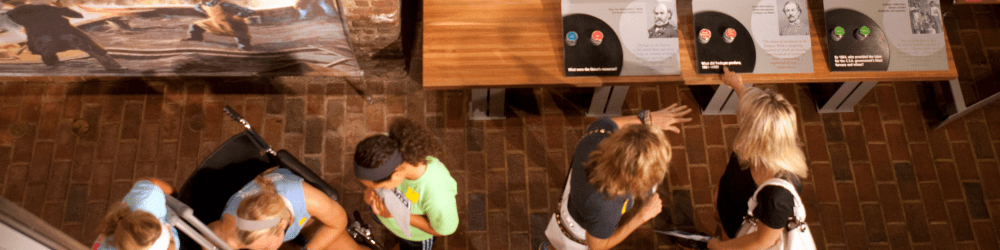
Thus came the decision to build a museum entirely dedicated to St. Augustine surf history. Our interviewees had been sharing images, trophies, competition jackets, and surfboards, so we knew the objects for such a project were out there. With Board approval and some funding, we have announced the impending opening of Surf Culture St. Augustine, a museum dedicated to St. Augustine surf history that will open in fall 2020 in the Tovar House, an eighteenth century structure on the grounds of the St. Augustine Historical Society.

The interviews we have conducted continue to drive our overall project. Names and events remembered, images and objects donated upon completion; these all point us to the topics we need to discuss in our space. We want to make this a museum about the locals. Quotations from the interviews inspire each panel. We are also going to install receivers throughout the Tovar House where museum patrons will be able to listen to fifteen or so excerpts from the interviews collected thus far. We want the people we have interviewed to enter the museum and see themselves reflected there.

As we accelerate work on the physical museum space, Magen and I have been turning our attention to object collection and writing overarching narratives, but the oral history project remains in full swing. After interviews are complete, either I or a volunteer (likely a student from Flagler College or a member of the community) transcribes the interview, marking down every word, exclamation, noise disturbance, and pause that occurred in the interview. We send these transcriptions back to the original narrator for approval. Our Chief Librarian Bob Nawrocki and Magen have spoken about compiling several of these oral history transcriptions and publishing these in a double issue of El Escribano, one of the Historical Society’s publications, within the next year or two.
Being a part of this surf project has been a highlight of my time in Florida. I have met remarkable people who have entrusted me with telling their unique stories. Although this is a local project, these surfers have traveled around the world as well, thus we have built valuable connections to St. Augustinians now in Australia and Hawaii. As we complete the museum project in 2020 I am most looking forward to bringing these surfers together in one space, a space that will reflect their own voices, their athleticism, their pride, their losses, and ultimately their love for this St. Augustine surf community. Stay tuned for a second blog post describing this event!


~Claire Barnewolt is an assistant librarian at the St. Augustine Historical Society, assistant to the collections coordinator at University of Florida’s Governor’s House Library, and the co-founder of the Surf Culture Museum. She will also start a new position with the World Monuments Fund in New York City at the end of January.
Categories Featured Alumni
Comments