Interdisciplinary studies: Designing the psychology of technology with Laura Cline
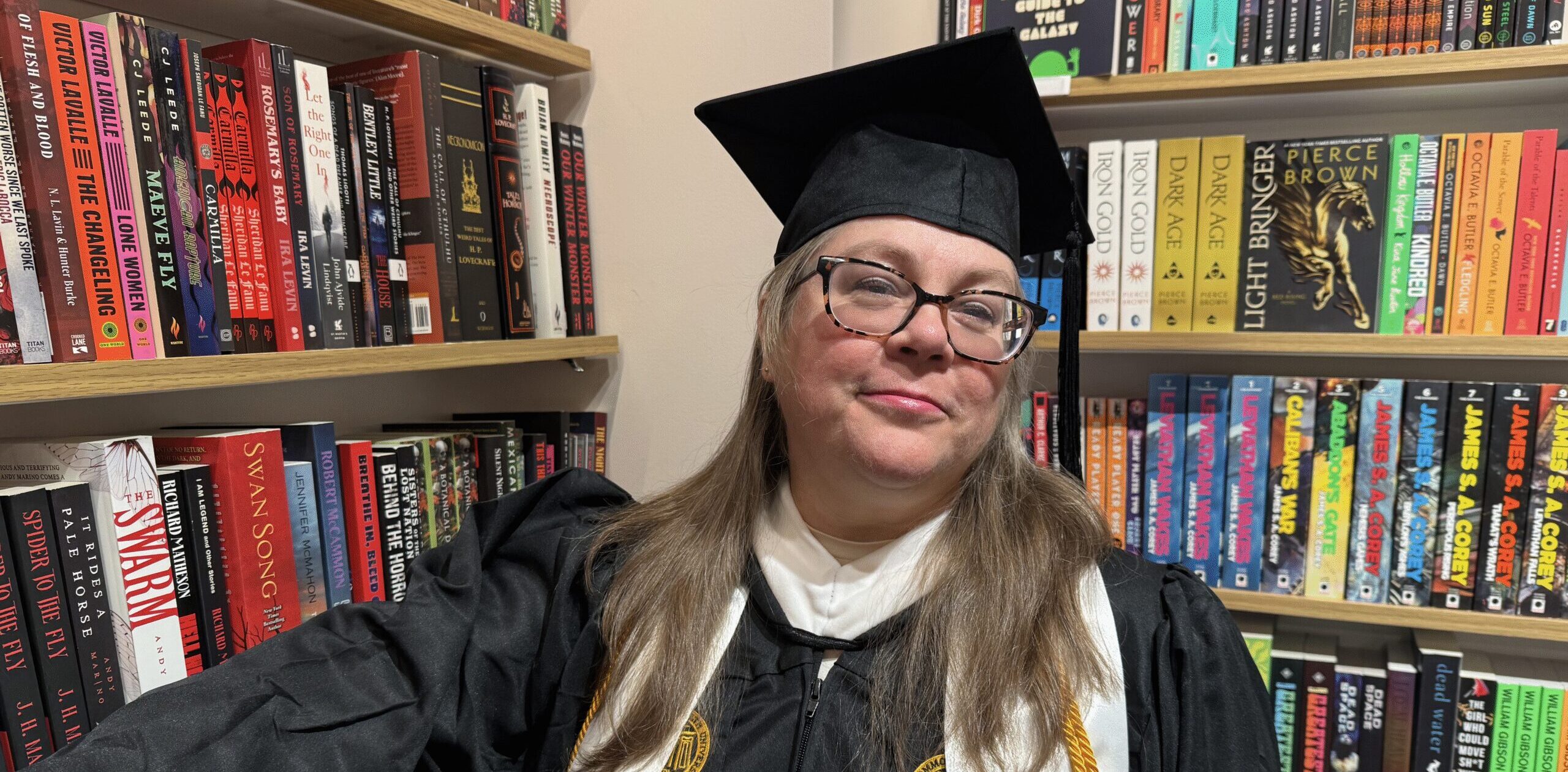
Laura Cline found her path at VCU by combining information systems and psychology to better understand how people interact with technology. A Virginia state employee and recent graduate of the Bachelor of Interdisciplinary Studies program, Clein is focused on improving usability, accessibility and data visualization through human-centered design. We spoke with Clein about tailoring her degree, applying coursework directly to her career and the impact of interdisciplinary learning.
What inspired you to pursue a degree in interdisciplinary studies?
I wanted to focus on the psychology of technology. I am really interested in using psychology to make data visualization clearer and technology more usable, especially for people with disabilities or those who face barriers to access. When I realized I could intentionally combine psychology and information systems, it felt like the right fit.
How does your interdisciplinary focus show up in your work?
A lot of it comes down to usability and accessibility. Understanding how people process information helps inform how systems are designed and how data is presented. My goal is to use psychology to make technology more intuitive and inclusive, rather than overwhelming or inaccessible.
What made interdisciplinary studies a strong fit for you?
With a traditional double major, you are often studying two subjects separately without much overlap. Interdisciplinary studies are different because the focus is on how those disciplines work together. I was able to choose psychology courses that directly supported my technology goals and information systems classes that aligned with usability and design. Everything felt intentional and connected.
How did VCU factor into your decision to enroll?
I am a state employee, and VCU offers strong opportunities for people in that position. It also has a solid reputation. At my agency, many of the interns we work with come from VCU, and they consistently arrive more prepared and knowledgeable. I wanted an education that was meaningful, not just a credential.
How were you able to apply your studies in a real-world setting?
Real-world application was one of the best parts of the program. Many of my professors emphasized projects that mirrored professional work. For my capstone, I redesigned the Virginia Department of Corrections’ bond program website, where I work as the bonding coordinator. In the coming year, the Department of Corrections’ bonding webpage will reflect changes that came directly from my capstone project.
What was the process like for designing your interdisciplinary degree?
I was talking with my advisor about how much I enjoyed information systems and how I wanted to incorporate psychology. He suggested merging the two under the umbrella of interdisciplinary studies. I did not even realize that was an option until that conversation, which really changed everything.
What advice would you give to students considering interdisciplinary studies?
Talk to an advisor. You do not know what you do not know. Once you start asking questions, you realize how flexible the program can be. It gives you the freedom to build something that actually fits your goals.
What was it like working with students from different majors?
It was fun and eye-opening. Hearing how people from other disciplines approached problems helped broaden my thinking about my own work and gave me new perspectives I would not have encountered otherwise.
“An interdisciplinary major is the secret sauce. You can literally build the degree you want.”
— Laura Cline ‘25 BIS
What’s next for you?
I want to continue building systems that prioritize accessibility, usability, and clear communication. Being able to apply what I learned directly to my professional work has shown me how powerful interdisciplinary thinking can be.
At VCU, Cline was able to tailor her education around her professional experience and long-term goals. By working closely with her advisor, she designed a personalized degree plan that integrated psychology and technology, making an immediate impact in her field.
Categories University College Newsletter