Interdisciplinary studies: Understanding the environment through creative expression with Aaron Bobb
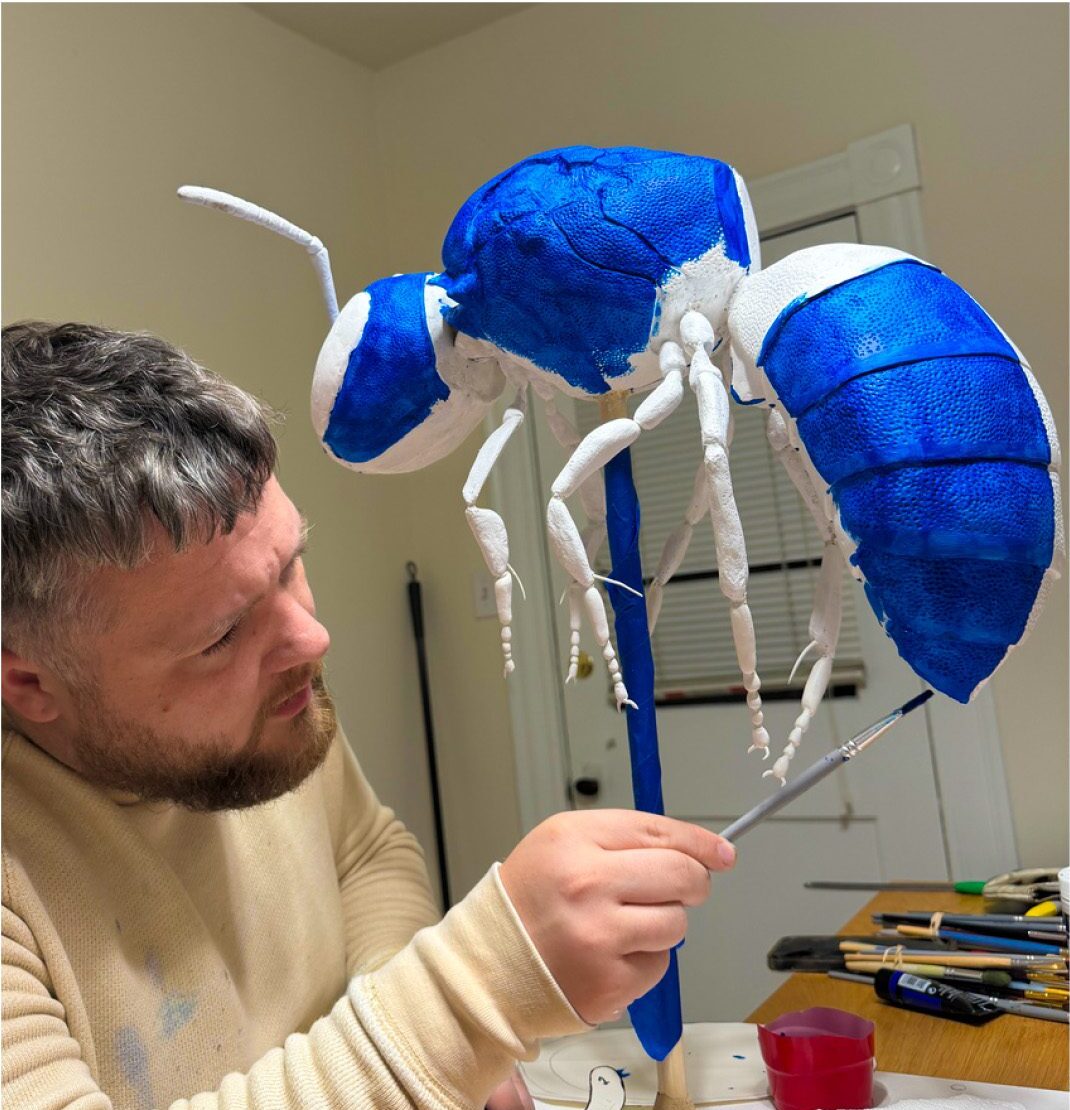
Aaron Bobb, who graduated with a Bachelor of Interdisciplinary Studies in Dec. 2025, merged science and art to develop accurate, educational insect models. Courtesy photo.
Aaron Bobb found his path at VCU by combining focus areas in environmental studies and craft and material studies to help build better insect models. We spoke with Bobb, an artist and aspiring scientist, who recently graduated with a Bachelor of Interdisciplinary Studies.
What inspired you to pursue a degree in interdisciplinary studies?
I am interested in creating anatomical models to make entomology accessible to all ages, from pre-K to entomologists looking to develop their identification skills. Science communication through creative expression is really the goal. My capstone project was to create an anatomical model of Augochlora pura, the pure green sweat bee, a common insect in the eastern United States.
How does your sweat bee model work?
There are different end goals depending on the age group. For pre-K-12, I believe that simply having something big and tangible is an effective way to engage students with the world around them. You have something blown up, and there’s something kind of magical about that.
For science professionals, the end goal is to create models that are detailed enough to identify organisms as species. Most anatomical models of insects have some accurate body parts. But when it comes to actually identifying species under the microscope, they lack the detail needed to make those distinctions. So I’d like to make models that make that more accessible by working with taxonomists and physiologists, who specialize in arthropods and entomology.
View Bobb’s Senior Capstone sweat bee model progression
What made your interdisciplinary studies program an awesome fit for you?
It’s just worked best with how I want to shape my career. I love research, but I also love exploring my creative capacity. So interdisciplinary studies are a way where I can work in tandem with people doing entomological research while also creating things that utilize my creative problem-solving skills.
Do you have any advice for students exploring an interdisciplinary studies degree?
Think about what your goal is. Take some time to reflect and understand. You don’t need to know where your future is going concretely, but figure out what drives you now and use that to determine what disciplines you want to focus on, because you may find that when you really dig down and think about what your desires are. It might end up different from what you expected.
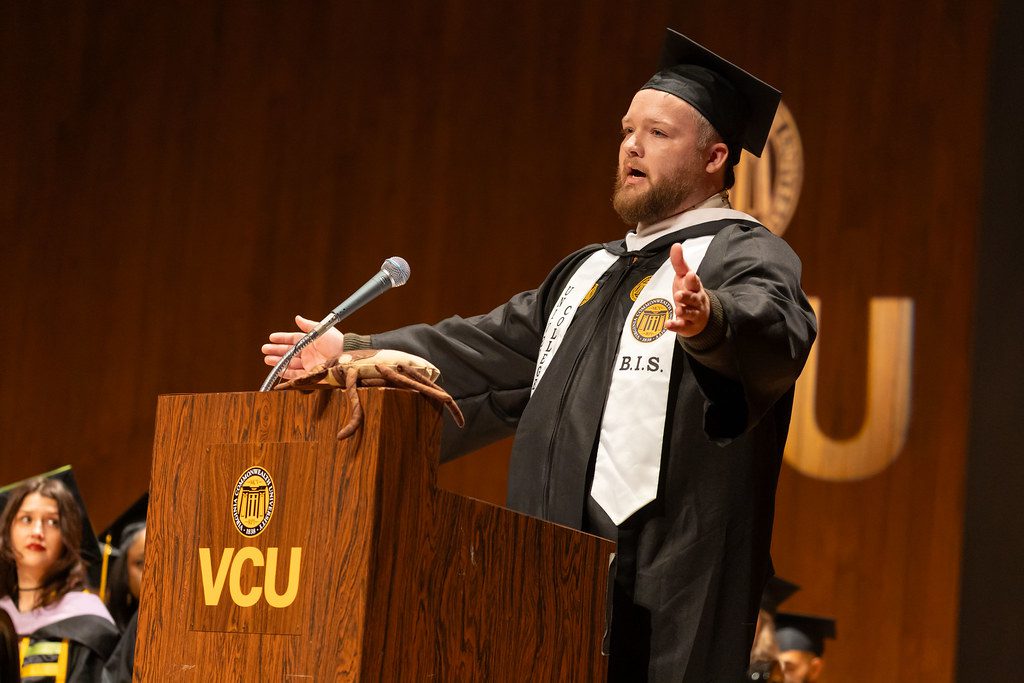
“Once you understand how these organisms work, it makes every moment you walk around the world becomes more enriching.”
– Aaron Bobb ‘25 BIS
What’s next for you?
I’d like to continue my work and then get these anatomical models in classroom settings to see how they affect both information retention and classroom engagement. I’m applying for some grants to keep my project going. I’m moving to Oregon this summer to work at some vineyards doing grape harvesting, meet entomologists out there and then, probably next year, go to grad school.
Tell us about your favorite part of your studies at VCU?
Looking at things under the microscope — I don’t know if fun’s even the right word. It’s awe-inspiring. Seeing the detail of insects in person is just absolutely mind-blowing. Once you understand how these organisms work, it makes every moment you walk around the world becomes more enriching.
At VCU, Bobb was able to tailor his education to his unique goals and experiences. Working closely with his advisors, he crafted a personalized degree plan drawing from programs across the university.
Learn more about the Bachelor of Interdisciplinary Studies program
Categories UC News, Uncategorized