The earliest intervention: Augmentative and Alternative Communication
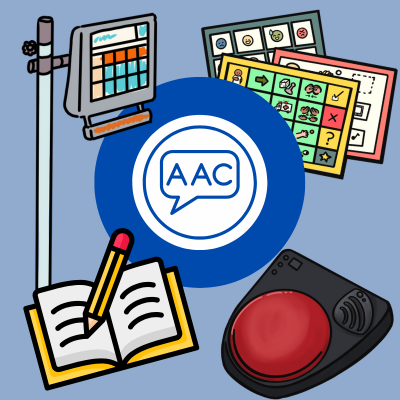
Augmentative and Alternative Communication (AAC) has often been seen as a last resort for individuals with complex communication needs (CCN). Many people think there’s a specific order of tools to try before moving on to high-tech AAC systems. However, things are changing with the rise of iPads, user-friendly communication apps, and a wealth of research supporting early AAC use. More educators and families recognize the benefits of introducing AAC to children with CCN before they reach school age. This leads us to an important question: can using AAC during early intervention improve communication skills for these kids?
Research focusing on children aged 24 to 60 months suggests that starting AAC early can lead to better vocabulary development and improved outcomes. Studies have found that kids who use AAC in their early years learn more spoken words and engage better with their peers. For instance, when children with Autism Spectrum Disorder (ASD) see their friends using AAC in shared activities, they become more active in social interactions (Bourque, 2020). Plus, AAC doesn’t deter speech development in kids with developmental disabilities (Walters et al., 2021). Providing AAC to children who aren’t speaking yet actually supports their speech and language growth.
One of the great things about AAC is how it helps kids express themselves. It can take the pressure off spoken language, especially for children who have trouble with speech sounds (Navarro et al., 2020). When AAC is woven into specific interventions, the results can be quite positive and even necessary for success.
The impact of early AAC goes beyond just communication skills; it significantly fosters social and emotional development, too. By enabling meaningful interactions with peers, AAC can reduce frustration and challenging behaviors that come from communication barriers. Kids using AAC often gain confidence and independence, allowing them to share their thoughts and feelings more easily. This emotional growth is important for building relationships and navigating social situations not just in childhood but throughout their lives.
In school, AAC can boost classroom participation and learning opportunities. Research by Beukelman and Light (2020) shows that using AAC during those crucial early years doesn’t stop kids from developing their speech; instead, it can enhance their overall communication skills. This means children with CCN can fully participate in the same learning experiences as their peers.
The benefits of early AAC don’t just stop when preschoolers enter the classroom. Research shows that those who received AAC support early on enjoy better educational opportunities, improved job prospects, and more active community participation. These advantages contribute to a higher quality of life, proving how essential AAC promotes lifelong communication development.
References
Beukelman, D. R., & Light, J. C. (2020). Augmentative & alternative communication: Supporting children and adults with complex communication needs (5th ed.). Paul H. Brookes Publishing.
Bourque, K. S. (2020). Peer-mediated augmentative and alternative communication for young children with autism spectrum disorder and limited to no spoken communication. Perspectives of the ASHA Special Interest Groups, 5(3), 602–610. https://doi.org/10.1044/2020_persp-20-0001
Fäldt, A., Fabian, H., Thunberg, G., & Lucas, S. (2020). “All of a sudden we noticed a difference at home too:” Parents’ perception of a parent-focused early communication and AAC intervention for toddlers. Augmentative and Alternative Communication, 36(3), 1–12. https://doi.org/10.1080/07434618.2020.1811757
Light, J., & McNaughton, D. (2015). Designing AAC research and intervention to improve outcomes for individuals with complex communication needs. Augmentative and Alternative Communication, 31(2), 85–96. https://doi.org/10.3109/07434618.2015.1036458
Navarro, I. I., Cretcher, S. R., McCarron, A. R., Figueroa, C., & Alt, M. (2020). Using AAC to unlock communicative potential in late-talking toddlers. Journal of Communication Disorders, 87(87), 106025. https://doi.org/10.1016/j.jcomdis.2020.106025
Walters, C., Sevcik, R. A., & Romski, M. (2021). Spoken vocabulary outcomes of toddlers with developmental delay after parent-implemented augmented language intervention. American Journal of Speech-Language Pathology, 30(3), 1023–1037. https://doi.org/10.1044/2020_ajslp-20-00093
If you have questions about AAC or want to learn more, please visit the AAC tab of Virginia’s Assistive Technology Network’s website or contact Lauren Whitlock, ([email protected]), Program Specialist T/TAC at VCU.
Categories Assistive Technology, Autism Spectrum Disorder, Intellectual Disabilities