Understanding and addressing internalizing behaviors: A guide for educators
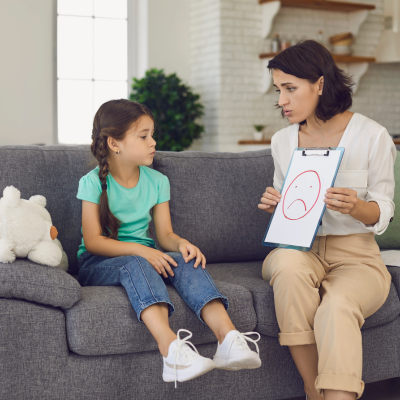
Part One: What are internalizing behaviors?
Mental wellness plays a crucial role in students’ academic success and emotional well-being. Research indicates that around 20% of children and adolescents grapple with mental health disorders. Alarmingly, one in ten children faces mental, behavioral, or learning challenges that hinder their ability to function effectively in both school and community settings (Kern et al., 2022). According to Whitney and Peterson (2019), about 16.5% of the school-age population have been diagnosed with a serious mental health disorder. Many students deal with co-occurring issues such as ADHD and anxiety (Kelchner et al., 2019; Lambros et al., 2016). Internalizing behaviors, including depression, anxiety, and suicidal thoughts, often go unnoticed; yet they can significantly disrupt a child’s learning journey (Liu & Lewis, 2011).
Certain groups of students face specific mental health challenges. For example, Hispanic students report higher levels of anxiety and depression but often receive lower-quality mental health services (Guo et al., 2017). Additionally, Black students may avoid seeking help due to concerns about discrimination (NAMI, n.d.). Those from low-income families and single-parent households are particularly affected by limited access to mental health resources (Kelchner et al., 2019). Female students and high achievers may conceal their struggles, while children with disabilities often face social isolation, exacerbating their mental health issues (Weist et al., 2018; Santiago et al., 2014).
Recognizing internalizing behaviors is crucial for providing effective support. Research shows that youth exhibiting externalizing behaviors are more likely to receive mental health services than those with internalizing issues (Weist et al., 2018). Key symptoms of internalizing behaviors include:
- Social withdrawal and isolation
- Poor academic performance
- Frequent visits to the school nurse
- School refusal
- Signs of anxiety and depression
- Somatic complaints (physical symptoms without a clear medical cause)
- Overperformance or perfectionism
- Behavioral changes
- Expressions of low self-worth
- Emotional distress
- Pessimism and low self-esteem
- Difficulty in problem-solving (Hendron & Kearney, 2016; Hubbard et al.; Kern et al., 2022; Weist et al, 2018)
Educators should closely observe symptoms of internalizing behaviors and work to build trusting relationships with their students. This approach encourages open discussions about mental health which are crucial for early identification and intervention. By promptly recognizing and addressing these behaviors, educators can create safer and more supportive learning environments for all students.
Stay tuned for next month’s article, “Part Two: Practices to support youth with internalizing behaviors.”
References
Guo, Y., Rousseau, J., Renno, P., Kehoe, P., Daviss, M., Flores, S., Saunders, K., Phillips, S., Chin, M., & Evangelista, L.S. (2017). Feasibility of an emotional health curriculum for elementary school students in an underserved Hispanic community. Journal of Child and Adolescent Psychiatry, 30(3), 133–141. https://doi.org/10.1111/jcap.12185
Hendron, M., & Kearney, C. A. (2016). School climate and student absenteeism and internalizing and externalizing behavioral problems. Children & Schools: A Journal of the National Association of Social Workers, 38(2), 109–116. https://doi.org/10.1093/cs/cdw009
Hubbard, G., Woods-Giscombe, C. L., Hageman, A., & Vimba, N. (2018). Innovative clinical training site for psychiatric mental health nurse practitioner students: Elementary school-based group therapy (Manuscript ID UMHN-2017-0143). Issues in Mental Health Nursing, 39(4), 357–361. https://doi.org/10.1080/01612840.2017.1406021
Kelchner, V.P., Perleoni, M.K., & Lambie, G.W. (2019). An investigation of change: Elementary students with an individual education program participating in a school‐based mental health counseling intervention. Journal of Research in Special Educational Needs, 19(4), 325–333. https://doi.org/10.1111/1471-3802.12451
Kern, L., Weist, M.D., Mathur, S.R., & Barber, B.R. (2022). Empowering school staff to implement effective school mental health services. Behavioral Disorders, 47(3), 207–219. https://doi.org/10.1177/01987429211030860
Lambros, K., Kraemer, B., Wager, J. D., Culver, S., Angulo, A., & Saragosa, M. (2016). Students with dual diagnosis: Can school-based mental health services play a role? Journal of Mental Health Research in Intellectual Disabilities, 9(1-2), 3–23. https://doi.org/10.1080/19315864.2015.1091055
Liu J., Chen, X. & Lewis, G. (2011). Childhood internalizing behaviour: Analysis and implications. Journal of Psychiatric and Mental Health Nursing 18(10), 884–94. https://doi.org/10.1111/j.1365-2850.2011.01743.x
National Alliance on Mental Illness (n.d). People with disabilities. National Alliance on Mental Illness.
Santiago, C. D., Raviv, T., Ros, A. M., Brewer, S. K., Distel, L. M. L., Torres, S. A., Fuller, A. K., Lewis, K. M., Coyne, C. A., Cicchetti, C., & Langley, A. K. (2018). Implementing the bounce back trauma intervention in urban elementary schools: A real-world replication trial. School Psychology Quarterly, 33(1), 1–9. https://doi.org/10.1037/spq0000229
Weist, M.D., Eber, L., Horner, R., Splett, J., Putnam, R., Barrett, S., Perales, K., Fairchild, A.J., & Hoover, S. (2018). Improving multitiered systems of support for students with “internalizing” emotional/behavioral problems. Journal of Positive Behavior Interventions, 20(3), 172–184. https://doi.org/10.1177/1098300717753832
Whitney, D.G., & Peterson, M.D. (2019). US national and state-level prevalence of mental
health disorders and disparities of mental health care use in children. JAMA Pediatrics,173(4):389-391.
For more information, contact Kristen O’Sullivan ([email protected]), Program Specialist, T/TAC at VCU.
Categories Autism Spectrum Disorder, Behavior, Inclusive Practices, Intellectual Disabilities, Uncategorized