Addressing brain injury: HERO Study offers hope for concussion sufferers
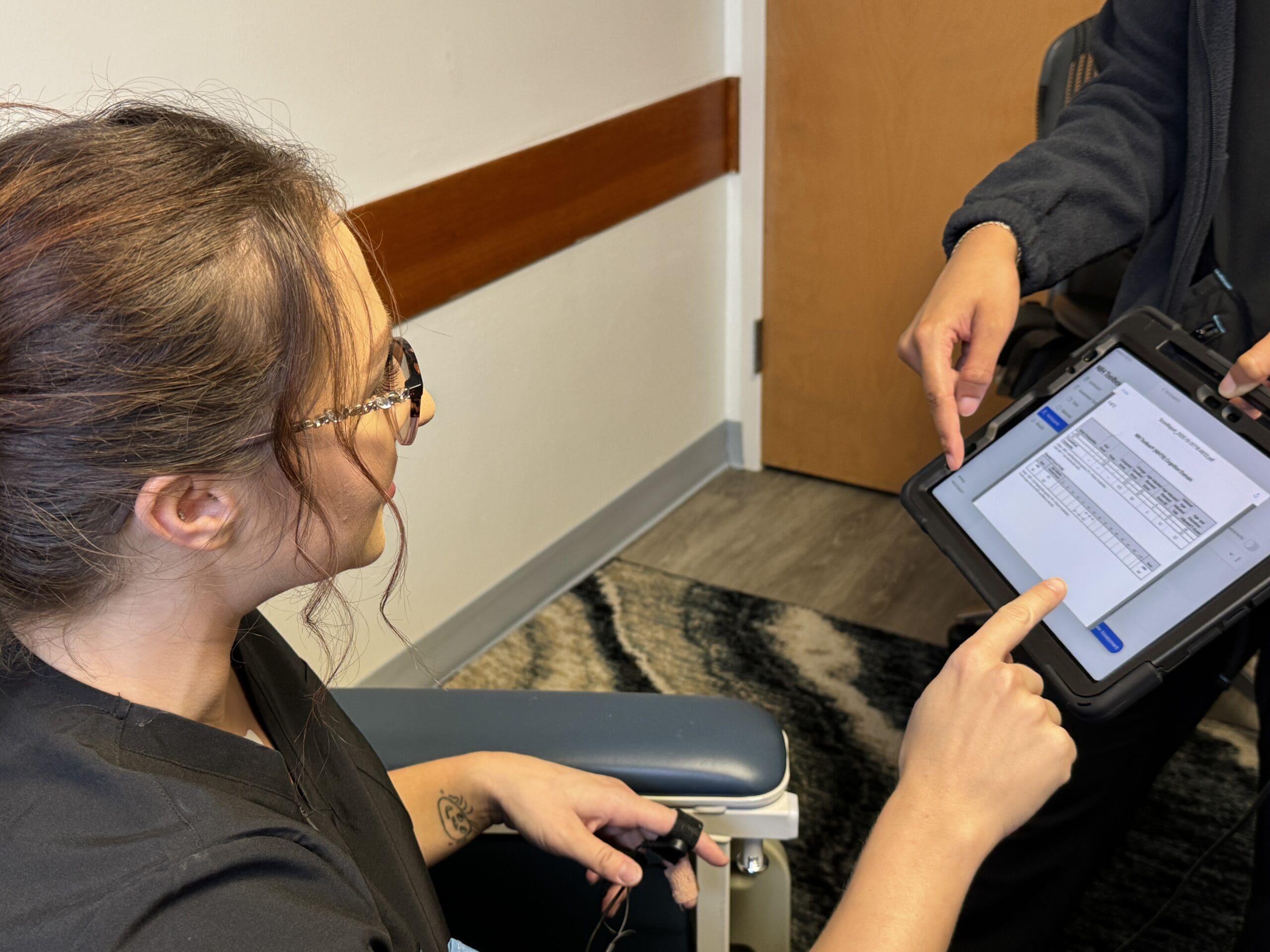
Few treatments currently exist for people suffering from long-lasting effects of a mild traumatic brain injury (mTBI), also known as a concussion. James Burch, Ph.D., a professor in VCU’s School of Public Health, and William Walker, M.D., a professor in VCU’s School of Medicine, are leading a study to address this problem head-on.
The four-year study, announced last year and funded by the Department of Defense (DOD), tests how a treatment called Heart Rate Variability (HRV) Biofeedback may help service members suffering from long-term symptoms after a mTBI relative to the usual care that these patients receive. Military service members face an especially high risk of concussion from blasts or other service-related injuries, which makes finding a solution an urgent issue for military readiness and long-term health.
These post-concussion symptoms are distressing and can significantly interfere with daily functioning, work, and relationships. The DOD funds studies like the HERO study to better understand and manage conditions affecting service members and veterans, but the findings have the potential to benefit a much wider population, including athletes and people who experience concussion from accidents or everyday activities.
“Currently, proven treatments for people suffering from many long-lasting concussion problems and symptoms are very limited,” said Jennifer Weggen, Ph.D., a clinical research scientist on the study and U.S. Navy Veteran. “Patients are often told that they need to learn to live with their condition and cope with the symptoms.”
This study is noninvasive and does not involve taking medication. Instead, participants try to learn and practice new ways to self-manage their concussion symptoms. Even if they don’t benefit personally, findings could advance concussion treatment research and help others.
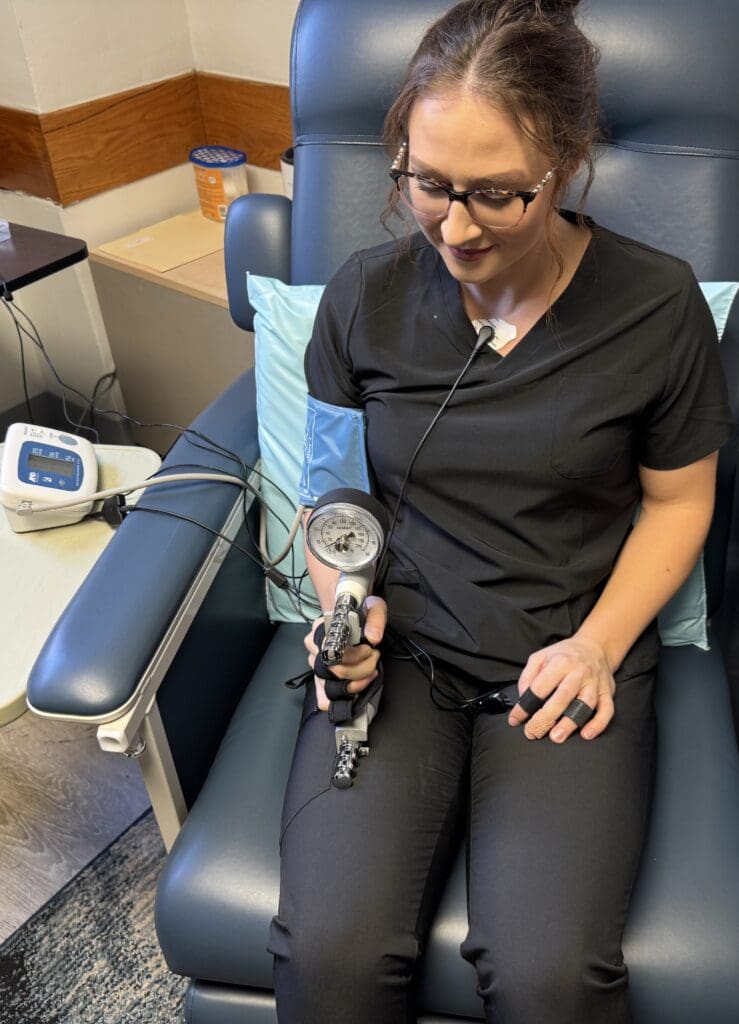
A typical in-person HERO session is tailored to each participant. Some metrics like heart rate and blood pressure will be measured during the visits. From there, participants will take one of two tracks. Those in the HRV biofeedback group will work with a coach on a special breathing technique using biofeedback equipment to show how their breathing affects their nervous system.
The other group will be taught practical, science-based information on stress and well-being, and have opportunities for discussion and tips to take home to their daily life. This is the psychoeducation group. Both groups leave each session with personalized guidance and tactics to continue to try at home.
“Participants in the HRV biofeedback group practice guided breathing for 5–10 minutes twice a day,” explains Meghan Varner, P.T., D.P.T., a HERO study interventionist. “Those in the psychoeducation group will receive a stress-reducing squeeze ball, and will be able to review and reinforce what was learned in the sessions, finding ways to use those strategies in their daily routine.”
The biggest challenge right now is recruiting for the study. While the results have the potential to benefit a wider population, the study is currently focused on military veterans and service members. Much of the treatment can be done at home in just five to ten minutes each day, and there are weekly, in-person training sessions as well. The study takes place over 11 weeks with nine in-person visits in Richmond, Virginia.
“Talking about the importance of clinical research in general and how it benefits the community can help normalize participation and reduce hesitation,” said Urenna Orazulike, B.Sc. M.S., a study coordinator at VCU.
When people speak openly about what is involved in a study and the impacts of participation, it can help more people understand the value of clinical research. In addition to privacy concerns or mistrust in health care professionals, barriers like taking time off work for the study or making time to complete the at-home portions of the study reduces the pool of potential participants.
“These factors make recruitment challenging, but they also highlight why building trust, reducing barriers, and meeting prospective participants where they are is essential to the success of the HERO Study,” explains Bret Brooks, C.C.R.P., the team’s senior clinical research coordinator.
Interested? Visit Hero-study.org to learn more.
Categories Grants and Funding, News, public health research