Planning a HEETF Purchase? Contact Procurement Services Early
The Higher Education Equipment Trust Fund (HEETF) helps VCU departments purchase equipment for instruction and research. If your department is planning a HEETF-funded purchase, Procurement Services encourages you to reach out early, especially for specialized equipment, high-dollar purchases, or items with long delivery times. Why start early? Some equipment purchases require competitive solicitations, supplier coordination, […]

Explore the New Procurement Services Website During Today’s Office Hours
VCU Procurement Services invites faculty and staff to join today’s Procurement Office Hours, Tuesday, Oct. 20, from 1 to 2 p.m., for a review of our updated website. The session will highlight the website’s features, navigation and resources designed to help the VCU community find procurement information more easily. Attendees will have an opportunity to […]

Savoring the Selection: America To Go Vendor Showcase Comes to MCV Campus!
Following a successful kickoff at Monroe Park Campus, VCU Procurement Services is bringing Savoring the Selection: America To Go Vendor Showcase to MCV Campus on Monday, November 2! Whether you’re planning a department meeting, staff appreciation lunch, or campus event, finding the right catering options just got easier. Through VCU’s America To Go e-catalog, faculty […]

Using Placeholder Requisitions to Request RFPs and Other Solicitations
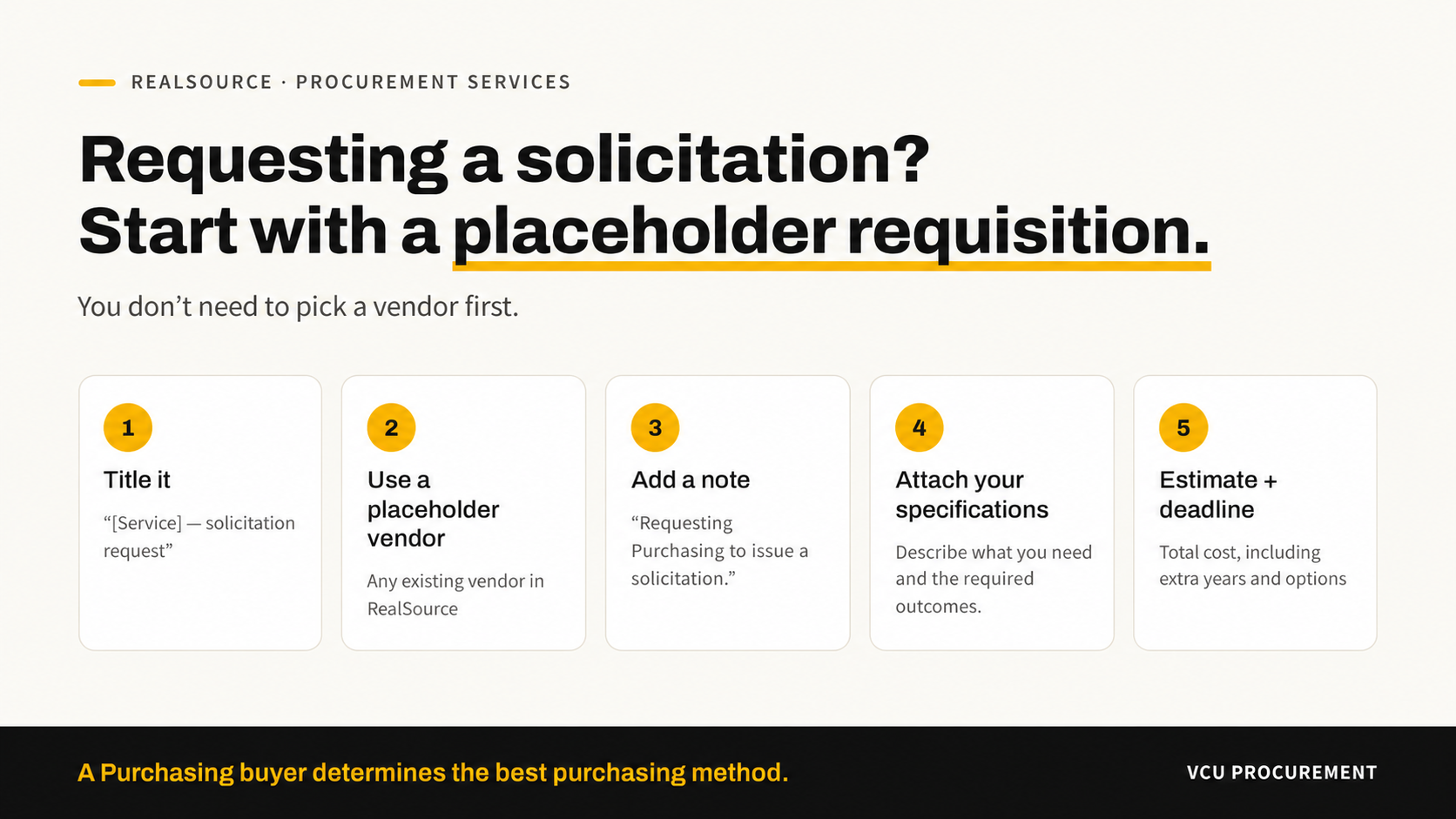
If you need Purchasing to run a competitive solicitation, such as an RFP, start by submitting a requisition in RealSource. You do not need to select a vendor first. Why a requisition comes first A requisition is your request for Purchasing to begin work. It is not a solicitation or a purchase order. It gives […]
Keeping Purchase Orders on Track When Work Changes
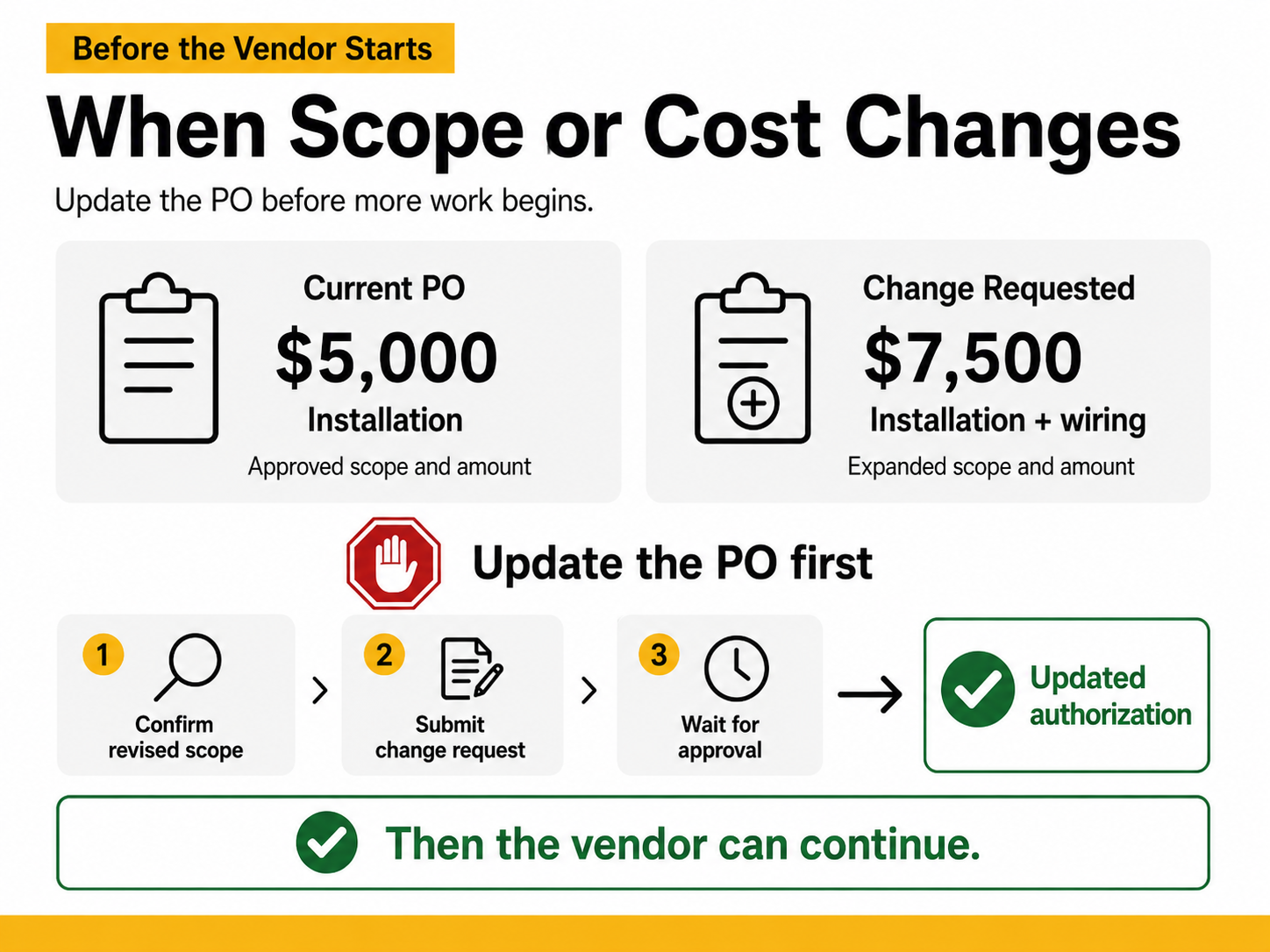
When the Scope or Cost Changes, Update the PO First. Having a purchase order does not mean a vendor has unlimited authorization to continue working. The PO covers the approved scope and amount. If either changes, address the change before the vendor performs the additional work. A common example A PO is issued for $5,000 […]
Before the Vendor Starts: Five Things to Check
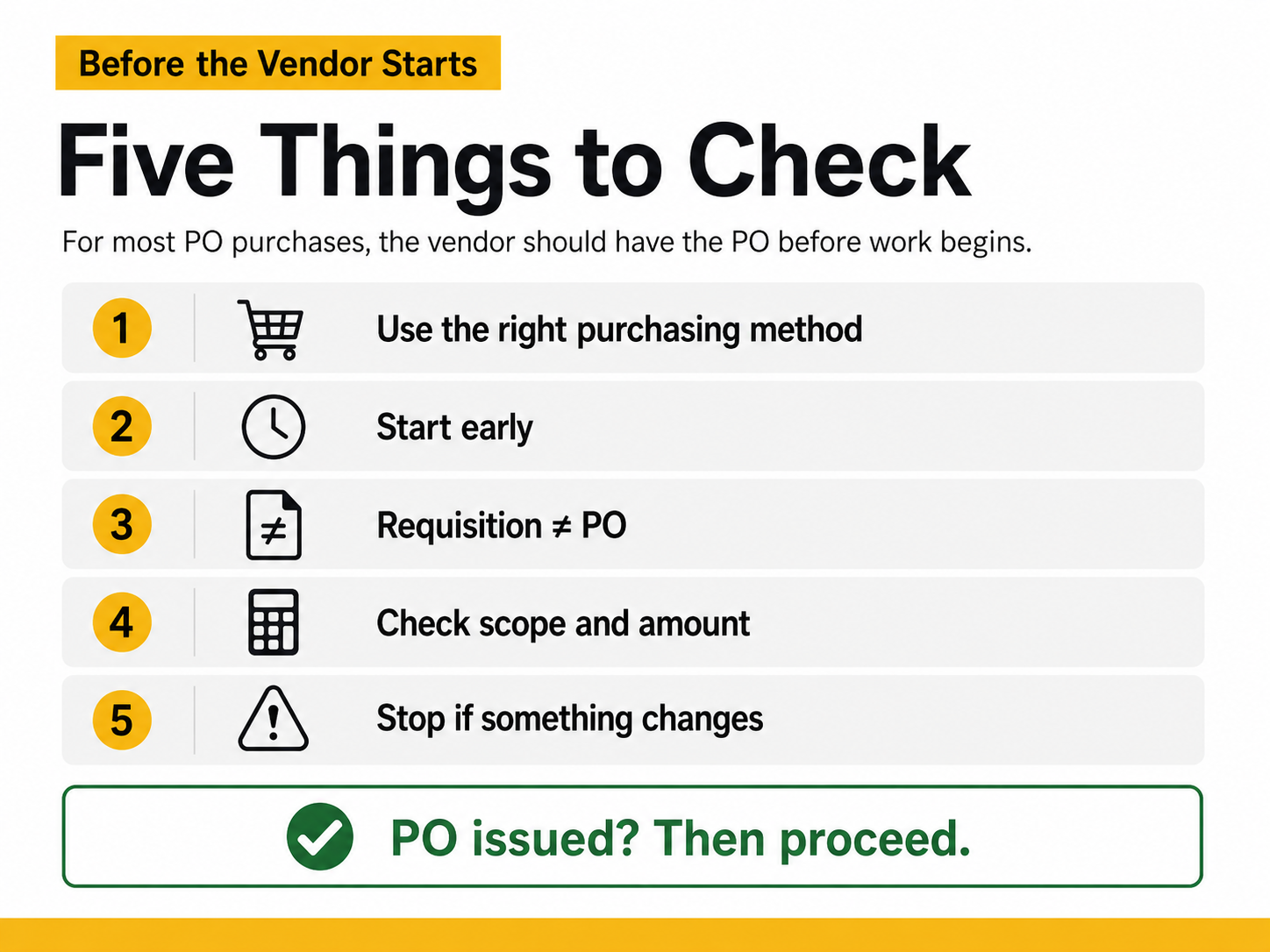
Before telling a vendor to begin work or place an order, make sure the appropriate VCU purchasing method is approved and in place. For most purchases requiring a purchase order, that means the vendor should have the VCU PO before work begins. Five quick checks Why this matters Getting the purchasing process completed first gives […]
Before Engaging a Firm and Authorizing Work to be Performed
A purchase order or signed agreement may not be the only step required before a firm begins work. Contractor work can trigger access, data, technology, insurance, VCU Facilities Management review, and compliance reviews. Identify those needs before services begin. Identify early whether the contractor will: Reviews that may apply Depending on the engagement, VCU may […]

Why After-the-Fact Purchases Create Problems
When a vendor starts work before the appropriate purchasing method is in place, the problem often shows up later—when the invoice arrives. Without a valid purchase order, the invoice may not have the information needed to route and match correctly in Digital Mailroom (DMR). That can leave Accounts Payable trying to determine who ordered the […]

How to Make Common PO Changes in RealSource
The correct process for changing a purchase order depends on the type of PO, whether invoices have been processed, and what needs to be updated. Common changes Use a Change Request to: For an index, account code, or accounting change, do not simply overwrite accounting on a line with prior activity. Reduce the original line […]

Why the PO Date Matters for Early Payment Discounts
Early Payment Discounts (EPDs) help VCU stretch its purchasing dollars by allowing certain vendors to accept slightly reduced payments in exchange for faster payment than the standard 35-day terms. The program usually runs smoothly, but questions often arise during vendor transitions—when a vendor is added to or removed from the program. EPD terms follow the […]