
At VCU, impactful innovation follows multiple paths
Here is how researchers turn inventions into ventures — and why industry and government are taking notice.
At Virginia Commonwealth University (VCU), groundbreaking ideas are moving beyond the lab and into the world through a growing culture of innovation and entrepreneurship. Researchers and faculty at VCU are turning discoveries into real-world ventures by collaborating across disciplines, securing patents and startup licenses, and participating in programs that help transition inventions into commercial and societal impact. Below are two College of Engineering researchers that are drawing attention from industry and government while creating pathways for inventive ideas to make a tangible difference, with the help of VCU’s TechTransfer and Ventures.
Nasal models designed tools for drug makers
3DInhale, a VCU-born startup founded by mechanical and nuclear engineering professor Laleh Golshahi, Ph.D., is transforming respiratory drug development with anatomically realistic nasal airway models. Built from commuted tomography (CT)-derived geometries across age groups, the platform enables precise, region-specific deposition analysis that traditional in vitro tools cannot match. “Our goal is to look at where the drug lands in the nose, because the location of delivery can determine how well the treatment works and how easily patients can stick with their treatment plan,” Golshahi said. 3DInhale’s models can help manufacturers de-risk drug formulations, strengthen generic drug applications and accelerate innovation.
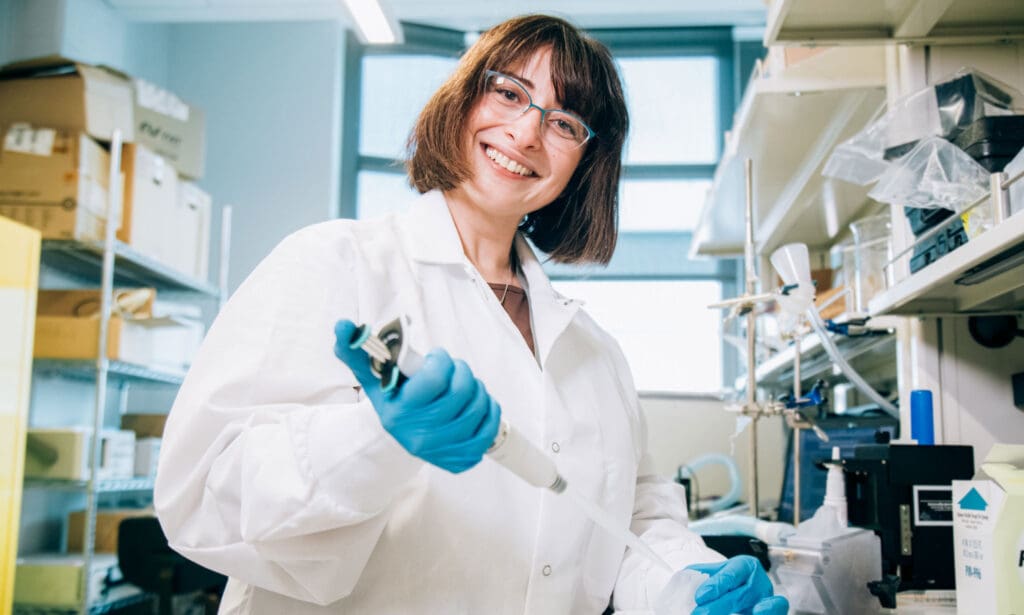
Laleh Golshahi, Ph.D.’s startup 3DInhale is researching and developing anatomically realistic nasal airway models. Photo by 3DInhale.
Advancing lifesaving aerosol therapy
VCU’s Innovators of the Year for 2025, the School of Pharmacy’s Michael Hindle, Ph.D., and College of Engineering’s P. Worth Longest, Ph.D., have collaborated for nearly 20 years on aerosol-delivery methods for treating neonatal respiratory distress syndrome. Their work is supported by the National Institutes of Health and the Food and Drug Administration, funding everything from next-generation aerosol therapies to new inhaler testing methods, 3D-printed airway models and open-source computational tools that help pharmaceutical companies design generic inhalers more efficiently.
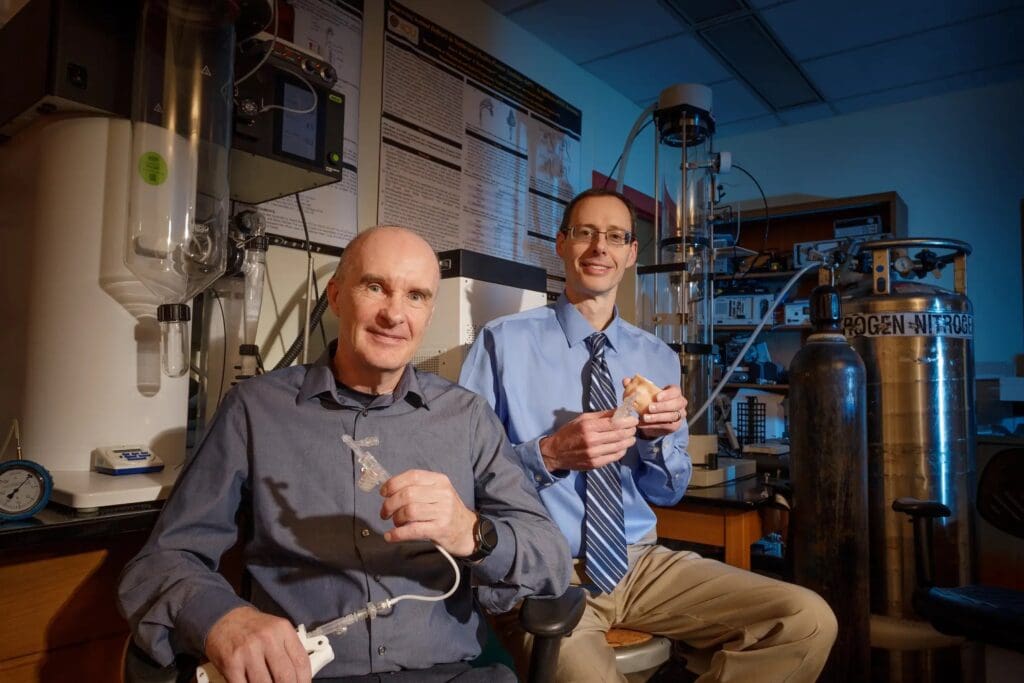
VCU’s Innovators of the Year for 2025, the School of Pharmacy’s Michael Hindle, Ph.D., and College of Engineering’s P. Worth Longest, Ph.D. Photo by Karl. E. Steinbrenner.
Categories General College