‘I’m supposed to be here’
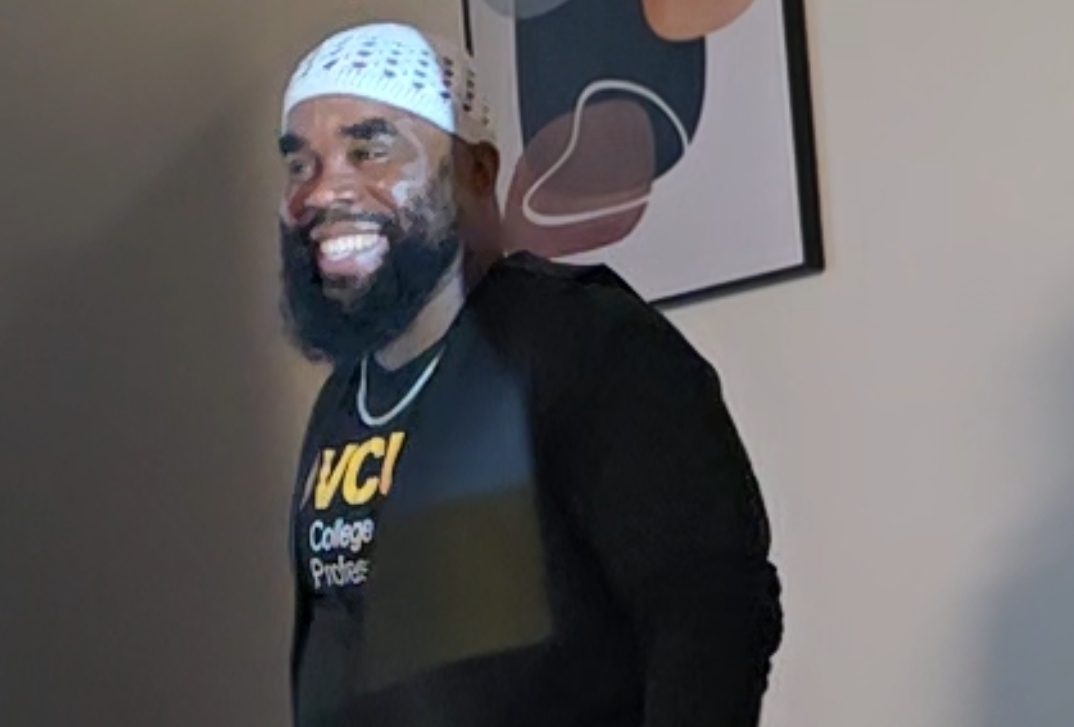
As a teenager, Azeem Majeed received two life sentences without parole. He entered prison with no hope of ever coming out.
Majeed was impacted by alcohol addiction—a major factor that led to the crimes he was convicted of as a minor—and struggled with gambling. But his incarceration became his first step on a path to recovery.
“When I entered into recovery, I stopped everything—I stopped drinking, I stopped smoking,” he says. “After hitting rock bottom and losing everything, I was left to deal with myself in a sober state. I knew that I deserved better than what the life of addiction gave me, so, I chose the life of recovery.”
This September Majeed celebrated the four-year anniversary of his release after serving 26 years. Majeed was the first Virginian to be resentenced after the Supreme Court ruled that mandatory life sentences for minors were unconstitutional. After a subsequent parole hearing, he was granted release at age 43.
Since his re-entry, Majeed has continued to help others in their recovery with a particular focus on the corrections community. He supports other formerly incarcerated people as they transition back into the community and frequently presents on his experience. He recently spoke at the 5th Annual Returning Citizens Booster Luncheon hosted by the League for Safer Streets.
Majeed also became a certified peer recovery specialist and is the lead CPRS for the Virginia Partnership for Gaming and Health. In addition, he’s a trainer for various CPRS endorsement credentials, a Certified Recovery Support Supervisor, an International Gambling Recovery Specialist, and an adult mental health first aid trainer.
This fall, he is piloting a training to help his colleagues educate corrections staff and support incarcerated people.
“For so long, people who are incarcerated and have a gambling addiction can catch an institutional infraction. They are penalized for their gambling,” he says. “We want to bring awareness so incarcerated people can seek treatment, while they’re in or when they leave. There are a lot of crimes that are motivated by gambling. If they haven’t received treatment for their gambling addiction, it can lead to increased recidivism. We’re trying to stop that.”
Here, Majeed talks about his own story of recovery and why he’s making it his life’s work to help others.
What were some of the biggest factors in your recovery?
One of the biggest impacts was losing everything—my mother, my freedom, just the normal life opportunities that a child goes through. I knew that I deserved better than what the life of addiction gave me. I chose to drink, I chose to gamble, but I didn’t choose to be addicted to drinking or gambling. But recovery is something that I chose, and when I realized that I had the power to choose that path, I started walking it.
The second thing is that along my journey of recovery, I had people who believed in me. I knew that I deserved more than this, but I didn’t arrive at that understanding on my own. That true belief came from people outside of me pouring into me and saying, “You are valuable. You are more than this.” I started living by this principle, “Never accept anything that you deem yourself unworthy of receiving,” and I knew that I was worthy of receiving a life of recovery and everything that came along with it.
When you meet someone who’s just beginning to reach out for help, how do you connect with them in that first moment?
In order to be heard, you must first listen. It doesn’t matter what level they’re at in their recovery journey—wherever they’re at, I meet them there. I listen and I receive. And when the opportunity presents itself, I let them know that I’m just like them. I talk to them about the power of choosing their narrative, the type of story that they want to have. I explain that they can have a story of addiction or a story of recovery, and that’s a choice that no one can make but them.
What led you to work in peer recovery?
I actually started while I was incarcerated, about six or seven years in. But when I started, I struggled to reveal that part of myself. Talking about what I struggled with coming up, my addiction, I felt like it made me less than or too vulnerable. I didn’t interpret vulnerability as a power or freedom. But at some point, I told someone my story and I saw how medicinal it was to them and how healing it was for me to utilize the very thing that caused me the most pain to bring about hope and healing for other people.
Why is that always something that I guess you felt called to do?
[I like to say] I’m not supposed to be here, but I’m supposed to be here. I had a sentence that took away my hope. But I made a vow when I entered the Department of Corrections that if I was ever given my first opportunity to be free out in society as an adult, that I would spend the rest of my life giving back to my community, just like the people who believed in me when I was at my lowest point. When someone reaches out, I try to be for them exactly what I needed when I was in that space.
Categories Uncategorized