VCU Broadens AI Education Through Applied Learning and Access
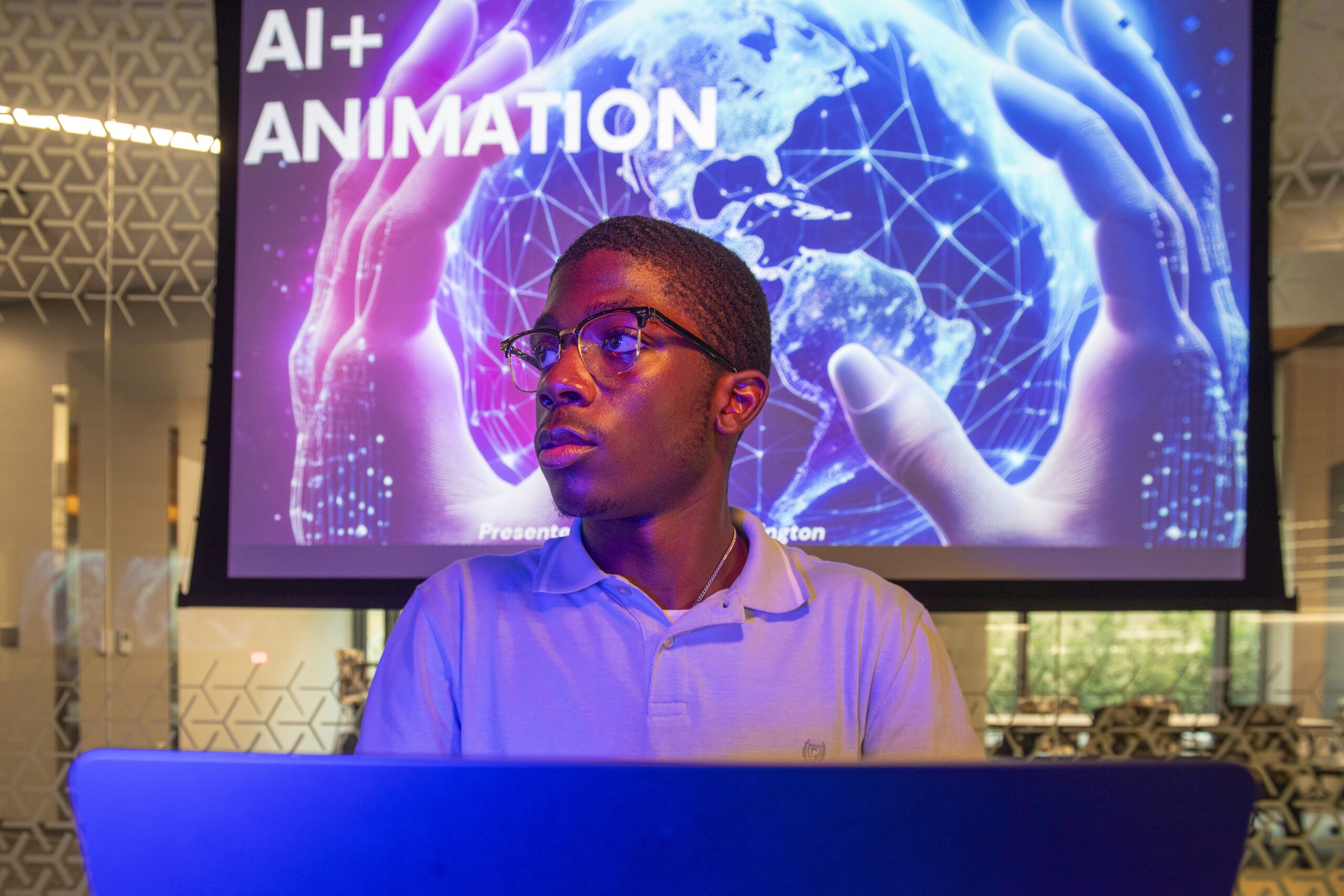
VCU is expanding artificial intelligence education across campus as part of a broader effort to ensure students of all majors graduate with the skills and literacy needed to navigate an increasingly AI-driven world. University College plays a central role in this work by advancing applied, accessible learning opportunities that connect AI understanding to real-world use.
A recent Commonwealth Times article outlines how VCU is honing its approach to teaching AI skills and literacy through coursework, faculty innovation and community partnerships. A collaboration with AI Ready RVA, a Richmond nonprofit focused on AI education, research and innovation, supports workforce development and regional growth while emphasizing inclusive and responsible use of emerging technologies.
AI literacy at VCU is defined as understanding what artificial intelligence is, how it functions at a high level, how it is embedded in everyday tools and how to use it ethically and effectively. University leaders and faculty stress that AI education should not be limited to technical disciplines but integrated across fields to prepare students for a rapidly evolving job market.
“Although an AI course is not required for graduation, VCU encourages students at all levels to enroll in one if possible,” said David Slipher, director of communications for VCU University College. “VCU faculty are integrating AI throughout their courses to ensure that students have broad exposure and preparation in their disciplines.”

VCU currently offers an artificial intelligence minor through the School of Engineering, along with AI-focused coursework in programs such as computer science, mathematics, statistics and data science. At the same time, faculty across the university are incorporating AI topics into nontechnical courses, examining how these tools intersect with ethics, philosophy, communication and creative work.
One example highlighted in the Commonwealth Times article is a philosophy course taught by associate professor James Fritz that explores the ethical implications of artificial intelligence. Students examine how AI shapes decision-making, labor, privacy and social values, encouraging critical thinking alongside technical awareness.
University College advances this work through initiatives aligned with its mission of access, flexibility and career relevance. The Practical AI minor, housed within University College and open to students of all majors, emphasizes hands-on experience with AI tools and applications across fields such as communications, business, health care and the arts. Rather than focusing solely on coding, the program centers real-world use cases, ethical considerations and workforce readiness.
In addition to the Practical AI minor, University College supports interdisciplinary and applied learning experiences that help students build confidence using emerging technologies. These opportunities connect academic learning to evolving professional expectations while reinforcing responsible and thoughtful engagement with AI.
As artificial intelligence continues to transform industries and redefine workplace skills, VCU’s universitywide approach ensures students are not only exposed to new technologies but equipped to understand their impact. Through faculty-driven innovation and University College’s focus on applied learning, the university is preparing students to adapt, lead and think critically in an AI-enabled future.
This story originally appeared in The Commonwealth Times. Read more here.
Categories Uncategorized