Alumni Spotlight: Deo Mujwara, Ph.D. ’21
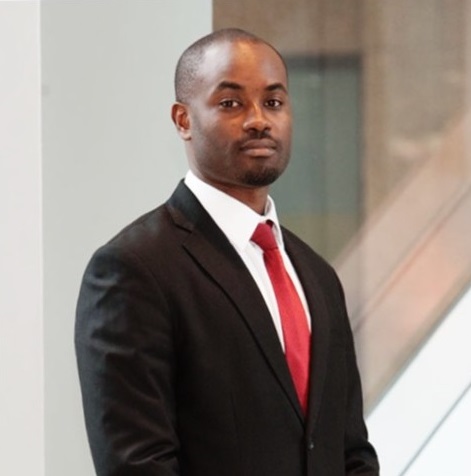
Deo Mujwara, Ph.D. ’21, is an alum of the Healthcare Policy and Research Program within the Department of Health Policy. He is currently an associate with the Boston-based Analysis Group, specializing in Health Economics and Outcomes Research. Coming from an economics and statistics background, Dr. Mujwara was drawn into the health care policy field when he took a health economics class while studying for a Master’s Degree in Economics. This led him into the detailed study of cost effectiveness analysis that resulted in his dissertation and still greatly informs the work he does today. For Dr. Mujwara, the Healthcare Policy and Research program was instrumental in preparing him for the work he does today – in a variety of ways.
Tell me about your current job. What do you find most rewarding about it?
Currently I’m an associate, mainly [doing] economic consulting, for Analysis Group. It’s based in Boston, but we do have quite a number of other offices across the country as well as outside the country. I do quantitative analysis, proposal writing, statistical analysis, and plans for different projects that we get, mainly in health economics and outcomes research. When I was in the Ph.D. program, I mainly worked on cost effectiveness analysis. I do quite a lot of that, economic modeling, surveys… anything related to health economics and outcomes research.
Is this your first position after finishing the Ph.D. program, or have you had other roles in the interim?
Starting a few months before finishing the Ph.D. program, I worked for a startup company called Allelica. It’s a genetic software company, and I was mainly doing economic evaluations for the genetic testing kits that they had. I worked there for a year, and after one year, I moved to Analysis Group.
How did your education in the HCPR program prepare you for what you’re doing now?
My background was mainly in economics and statistics, so when I joined the Healthcare Policy & Research program, I didn’t have much information about the health care system or even health care in general. I was really a beginner in the health care field, so I learned quite a bit, specifically the economic evaluation part. I was a TA for Dr. Kimmel, who was also the chair of my dissertation. My dissertation (“Cost-effectiveness of Alternative HIV Testing Strategies Among Hard-to-Reach Populations in Eastern and Southern Africa”) was all about cost effectiveness analysis, and with Allelica, where I started working, I was mainly doing economic evaluations and cost effectiveness analysis. So the skills that I got from the PhD program were directly transferable to the job that I immediately got, and even right now to the job that I’m currently doing. I use a lot of economic evaluations and of course other aspects of the program – writing, doing research in general. It was really helpful.
If you were coming from more of an economics/statistics background, what drew you to this particular Ph.D. program in health care-related concerns, rather than somewhere else economics-related?
When I came to the US, I didn’t have a full understanding of how important health care is. During my Masters program in economics, I took a health economics class that talked about a little bit of health care. And looking at how important having good care is in other aspects of your life, and how expensive it was in the US — a lot of bankruptcy because of medical bills — there were a lot of inefficiencies in the health care system. Which we still do have, of course. I was much intrigued why such an evolved country would still be having challenges like that. The resources to address those challenges seemed to be plentiful. So I was triggered into understanding more. I didn’t know how much I didn’t know, and there was a lot of information. So that’s where the interest came from, and when I joined the program, it seemed the right path to take for my career.
How do you feel like what you do today built on your dissertation and the other work you were doing?
As I said, the dissertation was mainly on cost effectiveness analysis. It was really helpful to work together with Dr. Kimmel throughout my program, [because] that’s also the area she specializes in. At Allelica, they really wanted someone who knew about Markov models and could do cost effectiveness analysis. That was exactly what I did for my dissertation, so it was easier for me to even do the interviews. They were asking questions regarding what they really wanted, [which] was specific to what I did. I would say that the skills that I got from the program really helped me transition from being a student to my current career. At Analysis Group, it has been a bit of what I had before and also what I’m currently learning. Being a consulting firm, we’re not always going to be getting work in a specific area. We get a lot of work in other areas as well. But still, the skills you get from the program are not just the subject matter. There are presentation skills, you get to understand the broader aspect of the health care system in the country, you also get to do research and presentations. All of those things come together to help you. In my case, in my current workplace, the program really helped significantly.
What would you tell current HCPR students based on your current perspective?
Joining the program without any background in health care, for me, felt like it was a good thing. You come with an open mind, and the program has a lot of experienced faculty, the classes are smaller, and you get one on ones with your advisor, so you really get to understand a lot more than being in a program that has a lot of students. Being open minded, I think, is the first thing you have to have. There’s so much to learn out there, so you don’t want to come with a closed mind. Of course, if you have a specific interest you want to study, that’s OK, but being open-minded is really great. At least, it worked for me.
Secondly, at least before you finalize your comps, it’s really good to narrow down what you’re interested in. If you wait too long, sometimes it becomes really hard to get a topic for your dissertation, and it can be very frustrating to even have a proposal that can be accepted. I know these seem to be opposite kinds of advice – be open-minded, but at the same time be specific on what you want later on – but I feel like once you reach the middle of the program, it’s better to try and narrow down. Also, it’s helpful to leverage what you’re doing as a graduate assistant. If you have an opportunity to be working with a professor who is somewhat in line with what you’re interested in, you already have a lot of background information, and are able to articulate your research question so well. That’s really helpful. The dissertation is not for doing your best work ever, but doing something you think is useful but at the same time is manageable to be accomplished.
What do you know now that you wish you knew when you started the HCPR program?
If I knew how important collaboration is, it’s something I should have done earlier in the program. I’m seeing now that you can’t know everything, and there are so many people who are willing to help. So putting yourself out there, attending conferences even if you don’t have a presentation to make, attending other people’s presentations, and putting yourself out there is very, very important. That’s not something that I did. I was mainly focused on doing classes: if there’s an assignment, get it done. If there’s something needed, make sure you’ve done it. But doing much more than that, people knowing the kind of work you’re doing, what you’re interested in… There are so many people who are always willing to help, so the more you put yourself out there, the more chances of you getting what you need, and the help coming much easier than you would have thought.
Outside of the academic field, what are your hobbies, pastimes, and passions beyond your work?
I’m a huge soccer fan, so I enjoy watching soccer. I enjoy playing it; I’m definitely not as good as I wish I would be, but playing soccer is one of the hobbies that I have. I also help students who are in Uganda who are interested in coming to the US to do their Masters or their Ph.D. learn how to navigate the schools and programs. I do that on a person-to-person basis, it’s not like a big organization, but I do reach out, and some of them reach out to me. I try to help with something — at least tell them what they need, how to look for different schools that may be appropriate to them based on their interest, how to study for GRE if it’s needed, or even how to choose between GRE and GMAT. I’m not very active, I wish I could give more time, but I try to do that as well.
Was there anything else you wanted to discuss that we haven’t touched on already?
No, I think you’ve covered everything regarding the program. I wanted to thank you for reaching out, and I wish all of the students in the program the best. I think the program is really good. It’s very small and very intentional, and I think all my other colleagues that I studied with, and even others who finished before and after, seem to be pursuing areas of their interest and doing well, so I think the program has contributed a lot to us.
Categories Alumni news