Alumni Spotlight: Carrie Dolan, Ph.D. ’17
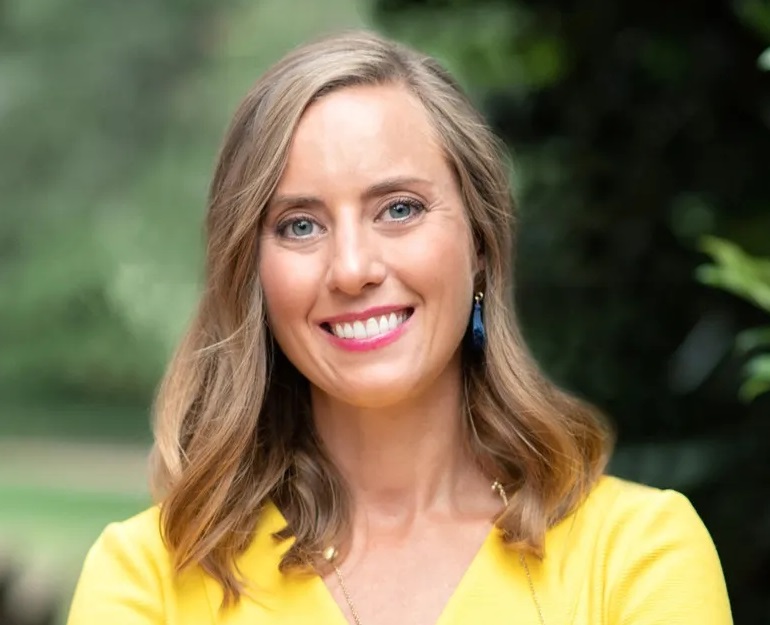
Carrie Dolan, Ph.D. ’17, is an alum of the Healthcare Policy and Research program within the Department of Health Policy. She is currently an Associate Professor in the Department of Kinesiology at The College of William & Mary, and is the director of the Ignite research lab. A veteran of the Peace Corps and AmeriCorps, Dr. Dolan is strongly committed to the idea of community across the globe. During the course of her investigation into health care issues around the world, she’s traveled everywhere from Botswana to Jamaica. Indeed, she’s so well-traveled that she was named a Fellow of The Explorers Club. Her research focuses on the effective, efficient, and equitable distribution of global health resources, especially among women and children, and she hopes for her work with Ignite to “ignite change by providing greater health services for global communities.” Dr. Dolan spoke extensively with us about what she learned from her time in the HCPR program, and all of the ways that work carries forward into the work she’s doing today.
Tell me about your role at The College of William & Mary and what you find most rewarding about it.
I’m an associate professor of health sciences at William & Mary and I direct a global health research lab called Ignite. One thing I really like about William & Mary is that a multidisciplinary approach is encouraged. That was part of my training when I was at VCU. It was heavily focused on economics but also public health, and I had a geography piece to what I did. And at William & Mary, that kind of framework is encouraged. I also really enjoy working with our students. It’s exciting to me to integrate undergraduate students into the kind of work I do.
Tell me about Ignite. What’s the basic purview?
We’re focused on working with community partners, so every research project we take on has a really strong in-country community partner, and that partner has a question they want answered. Usually that question is how they can get the biggest return on investment for some sort of limited health funding that they have. So we look at how resources are allocated: the effectiveness of those resources — if they’re doing what they’re supposed to be doing; the equity of them — if the people are getting them that need them; and the efficiency — which is cost-benefit/cost-effectiveness analysis.
It seems like this follows on with the work you were doing in your dissertation (“Health Aid In Africa: Placement, Service Utilization, and Benefit”).
It’s the same kind of thing — figuring out how to get the most possible out of limited resources for global public health.
I saw on your LinkedIn that you’re an Explorers Club 50 Fellow. What does that involve?
I got that honor in 2023. The Explorers Club says I’m one of the 50 people changing the world to know in 2023.
Oh, that’s pretty cool.
Yeah, it is cool. [The Explorers Club] is a network of people who are doing non-traditional research. I’m an Explorers Club Fellow, which means there’s a research element to what I do, and [I’m] working in areas where people haven’t worked before. It integrates me into a network of other researchers. I have a project in Kenya that I did this summer, and I actually reached out to my Explorers Club network and had a photojournalist come do a digital chronicling of our work, which was really cool. I don’t have a lot of pictures of the kind of work I do, because I’ve always been nervous about the journalistic integrity of those images. It was nice to be able to collaborate with someone in that network who knew how to do that as a career.
I noticed that you had parts of your dissertation that dealt with Malawi and Democratic Republic of Congo. Have you been to those places?
No. Part of what I try to do is leverage existing data sets — using information that’s already out there and combining them in new ways to get answers to questions people have. It’s a lot cheaper to do it that way than going in-country and doing primary data collection. I intentionally didn’t go to those countries to make a point about how we could use secondary data effectively, and collaborate with in-country partners. I was in AmeriCorps and the Peace Corps, and that really served as a foundation for the questions that I ask, the research I do, and how I approach it. I have gone to Africa many times – Ghana, South Africa, Botswana; Kenya six or seven times. I started learning Spanish last year at William and Mary. I’m trying to transition to doing more projects in Central and South America because of the accessibility. At William & Mary, including undergrads is really important, so if I have projects in Central or South America, then we could go over spring break or over winter break. Africa is limited to the summer.
How did your education in HCPR prepare you for all the things you’re up to now?
My education gave me a foundation for what I want to do. The whole framework of effectiveness, efficiency, and equity came out of my coursework at VCU. Learning to write in a way that’s clear, precise, and concise was a big focus of my coursework, and I still use that every day. I got really rigorous methodological training, particularly in econometrics. I still use that all the time. Another thing is funding. When I was there, writing rigorous funding proposals that had likelihood of getting funded by NIH and NSF was really important. We did that quite a bit, and I got a lot of feedback. I’ve realized since I was at VCU how lucky I am to have that kind of training. I had really great mentors when I was at VCU. Andrew Barnes was my advisor, and he was exceptional. He created a space for me to flesh out these ideas of what I wanted to do moving forward. And as you mentioned, I’ve been building on that since. I think it served as a really strong foundation for my research background, which I’ve been able to continue to build on after I left.
It looked to me like you went straight from graduating from the HCPR program to your role at William & Mary. Is that accurate?
Yeah, I got a tenure-track position straight out of the VCU program. I got tenure the year before last.
What was it like transitioning immediately from the doctoral program to being a professor, and how do you think your work at HCPR prepared you for that?
I didn’t know how lucky I was to have the time to do research all the time. When you’re a Ph.D. student, that’s your job: to do research projects, and focus on them. When I started my tenure track position, there was a teaching component that I had to grow into. I really enjoy teaching, and it was something I was intrinsically motivated to learn how to do, and do well, but I had to adapt to be able to do teaching, research, and that service commitment piece, which is important. I think VCU prepared me really well for the research piece. They were gearing me towards going to a big R1 research institute — which William & Mary is now, but we have a different kind of teaching focus than existed at my Ph.D. level.
How much teaching do you do in your current role?
Two classes in the fall, two in the spring, which is pretty typical for all tenure track faculty at William & Mary. I have about 150 to 200 students every semester, so I’m doing a lot of teaching and mentoring.
Is that undergrad and grad students?
We don’t have a graduate program, so these are all undergrad. It’s just a different kind of focus. But I really like working with the undergrads. William & Mary undergrads are highly capable, and they’re great research partners. I find it really exciting to have the opportunity to interact with these people when they’re 18 to 22. They’re forming ideas about what they want to do in the next stage of life, and it’s exciting to be part of that process. You definitely see them shifting and changing ideas about what they thought they were going to do when they came into college, and what they want to do after, based on their interactions with the kind of work we do in Ignite.
What would you tell new HCPR students from your current perspective?
[Laughs] Andrew [Barnes] told me this, and I say it almost every time anybody asks me this question. What I would tell them is: what they’re doing isn’t their magnum opus. It’s not the greatest piece of work they’ll ever produce. If your Ph.D. project is the best thing you ever do, there’s kind of a problem with that. They should give themselves the permission and the flexibility to do the best that they can do, but also know that there’s going to be an opportunity to continue to grow and develop beyond that, into the researcher that they want to be. I was really caught up in things being perfect, and I wanted things to be right, and absolutely the best, which was hard. I wish I had understood that this was just a stepping stone to the next thing. My dissertation doesn’t define me as a researcher, but it definitely is what got me this job, which created this space for me to figure out who I was as a researcher. The best is yet to be, I guess. [Laughs] That’s how I look at it.
What do you know now that you wish you’d known at the start of the HCPR program?
I wish I would have understood that a lot of the things that faculty were telling me were things that I could consider adopting. Every researcher has a different approach, and I wish I had been more curious about how those faculty were doing different things, and why. As a student, I just took everything they said as fact. I wish that I would have been more open and curious to how they set up their labs, how they organized their workflow, what projects they took and didn’t take, which were funded and which weren’t, and why they made those decisions and tradeoffs. [Being] more curious about their process would have helped me figure out my process. But I was looking for the right way to be a researcher. That’s what I would go back and tell myself – just be intellectually curious. Take what you like and leave the rest out of it. What they’re trying to do is help mold you into the best researcher you can be, but you’re not going to look just like them. Just like everybody else looks slightly different. You take the lessons that they’re teaching you and then figure out how that works for you in your own research.
What are your hobbies, pastimes, and passions outside of your career?
I scuba-dive, I like to hike a lot… I just hiked the Haute Route that goes from Chamonix, France to Zermatt, Switzerland. I’m going to hike to Machu Picchu in the spring. I like to run a lot, I run every day. I’m a big outdoorsy kind of person.
Is there anything else you feel that we should cover that we haven’t touched on?
I just am really grateful for the lessons I learned while I was in the department. I feel like I got really strong training and resources that have set me up for success in the rest of my career. I’m appreciative of all the faculty for all the time, energy, and dedication that they put into who I am.
Categories Alumni news