Alumni Spotlight: Anushree Vichare, Ph.D. ’17
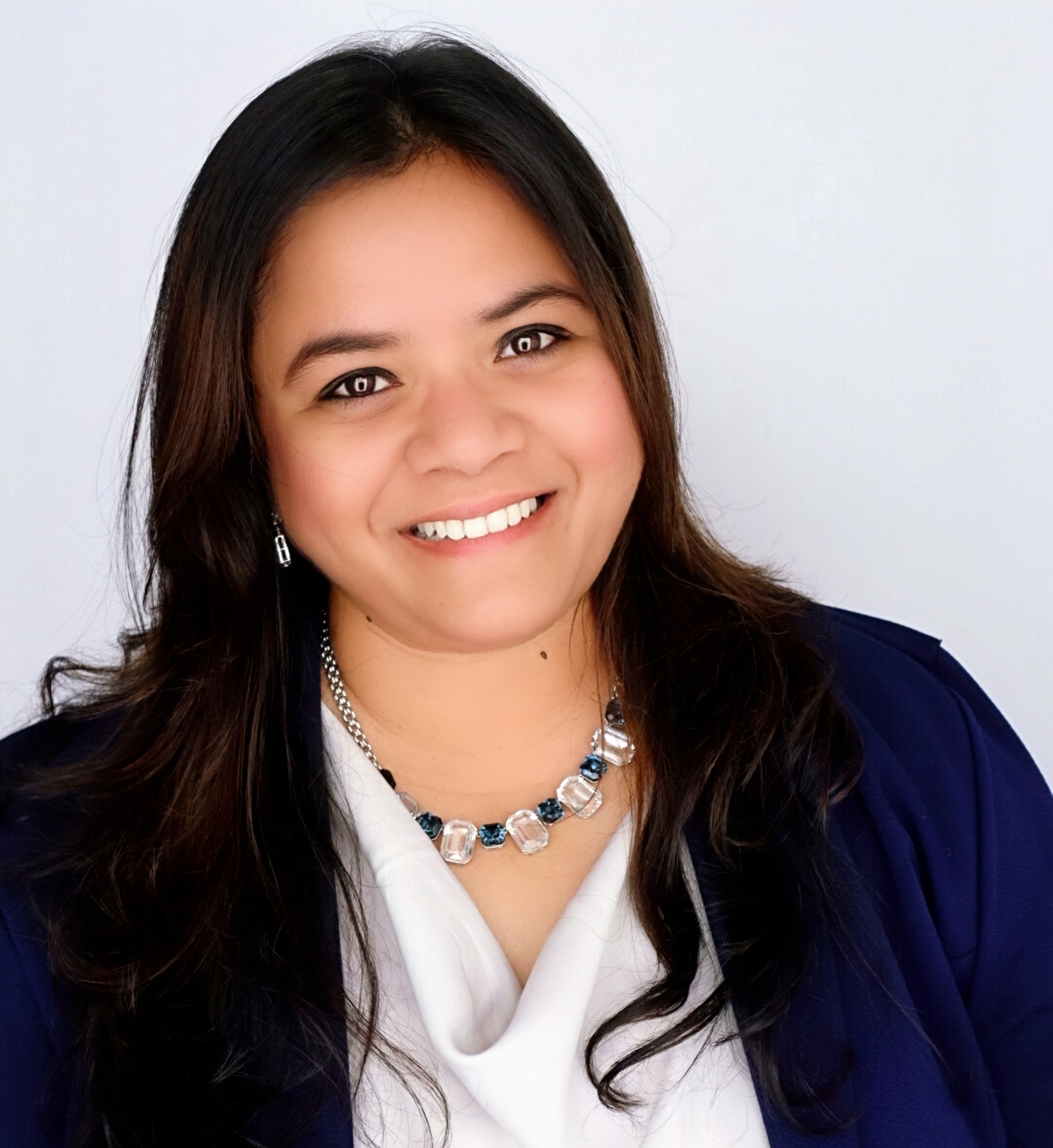
Anushree Vichare, Ph.D. ’17, is an alum of the Healthcare Policy and Research program within the Department of Health Policy. She is an Assistant Professor in the Department of Health Policy and Management, and is affiliated with the Fitzhugh Mullan Institute for Health Workforce Equity at the Milken Institute School of Public Health, at George Washington University. She is also a primary care physician, and previously worked with medical societies to develop clinical practice guidelines, as well as quality measures to improve cancer care. This work is, in some ways, what led her to HCPR; we discuss that below, along with many other elements of her experience in the HCPR program. Dr. Vichare spoke very highly of the program throughout our conversation, and also shared with us the benefits she has experienced from having a wide variety of research interests and experiences. She’s living proof that remaining open and exploring one’s options can lead to a career full of opportunities to learn and grow.
You graduated in 2017. What have you been up to since then?
I was fortunate to land a faculty position right after my graduation. I graduated in August of 2017 and my very first job right after graduation was as an assistant professor in the Department of Health Policy and Management here at the Milken Institute School of Public Health at George Washington University. I am a full-time assistant professor. I do research, teaching, and service — which includes service to the department, the university, and our school, but also outside, as I am a part of many professional organizations. And of course, a big part of what we do is mentoring our students.
What parts of it do you find build on what you were doing in the HCPR program, and how so?
All of them. Primarily, a big part of what I do and who I am is a researcher and a teacher. I think the program at HCPR was really well-designed, and once I graduated and started my job, I realized how strong our curriculum, training and exposure had been at HCPR. We had been fortunate to learn from very strong health economists, sociologists, and faculty that came from a variety of different disciplines, but also had many different research interests.
I still remember when I interviewed for the doctoral application, I had had sort of a different career path, that hadn’t been straight from one degree to another. But I was really fascinated by the work Dr. Askar Chukmaitov was doing with Dr. Cathy Bradley, who was the chair of the department then. They had published a paper on quality measures, looking at the quality of colonoscopy. Interestingly, when that paper came out, I was working as quality improvement director at the American Gastroenterological Association. What I did for a living was essentially develop clinical practice guidelines and quality measures around colonoscopy and gastroenterology. So this paper came about, and I was really fascinated to see that even in academia, there was an application for what we were trying to do in my professional life. When I interviewed, I thought that’s what I would do in my doctoral program, and my dissertation continued that focus on quality improvement. But as I took different classes, I was really fascinated by other aspects of health policy, particularly Medicaid policy.
Dr. Lindsay Sabik’s class on health economics was the most inspiring. She spent a lot of time curating a curriculum that was really rich in health econ, but also exposed us to a lot of seminal papers in health policy. And I never thought that I would be interested in health economics and applying it to health policy, but that opened up a whole new world for me. I just fell in love with Medicaid policy. Dr. Tiffany Green, who used to be faculty in the department, had a phenomenal course that looked at the applied economic frameworks to study health disparities. And again, that sparked my interest in researching about health inequities. She had a guest lecturer who studied patient-provider interaction; that was the first time I heard about race and ethnicity concordance between patients and the providers, and that really got me interested. My very first paper that I did for Dr. Green’s class led to my first dissertation paper, but also is a very important part of the research I do now on patient-provider concordance. So, a class project which was inspired by a guest speaker has led to one of the critical aspects of what I do in research. And of course, Dr. Peter Cunningham’s class exposed us to a lot of survey data, and the use of survey data in health policy. I was able to explore more questions of concordance using the survey instruments I learned in his class, which also led to my dissertation, and I continue to use those survey instruments in my current work.
All of the courses that exposed us to the varied aspects of health policy were phenomenal. I have to say though, I think the graduate research assistantship, when I had the opportunity to work as a research assistant to Dr. Sabik, was particularly inspiring, and really led me to my path as a researcher now in Medicaid policy. She gave me the opportunity to work with her on grant writing, data analysis, and writing research papers, networking… I had the opportunity to arrange a panel for a really big policy conference, which was a great exposure for me. The department in general was always very supportive of funding students. I was always supported to attend conferences, funded my travel, so that has been very instrumental. And then a big piece of what I do in my research now is cancer policy, which is inspired by Dr. Sabik’s work in Medicaid cancer policy. But also, in my prior life, I used to work at the American Society for Radiation Oncology, so I used to do a lot of work on the radiation oncology and oncology workforce. During my doctoral dissertation (“Affordability, Utilization and Satisfaction With Care: A Policy Context For Improving Health Care Experiences”), I had the good fortune of being funded through the Susan G. Komen fellowship as a pre-doctoral fellow. I was able to go back to my roots of oncology policy, and study breast cancer policy as one of my dissertation papers. That’s also a big piece of what I do now in my current research — trying to understand how Medicaid policies impact access to cancer care for Medicaid beneficiaries. All of these different experiences have culminated in not just shaping my research interests, but helping me to continue those research interests in my current research portfolio.
Tell me about the parts of your current job you like best, and what you find most rewarding about it.
I think what defines me as an assistant professor is the fact that I get to teach. When I made the decision to transition from being a professional to going back to graduate school, I had my MPH from VCU. Going back to VCU to get a Ph.D., I always knew I wanted to go into academia after graduation — that’s the only reason I did a Ph.D. The most rewarding part of being an assistant professor is being able to share a classroom with very smart, driven, engaged, hard-working, and inspiring students. I get to do that every single semester. I teach MPH students two of the core courses in Health Policy, one of which is Advanced Health Policy Analysis and the other is a Capstone, which is their final policy analysis project. We get to have a lot of fun with it, but being able to create a classroom space that feels safe and to also be able to ask challenging questions is the best part of what I do. It’s really satisfying to be able to create opportunities and interests in the next generation of policy researchers, analysts, and public health practitioners. It’s really gratifying when I see my students succeed. They come back to my class as guest lecturers, and it’s really humbling to see how much I get to learn from my students, and how much they’re navigating, with life and their full-time jobs, and still doing phenomenal in the classroom. It’s the best thing. It’s the best thing ever. That’s what gets me excited about my job every single day. That’s what makes me wake up and want to go to work every day, is just being able to teach and be with students.
On that note, what message would you pass on to current HCPR students from your current perspective?
Stay open to ideas. I’ve had a very interesting career path, and on a CV it may look like “she doesn’t know what she’s doing.” I have a medical degree from India; I came to the US to get an MPH in epidemiology. I worked as an epidemiologist for about a year, and then I had to make a switch – for immigration purposes, not by choice. I was pretty much forced because of the recession, because we all had to lose our jobs at the Department of Health. I ended up with the American Society for Radiation Oncology. I worked there and led a lot of their studies — got a lot of publications out there, which I never thought I would. But that is what exposed me to health policy. I was an epidemiologist by training, and I loved what I did, but when I was exposed to health policy, I realized that someone who has a background in medicine and research, and can be trained in health policy, can bring so much more to the table in health policy analysis. Which is what led me to jump back into graduate education. When I came in, I thought quality improvement is what I would do for the rest of my life, until I let these experiences in grad school inspire me.
I would say being open to ideas is really important. I think it’s OK to not know upfront, at the outset, what you want to do, or what your dissertation is going to be, or what you want to do in life. That’s the whole idea, is getting trained through this beautiful doctoral program and getting exposed to wonderful faculty in the department. But I will also say, one of the things that I intentionally tried to do was try to seek as many opportunities as I could. Even though at that point, it felt like “Why are they making me do this?” In hindsight, I realize that every single elective that I took, every core course I was made to take, has been helpful in some shape or form. Some of it is pretty obvious, some of it isn’t so obvious, but when I think back about the courses I had to take, I feel like each of them plays a role somehow in shaping who we are. I maximized the opportunities that were offered to us through the departments, such as networking during professional seminars. We had the opportunity to meet with guest speakers. Interestingly, I now get to work with a faculty member, Dr. Leighton Ku, who was a guest speaker when I was in the doctoral training. I had the opportunity to meet with him [when he was a guest speaker], and when I had my job talk at GW, he remembered me, and was my biggest cheerleader during my job talk.
Try to find opportunities to attend conferences. Submit your work. Present at conferences, whether it’s a poster or a panel. Make the most of your graduate research assistantship. Some of the work may seem petty, such as submitting IRBs, which is painful. But trust me, as a researcher and a PI, I have to do it all the time, and I’m so glad I had to do it during grad school. I was also at some point offered the opportunity to teach as a TA during my doctoral training, and I’m glad I took up that opportunity to TA a class. It was for undergrads, but that teaching experience really boosted my CV. I knew I wanted to go into academia, so when I was interviewing for my jobs, having this wholesome experience of teaching and research at such early stages of doctoral training were really important. In a nutshell, grabbing every opportunity that one can get, but also being open to the idea of change. I feel like change is great. You’re not wedded to anything early on, so you have the entire span to figure out what you want to do. That’s the beauty of the doctoral training, it’s such a safe environment. I really miss being a student. You’re allowed to make mistakes, there is everybody to protect you. Once you’re out in this world and you’re trying to figure things out, I’m really glad I can go back to my VCU mentors and faculty — who are now colleagues, but I always look up to them as role models. So my advice is just to make the most of the doctoral experience.
What do you know now that you wish you knew when you started the program?
I wish I had known how important it was to practice grant writing. It doesn’t come naturally; if you’ve written one grant you’ve only written one grant, and I wish that I had sought more opportunities during my doctoral training for proposal writing in any shape or form. I know the program has since made changes, and are exposing students a lot more to grant writing than we had. I’m glad the department made those changes, because I think it’s really important. Because it’s a really competitive world out there, and being able to have confidence in writing strong proposals [is essential]. It’s a really long learning process, and being able to do that early on in grad school is the best time to do it, because you have so much mentorship, which may not always be the case once you’ve graduated. So I wish I’d known how hard and how important it is to write research proposals. I would have done a lot more of that during my grad school.
What are your hobbies and pastimes outside of your career?
I am a very social person, and so I like to volunteer as much as I can, giving back to my community as an immigrant. I have been very privileged and fortunate to have experienced the best of diversity in the US, but I know that’s not the case for everyone that migrates to or even lives in the United States. I had a really strong Indian student community at VCU, both during my masters and my Ph.D. I also had students who looked out for me when I was brand new to the country, so I try to do the same now that I’m on the other side. I love mentoring students who are trying to come to the United States, or are just trying to figure things out in the US; I’m always talking to them. I love mentoring, not just in the role of teaching but also outside of it, so I end up doing a lot of volunteer work in that capacity. Other than that, I have a six-year-old, and he eats a lot of my time, so my hobbies are very much driven by his interests. Which include traveling; we do a lot of music, take music classes together. And I love reading, not just health policy, but I just love reading whenever I have the time.
Anything else you want to address before we wrap up?
I obviously was nervous when I started out as faculty right after my doctoral degree, but I think my training in HCPR gave me enough confidence that I would do well. Because I just trusted my training. So I just wanted to say that I am exceptionally proud to be an HCPR alum.
Categories Alumni news