Alumni Spotlight: Lauryn S. Walker, Ph.D. ’19
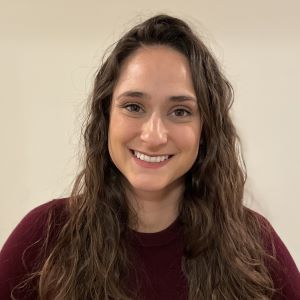
Lauryn Walker, Ph.D. ‘19, is an alum of the Healthcare and Policy Research program within the Department of Health Policy. She is the Chief Strategy Officer for the Virginia Center for Health Innovation, a non-profit dedicated to creating and promoting value-driven models of healthcare in Virginia. She is also on the board of the non-profit organization Richmond Aging and Engaging, an adjunct professor in the Department of Health Policy, and is raising a young child. Despite being such a busy woman, she generously offered her time to speak to us about what she learned in the HCPR program and how she has taken that knowledge forward into her current career.
How does your current work at Virginia Center For Health Innovation carry forward the things you learned during your time with the Healthcare and Policy Research Ph.D. program?
Part of my work is research-related, which is directly relevant to the studies I did in the Ph.D. program. I’m building a health policy research consortium for the state of Virginia, helping to put together different research expertise that is directly able to inform state policy. The other part [of my work] is a bit more indirect. Right now, for instance, I’m putting together a payment model to help pediatricians do more behavioral health in their practices, and I do that using all of the evidence and research that I did when I was researching my dissertation, which was focused in incentive programs and payment models. Now I take all of those pieces and build payment programs for Medicaid, applying all of the evidence and economic theory I was learning and putting it into practice.
Was this your first role after graduation?
My first role was with Virginia Medicaid. I transitioned from researching Medicaid directly to the state [organization] that was overseeing the research I previously had been doing. When I started in the Ph.D. program, I was a nurse. I knew a lot about health policy, but I had a pretty thin health economics and research background. The program helped me think about how people behave: what are their incentives, how do you frame those incentives, and how do you evaluate whether or not people change their behaviors based on their surrounding incentive structure?
I saw that was the focus of your dissertation (“Patient-Centered Medical Homes and Hospital Value-Based Purchasing: Investigating Provider Responses to Incentives“). Money was being spent, it didn’t seem like it was getting where it needed to go, but behaviors were still changing. So what difference is that making, if not in the economically beneficial way that was expected?
Oh my gosh, did you read my dissertation?
Just the abstract. [laughs]
[laughs] I love that you read that. That’s exactly right. I had thought a lot about health policy and overall models, but I thought about it from the policy maker framework. I had been on [Capitol] Hill trying to build some of these policies, and I had been a nurse, implementing policies that clearly weren’t working the way policy makers wanted them to. So when I came into the [HCPR] program, I was able to fill in those gaps. I could look at the payment models that currently existed, or didn’t exist, and try to figure out how we get from what they think they’re doing to my experience. That was really fleshed out in the Ph.D. program, where I learned how to do evaluations, but I also learned about the theory of economics, and about how people are incentivized to change. So I put that together. I was building payment models at the state, and here I’m working with the practices and the state payers directly, trying to build a smaller, more direct payment model.
So you went from learning how the process worked to implementing the things you learned in the next iterations of the process?
That’s exactly how I see it. I’d learned the federal policy, I’d learned the on-the-ground implementation, and I used the [HCPR] program to put the pieces in the middle together.
You’re the only one of our recent [HCPR] alumni that has gone into the non-profit space rather academia or the corporate world. What is attractive to you about non-profit work rather than following some of the more standard career paths?
I am a nurse at heart. I like working with people. I want to see my impact. While I still love telling stories with data, to me the whole point of telling stories with data is figuring out the best way to build a program to change people’s lives. I like working in the non-profit space because I get to do that very directly. I chose the VCU Ph.D. program because when I interviewed with them, I said up front, “I don’t want to go into academia. I want to be in government and policy. I want to build programs.” They were not just accepting of that, but really helped me to thrive in that space. When I talked to some of the other programs, success to them was to have students that were successful in the academic careers. That just wasn’t for me. I love that other people are doing the research, but I wanted to apply it.
Having said that, you are teaching one class per semester for the department right now. You’ve stepped into that role, after having gone into the field saying you didn’t want to be an academic. What’s attractive to you about coming back and teaching at the very place you graduated?
I love teaching and I love students. I don’t necessarily want to do research for research’s sake, but I want to help support and grow the next generation of health policy people, and I hope I can recruit some people to be interested in state policy. I want people to change where we live and our own communities. If that’s not where they go, fine — everyone’s going to have their different path. I had an unusual career path. I knew I wanted to do health policy when I was in junior high. That’s a weird thing for a junior high kid to want to do, but it was always my passion. But I didn’t know anybody who did that, so I was really lucky to have incredibly kind and thoughtful mentors along the way. My reason for coming back and wanting to teach in this program is to pay that forward. My faculty were incredible, and they helped me create a career here in Richmond. And while the Ph.D. program was sometimes really tough, what I became out of that program has genuinely changed my life. I really want to make sure that other students have somebody who’s also watching their back and helping them grow into whoever they want to be.
What do you want to pass on to current students in the program? What do you wish you had known when you were starting out in your Ph.D. program?
I feel like I knew nothing when I came into the Ph.D. program. I was coming in more blind than I realized. When I’m teaching students, I try to be cognizant of the basic things that I needed to know and didn’t learn until my third year. One of the things that I try to work on with the students in my professional development class is the basics of how the program works. I was going into my second year and realized, “Wait, am I supposed to be publishing things? Am I supposed to be applying for conferences?” I think faculty who are so entrenched in the research world sometimes miss that the students don’t have the basic background. Because I’m adjunct faculty, I can have outside perspective for both the students and the faculty. The core faculty are the ones the students go to on a daily basis to say, “I want to grow in this area.” But I can be the person where students say, “I don’t know if I want to go into academia, I don’t know what else is out there. What does the world outside look like?” I can help them see what else is out there.
You also work with an organization called Richmond Aging And Engaging. How does that organization play into your overall career, and what do you do with them?
RAE was started by another alum from VCU, Jodi Winship. We were both the only ones in our year for each of the programs [Dr. Winship was in Social and Behavioral Health] so we became really close, and followed each other’s career paths. She wanted to look at the well-being of the population she was working with at the time: Richmond’s low-income seniors. If you’re an upper-middle-class person going into a senior living facility, you have all sorts of great programming: faculty coming in from the local university, orchestral music… They don’t have that at Church Hill House. What RAE does is come in and create leisure and well-being activities and connectivity for people that are living in various low-income housing units we work in, [along with] some basic rollator repair clinics. I was a founding board member with her, and I started this role when I was at Medicaid. I spent so much time looking at payment models and what can be billable, [but] one of the biggest gaps is what that person needs to be happy and healthy. What I love about RAE is that it’s human focused. It’s also an opportunity to get back to people. My background is in nursing, and I’ve been working in this policy and research space. I wasn’t able to spend a lot of time with people, and I missed that! RAE was an opportunity to play board games with people that just needed a little sunshine in their life that afternoon. I really missed having that human interaction, and RAE was a wonderful way to do it.
Final question: what are your hobbies, pastimes, passions outside the job? What do you spend your spare time focusing on?
My closest to a hobby is that I’m a huge Georgia Bulldogs fan. And I have a two-and -a-half-year-old, so I spend a lot of time at playgrounds and kids’ picnics. We play Spidey a lot. [laughs] So that’s really my whole day!
But that brings up an important point: you’re raising a young child while doing all this work. It’s got to be a balancing act to do all this high-level work and then also have to take care of the needs of a kid who needs you 24/7.
It has changed the way I work dramatically. It helped that I didn’t have kids until later in my career, because I spent the first several years working until 7:30 every night, and I advanced my career because of that. I was grateful that, when I did have a kid, I had the ability to step back a bit. I had a wonderful job offer at North Carolina Medicaid that I ended up not taking because I was really happy here in Richmond, and I was happy with our family life here. I have made more sacrifices than I thought I’d have to make, but I’m really happy both in the career and the family that led me to. I have a job that’s really supportive, and a husband who’s good at taking time off when our son is sick. It has been such a relief that he’s an incredibly involved dad who is willing to take him to school every morning so I can be the one that heads into work earlier sometimes. I don’t know how working moms did it in the past when there was less of that. I feel so grateful that we both have flexible jobs, because kids are a lot of work, and they get sick a lot in the earlier years.
Is there anything else you’d like to talk about before we wrap up?
I just really want our students to get creative with what they can do with their careers. I hope these profiles can give them a sense of all the different options they have, and that they don’t have to go one track or another. Sometimes it’s easy to see what your mentors are doing and do the same thing, but that’s not really what mentors want for their mentees. They want them to grow into their own people.
Categories Alumni news