
Beyond the Finish Line: VCU students engineer safer supports for winter para-athletes
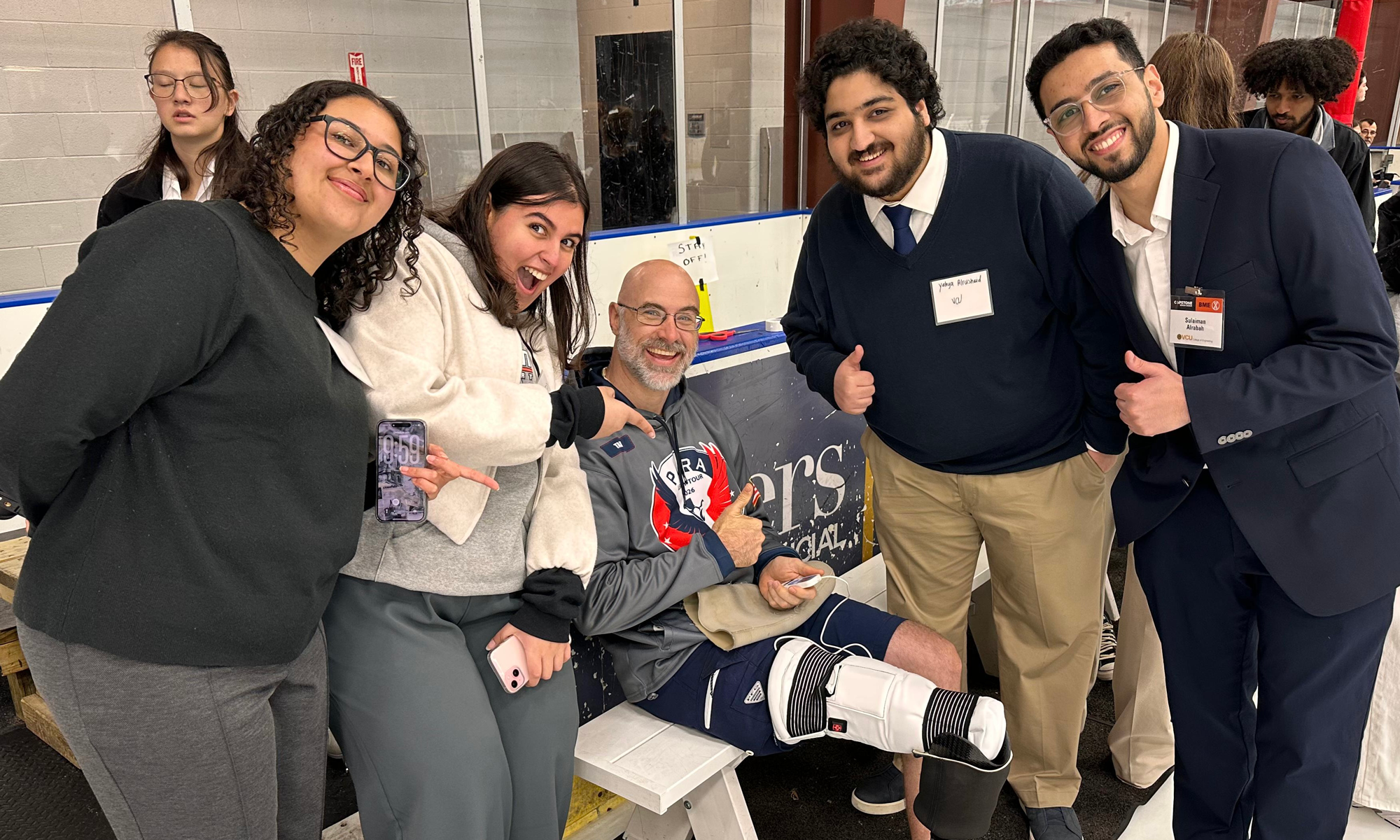
A team of four seniors designed a real-world, high-performance residual limb warmer for winter para-athletes, winning them third place at the nonprofit “Project S.E.R.V.E.” Annual National Design Competition.
A team of four biomedical engineering students from the VCU College of Engineering were awarded third place at the 2026 Project S.E.R.V.E. Annual National Design Competition, held April 25 at Virginia Tech.
Under the guidance of their faculty advisor, Associate Professor Priscilla Hwang, Ph.D. from the Department of Biomedical Engineering, the team designed a real-world, high-performance residual limb warmer for winter para-athletes. The work also served as the team’s VCU capstone project, which earned them second place in the biomedical engineering category at the VCU College of Engineering Capstone Expo.
“This is an amazing accomplishment for my team,” said Hwang. “It’s been inspiring to watch them take a design idea to a final product. This project is a great example of the students applying all the biomedical engineering skills they learned in the classroom toward a real-world product.”
The Challenge
Traditional winter sports pose extreme cold challenges for all athletes, particularly para-athletes in skeleton and bobsled who face unique environmental demands.
Before a skeleton run, para-athletes must remove their prosthetics, leaving residual limbs exposed to extreme cold. Current warming methods, like taping on chemical heat pads, are inconsistent and lack control. This lack of a reliable warming solution poses risks of discomfort, skin irritation and serious injury between runs.
Teams participating in the 2026 Project S.E.R.V.E competition were challenged to engineer a real-world solution for these athletes by creating a safe, effective warming system for residual limbs—designed in partnership with Team USA’s Para Sliding program.
From VCU Engineering, four students—all of whom are studying abroad from Kuwait—took on the year-long project: Mudhi Albader, Rianah Aleisa, Sulaiman Alrabah and Yahya Alrushaid. They collaborated directly with decorated skeleton para-athlete Chris Tarte, as well as representatives from Project S.E.R.V.E., a nonprofit that engineers personalized solutions for veterans and emergency responders.
“The team met with their athlete and Project S.E.R.V.E. mentors regularly throughout the year,” said Hwang. “They always took any feedback received to further enhance their product, which is why the final product achieves their design goals.”
Planning & Design
To tackle the project, the students broke out into distinctive roles aimed at highlighting an individual’s expertise or unique capabilities:
- Financial Manager: Mudhi Albader
- Logistic Engineer: Rianah Aleisa
- Team Leader and System Engineer: Sulaiman Alrabah
- Manufacturing Engineer: Yahya Alrushaid
The team also worked under strict a timeline, embracing the iterative engineering process while meeting all product requirements:
- Safety: Must maintain a safe warming range (monitored by built-in management systems).
- Performance: Battery life must exceed three hours on the highest setting.
- Portability: Weight must be under 500g (current prototype is 456g) and less than 6mm thick.
- Usability: Must be easy to put on and take off quickly between runs using Velcro strips rather than complex dials.
Collaboration with Tarte was the cornerstone of the design process. Regular team meetings provided insights that the students hadn’t previously considered, specifically regarding safety and practical field use.
“Our goal was not just to make something that heats up, but to make something an athlete could actually wear between runs without it being bulky or difficult to use,” said Alrabah.
After months of research, testing, designing, sewing, troubleshooting and redesigning, the team created a prototype that could provide controlled warmth and still be lightweight, comfortable and easy to use. The final device uses heating pads built into a layered sleeve, powered by a portable battery pack.
The Competition
After placing second in the VCU Capstone Design Expo, the team was energized for the Project S.E.R.V.E competition at Virginia Tech.
“The competition was an amazing experience for all of us,” said Alrabah. “It was special to finally meet Chris and our advisors from Project S.E.R.V.E. in person. It made the project feel much bigger than just a class assignment.”
The VCU team was surprised to see how many different ways other groups—12 total—approached the same problem.
“Being there with other teams and seeing everyone’s hard work made the whole experience even more special,” said Alrabah “Of course, we wanted to do well in the competition, but the real goal was always to create something usable that could help winter para-athletes.”
Tarte was able to try the prototype at the competition and loved it, remarking on the simplicity and user friendliness of the design. In the end, VCU was named the third place finisher.
“As a team, we talked about how even if we had not placed in the competition, hearing that Chris liked the design would have been enough for us,” said Alrabah. “Knowing that our work could help solve a real problem for a real person was the most rewarding part. Winning third place made the experience even more unforgettable, but Chris’s reaction was what made us most proud.”
The Department of Biomedical Engineering provides undergraduate and graduate students with the opportunity to perform real-world research as soon as they enroll. From delving into the intricacies of cell migration in cancer research to exploring tissue engineering in menisci, tendons and ligaments, our students pursue a diverse range of cutting-edge research topics. Browse videos and recent news from the Department of Biomedical Engineering to discover how the College of Engineering at Virginia Commonwealth University prepares the next generation of scientists and engineers for the challenges of the future.
Categories Biomedical Engineering, Student Stories, Undergraduate Student Stories