DCE April 2026 Engagement Highlights
Division of Community Engagement | Virginia Commonwealth University
Community engagement at VCU is a sustained orientation toward the communities that surround and support this university — one that requires consistency, intentionality, and the willingness to keep showing up. April 2026 reflected that orientation across every program and partnership area within DCE. This report captures the highlights of that month, along with a few early May events that fall within the same programmatic arc of the spring semester.
Community Partnerships and Collaboration
New partnerships continued to take root across the division in April. The Health Hub at 25th Street welcomed three new collaborators: the Richmond Department of Transportation, Real Life, and People’s Advantage Helping Hands. The Mary and Frances Youth Center continues to work with its broad network of 14 anchor community partners, including Street Smartz LLC, She Reads She Leads, Starseeds Learning Lab, Richmond Success Academy, CodeRVA, Girls on the Run, and others. Across Collaboratory, VCU’s community-engaged partnership database, nine new units came into the fold this month — including the Humanities Center, Gerontology, Kinesiology and Health Sciences, the Institute for Collaborative Research and Evaluation, and University Counseling.


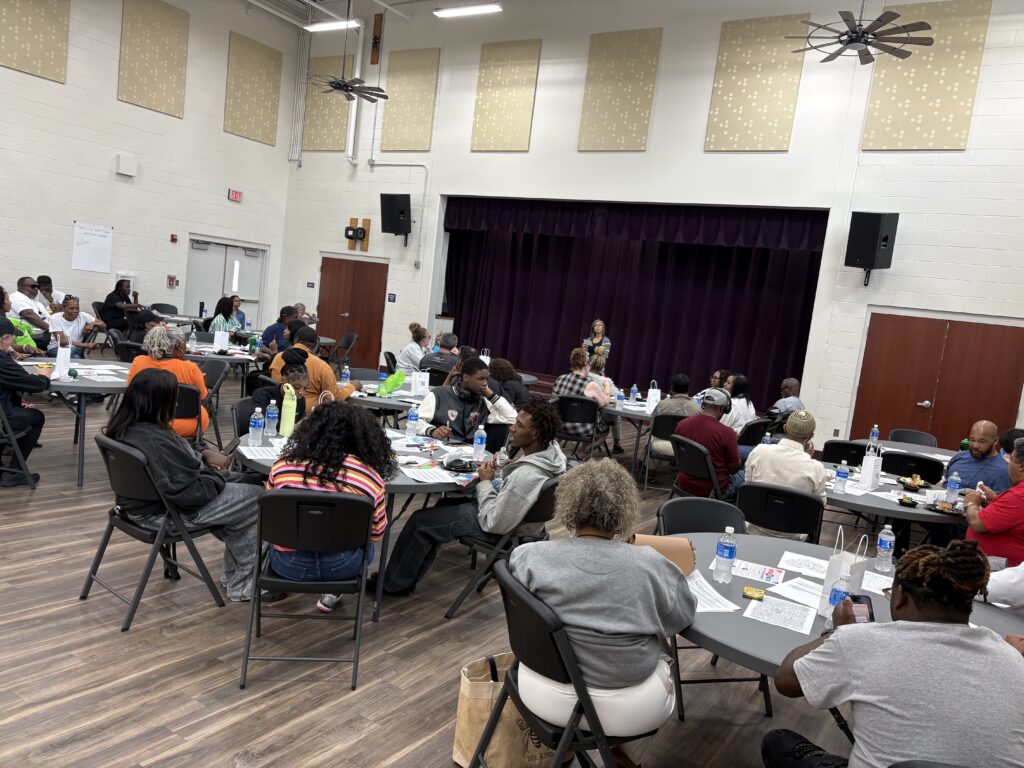
A fitting close to the semester came on May 7th with our Community Engaged Partnership Cookout, a gathering that brought together more than 40 VCU faculty, staff, and community partners to celebrate a year of shared work.
In a season that can often feel like a sprint toward the finish line, the Cookout created space for people to connect, reflect, and simply be together. Participants expressed genuine appreciation for the opportunity to gather in a relaxed setting at the close of the year — a reminder that relationships are not just the means of community engagement, they are part of the point.
Celebrating Excellence in Community Engagement
On May 14, the Division of Community Engagement hosted its annual Excellence in Community Engagement Awards ceremony — a moment set aside each year to recognize the faculty, students, staff, and community partners whose work brings VCU’s engagement mission to life.
This year’s honorees were selected from a competitive and deeply impressive field of nominees, each recognized by the colleagues, collaborators, and community members who witnessed their work firsthand. Awardees were named across four categories: Excellence in Community Engaged Research, Excellence in Community Engaged Teaching, Excellence in Community Engagement (Faculty or Staff), and Excellence in Community Engagement (Student, Fellow, or Postdoctoral Fellow), along with the Outstanding University-Community Partner Award — which this year recognized two programs within Richmond Public Schools.
As Dr. Mosavel reminded us: “Community engagement is more than just a good deed — it’s a science, it’s an art, and it’s a practice.” And it is a practice made visible every day by the people this ceremony honors.
Read the full awardee announcement — including honoree profiles, nominee lists, and highlights from the ceremony — on our blog: 2026 Excellence in Community Engagement Awards →
The CONNECT Conference is VCU’s annual gathering that brings together community partners, faculty, students, and civic leaders to celebrate and advance community-engaged work across the Greater Richmond region — and this year’s planning is already off to a remarkable start. The 2026 Planning Committee launched this month, receiving more than 50 volunteer sign-ups within 24 hours of the call, with more than half of those respondents being community partners. Planning will begin with committee members in May, and the Conference will be held in November 2026.
Overall, across all units, DCE maintained active engagement with more than 96 community partners this month, including the City of Richmond, Richmond Public Schools, Richmond Behavioral Health Authority (RBHA), YMCA, neighborhood civic associations, and a range of nonprofit and civic organizations.
VCU Community Engagement Showcase
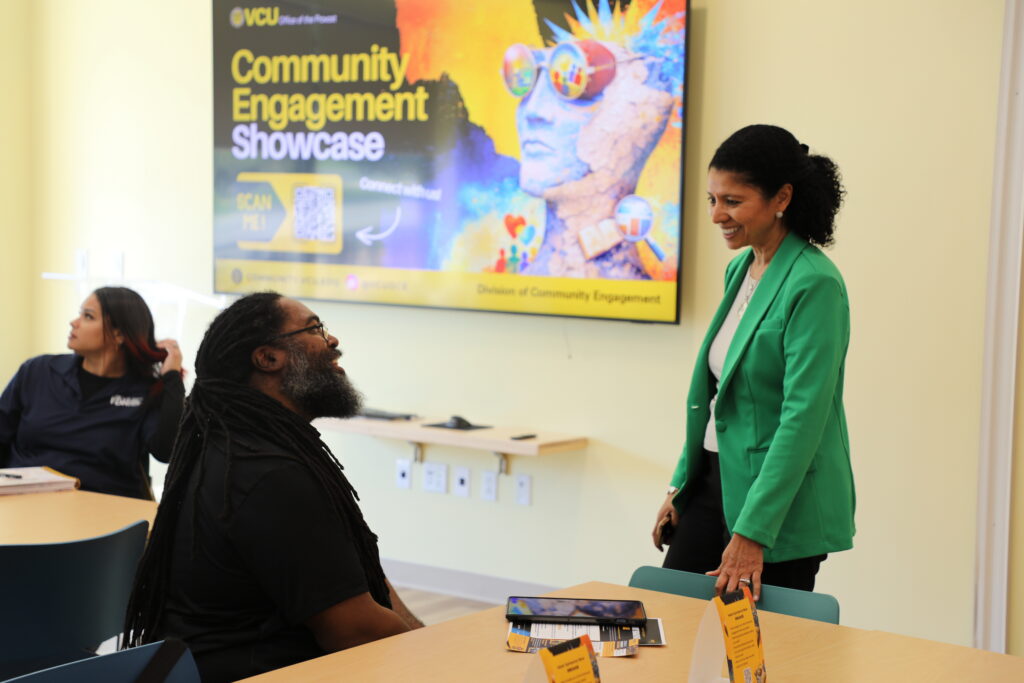
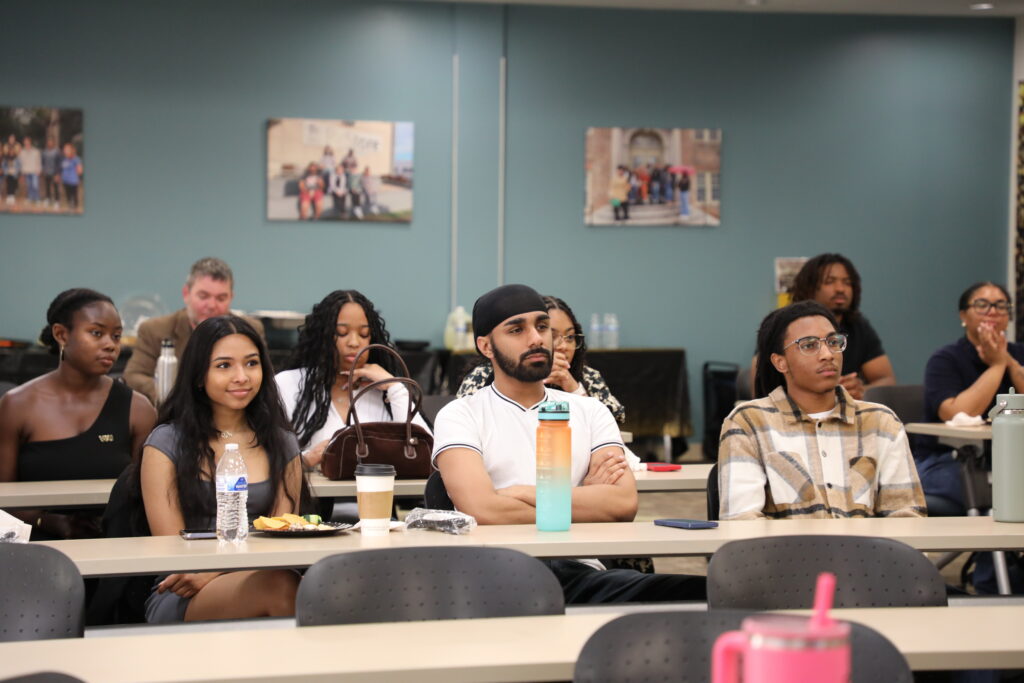
On April 9, DCE hosted the Community Engagement Showcase at the Health Hub on 25th Street, drawing approximately 50 attendees. Six faculty members presented their community-engaged work, including three showcase presenters who shared ongoing partnership projects with community audiences.
The event created a site for the kind of visibility that community-engaged scholarship needs: a public space where the work is named, shared, and celebrated by the communities it serves.
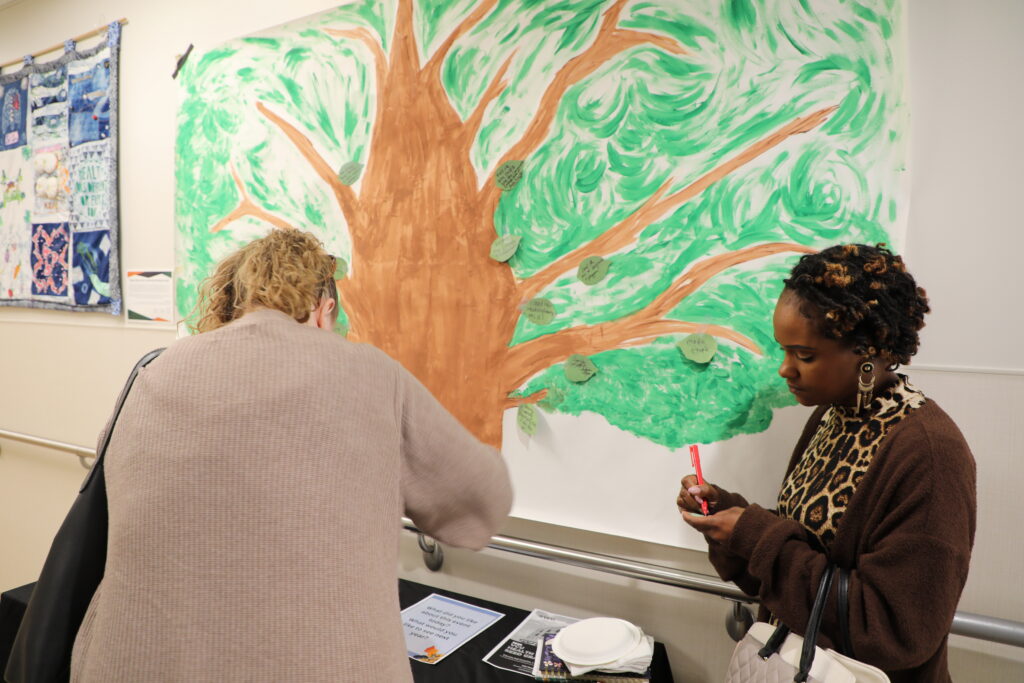
The Showcase also featured a reflection station staffed by students from the Student Council for Community Engagement, whose presence bridged the event’s academic and community dimensions.
Student Engagement and Experiential Learning
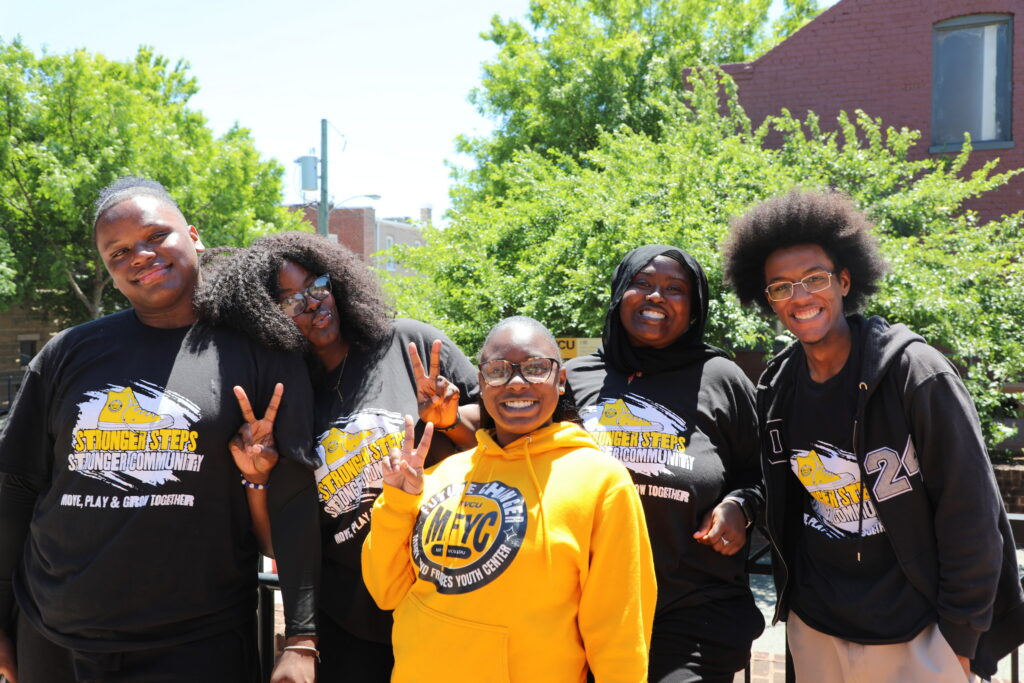
Across DCE in April, more than 400 VCU students engaged through DCE programming — through service learning, internships, Federal Work Study placements, graduate assistantships, volunteer leadership, and more.
At the Health Hub, 54 students engaged across academic classes and nursing rotations through the Mobile Health and Wellness Program (MHWP), internships, an Interprofessional Education and Collaborative Care (IPEC) course session, and a service learning outreach tabling component. Twenty of those students returned for multiple visits, signaling how deeply embedded the Hub has become as a site for sustained experiential learning. Students engaged across disciplines, including the School of Social Work, Pharmacy, Nursing, Dental Hygiene, and Public Health.
A high point of the month was the Health Hub’s BSW Final Intern Presentations on April 28. Both of the Hub’s year-long Social Work interns delivered comprehensive presentations demonstrating synthesis, critical thinking, program implementation, and deep community engagement — the full arc of what a rigorous, place-based internship is designed to produce.
The Mary and Frances Youth Center engaged 217 VCU students this month, including 17 student staff members, 45 volunteers supporting MFYC and Starseeds Learning Lab programming, a Graduate Assistant, two Transformative Federal Work Study interns, and two Social Work interns. Graduate Assistant Betty Kiconco and Social Work intern Laila McGlone co-supervised the Youth Council’s Grounded and Growing Mental Health Event. Students Pilar Jemmott and Cynara Manley co-led Girls on the Run programming for Starseeds Learning Lab, Peter Paul, and community participants.
The month closed with the DCE Student End-of-Year Celebration, which recognized student contributions across leadership, service, and community-engaged learning. It was an opportunity to name, in community, the investments students had made throughout the year.

Programs and Community Participation
April programming reached hundreds of Richmond residents across initiatives addressing financial health, youth development, civic education, housing access, legal literacy, mental health, and leadership.
The Health Hub on 25th Street hosted 19 programs and welcomed 462 community members—with 644 total sign-ins to the building, the highest recorded since digital tracking began in February 2025. Programs this month included Mobile Health and Wellness Program (MHWP), the Medical Legal Partnership’s Legal Education Life Planning Clinic, Wednesday Walks, Fitness Warriors, the SCAN resource table, ANWoL, the Memory Café, Kidney Screenings, Financial Coaching, the Community Engagement Showcase, Hub Club, the Massey Watch Party, the Rollator Walking Group, and more. The month also saw a record 88 applications submitted for the annual Health Hub and MFYC Seed Grant funding opportunity, which supports organizations in building capacity for positive youth development, health, and wellness. A community review committee has been convened to deliberate on final selections, to be announced in mid-May.
The Mary & Frances Youth Center delivered and/or hosted 15 programs—9 youth and 7 adult—reaching 174 youth and 224 adults. Youth programs included partnerships with Cultural Roots, Carver Elementary, Peter Paul, Wilder MS, Richmond Success Academy, Girls on the Run, CodeRVA, and Star Seeds Learning Lab. Adult programs included the Power of Pause workshop, RichmondYPQI sessions on Emotion Coaching and Planning and Reflection, and a Breathe Easy Parent Night and Creative Writing Workshop.
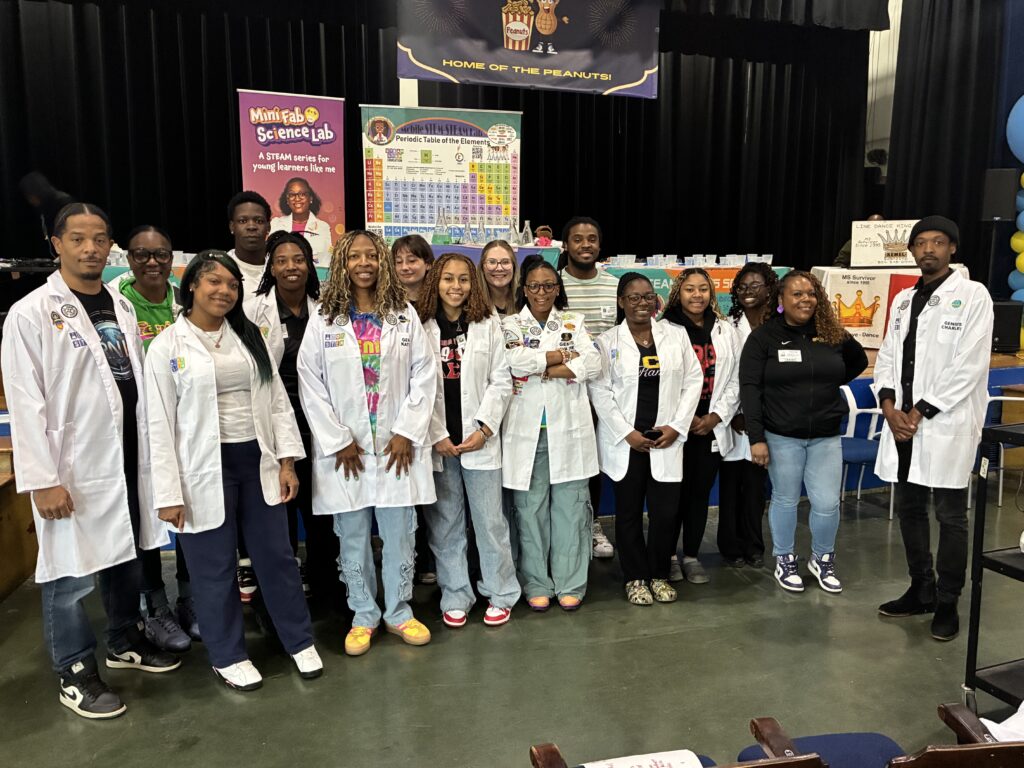
DCE also co-led programming that engaged more than 300 community members this month, including a Carver Elementary Spirit Day, a STEM Pep Rally, food distribution, focus groups, community tours, and ongoing civic engagement meetings across Richmond neighborhoods.
Faculty Engagement and Research Collaboration
Faculty engagement across DCE in April was broad and substantive, spanning research partnerships, curriculum development, grant activity, scholarly publication, and cross-institutional dialogue.
The Health Hub engaged 6 faculty members this month, including Dr. Amber Paulus (KARE Project), Dr. Kathie Falls, Dr. Genevieve Beaird, Dr. Kim Battle, Dr. Elvin Price, and Dr. Marion Manski.
The Hub also strengthened its partnership with the School of Public Health through support of Dr. Elizabeth Prom-Wormley’s Are You Substance Smart? dissemination event, which featured a Health Hub community table and introduced new community connections, including a sustained link to Peter Paul Development Center.
Through Collaboratory, DCE engaged approximately 45 faculty across 40+ units, including the Humanities Center, Gerontology, Kinesiology and Health Sciences, the Institute for Collaborative Research and Evaluation, Finance Insurance and Real Estate, University Counseling, and Chemistry. These conversations documented service-learning, internships, and engagement activities while providing training and follow-up support to faculty as they navigated their Collaboratory entries.
Scholarly output this month included the continued revision and resubmission of “Intentional Networking: A Strategy For Creating Spaces of Civic Joy and Impact” to Catalyst: An Interdisciplinary Journal of Service Learning and Community Engagement, as well as two submissions to the Community Engagement section on Scholars Compass. We also hosted Trust in Practice: Developing a Partnership Framework and collaborated through conversations with UR, VUU, and VCU partners through the HJWA Research Collaborative.
Community Impact Spotlight
This month, we are proud to share a spotlight video featuring Scientific Director of the Tissue and Data Acquisition and Analysis Core and Associate Professor of Pathology at VCU’s Massey Comprehensive Cancer Center, Dr. Jennifer Koblinski, and PhD student Nina Dashit-Gibson, highlighting their data dissemination grant project, Brushstrokes of Discovery. The project exemplifies how community-engaged research can reach beyond academic publication to create direct, accessible connections between knowledge and community.
Strengthening Community Infrastructure and Capacity
Sustainable community engagement requires infrastructure that is as intentional as the programs it supports. April saw meaningful progress on several fronts.
Collaboratory continued to expand its reach, contributing to 110 documented activities in the database between April 1 and May 7. Eleven trainings were delivered across units this month—to University Counseling, Education, Recreation, Chemistry, Gerontology, the Humanities Center, and more—each one building the institutional muscle for accurate, reflective documentation of community-engaged work.
At the Health Hub, this month’s infrastructure improvements included updated data collection systems, new sign-in equipment, and revised intake forms that emphasize accuracy and accessibility. As of April 2026, all participants—including students, faculty, and partners—are required to sign in each time they enter the building, enabling more precise tracking of engagement.
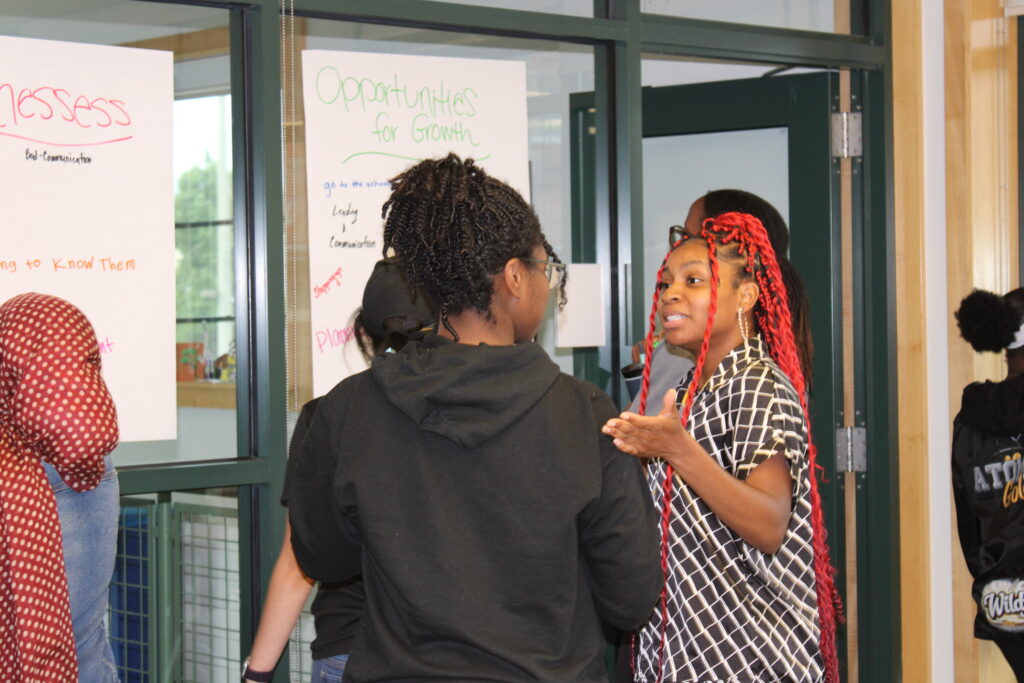
Also this month, a Trust-Building Workshop engaged 26 participants and laid the qualitative foundation for an emerging trust framework—evidence that the infrastructure for sustained engagement is being carefully and deliberately built. Co-developed through a collaborative session between community partners and university stakeholders, the framework draws directly from participants’ contributions on best practices in community-engaged trust building. Those ideas have since been synthesized and member-checked, producing a university model for trust-building in community-engaged work.
The Community AI Working Group launched this month as a new infrastructure for community-informed thinking about artificial intelligence. With community members at the table from the start, this group reflects a growing institutional recognition that technological questions have community implications—and that communities should have a voice in shaping the answers. Finally, DCE was honored to receive two significant external grants this month. The Allstate Foundation College Service Award will fund seed grants to student clubs for civic and community engagement work, creating a new pipeline for student-led engagement. And the Trucen Spotlight will amplify DCE’s model of community-engaged practice to peer institutions nationally in November 2026.
Looking Ahead
April 2026 was a month of both endings and openings. Interns completed year-long placements. Students were celebrated. Seed grant applications were reviewed. New committees launched. And through all of it, the relationships that make this work possible continued to deepen.
The Mary and Frances Youth Center is preparing for Summer Camp Season, with partnerships with the Richmond Volleyball Club, Performance Pickleball, Waterfront RVA, L.O.C.A.L Adventures, VCU’s Pauley Heart Center, and RecWell.
The work of community engagement does not pause at the end of an academic year. It continues in the relationships that were formed, the commitments that were made, and the infrastructure being built to sustain them.
We look forward to continuing this work this summer and beyond.

The VCU Division of Community Engagement advances the university’s commitment to thriving communities through partnerships, student experiential learning, research, and capacity-building across the Greater Richmond region. Learn more at community.vcu.edu.