Changing the Narrative
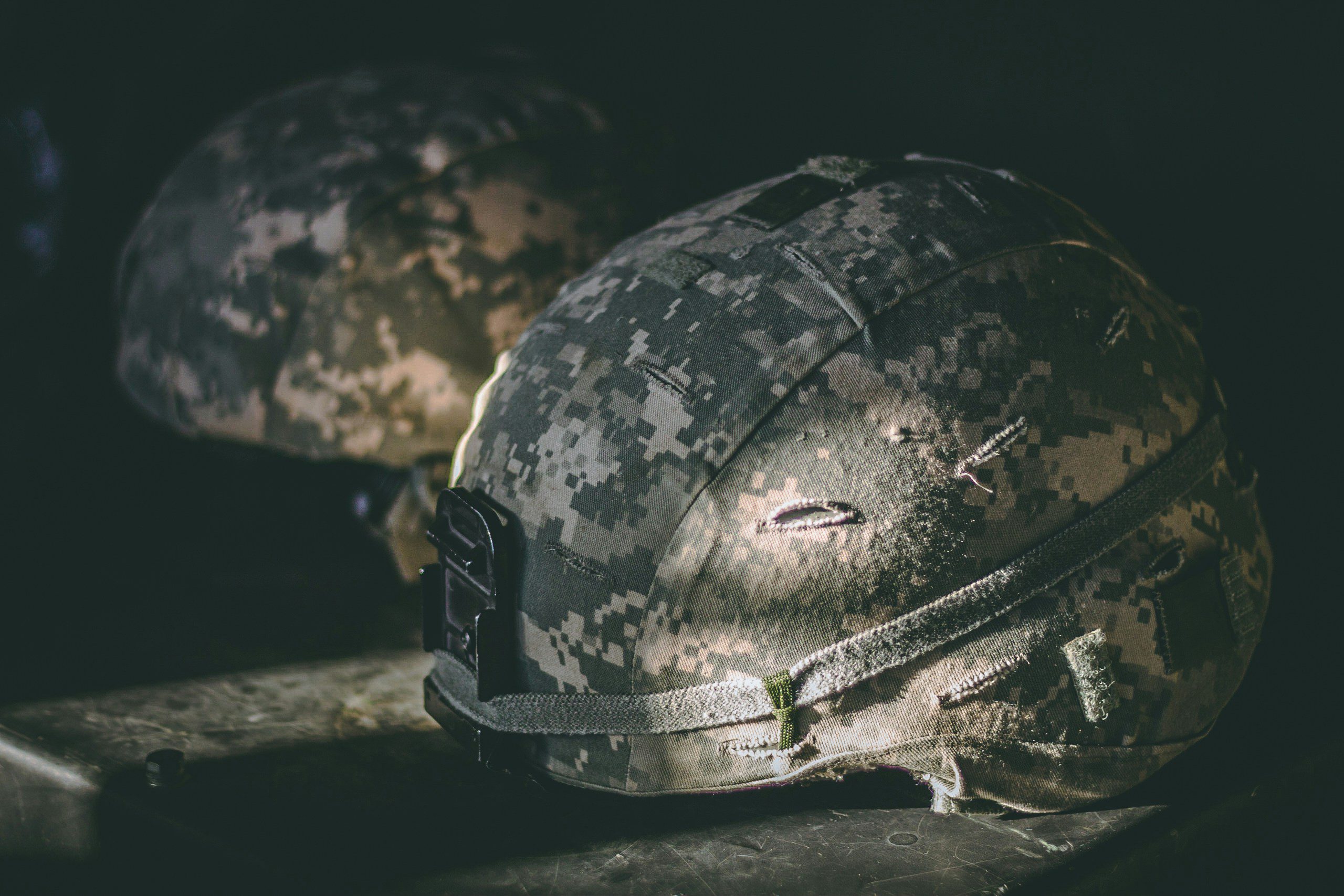
For more than 10 years, David L. Robbins has been helping veterans process their experiences in the military through writing as part of the Virginia War Memorial’s Mighty Pen Project.
It’s not an uncommon strategy. Narrative therapy and writing exposure therapy have long been used to help people break down past traumas and heal by retooling stories about their lives.
But Robbins isn’t a therapist—and the Mighty Pen isn’t narrative therapy.
Robbins is a New York Times bestselling author and creative writing professor, and the Mighty Pen’s 12-week writing workshop looks more like what students experience in his classroom at Virginia Commonwealth University. Veterans sign up because they want to learn to write, and Robbins teaches them how. Participants choose their subject matter, and he offers feedback on how to effectively tell their story. Throughout the course, participants form a community and find a safe and supportive environment for sharing difficult experiences.
“I liken it to painting,” Robbins says. “In their left hand, they have a palette full of paint. That’s the story of what happened to them. In their right hand is the painting, where they turn those events into an art form. Through that craft and curation, something honestly magical happens.”
While Robbins doesn’t present the workshops as a therapeutic tool, after more than a decade, he’s found that’s often a result.
“The writing process slows them down,” he says. “Somewhere in the rigor, the attention, the pace, the workshopping, the back and forth, the lessons, the care with which they express their story, it becomes cathartic. Somewhere in there, it interrupts their pattern and begins the healing.”
Now, through a research partnership with Jared Schultz, chair of VCU’s Department of Rehabilitation Counseling, Robbins is seeking to better understand what makes his methods work—and if they could help those experiencing other forms of trauma.
Making connections
The partnership began this spring after Robbins crossed paths with Carolyn Hawley, executive director of the Virginia Partnership for Gaming and Health, on the set of CBS 6’s Virginia This Morning. Hawley was there to talk about Problem Gambling Awareness Month and how VPGH helps support seekers. Robbins was promoting War in Pieces, a festival of one-act plays written by veterans.
Hawley asked if he thought his methods might work for people experiencing suicide ideation, addiction, and other kinds of trauma.
“I didn’t want to sound too confident, because I’ve not worked specifically with a community that was selected for those characteristics,” Robbins says. “But at the same time, I was confident, because I’ve seen all different kinds of trauma sit down in the room and work with the Mighty Pen.”
Hawley, who is also a professor in the VCU Department of Rehabilitation Counseling, proposed a partnership and connected Robbins with Schultz. The pair applied for and received a one-year, $100,000 grant from the Virginia Department of Veterans Services to find out what makes the Mighty Pen so effective.
A model approach
As the study’s principal investigator, Schultz will observe Robbins’ workshops and measure the effectiveness of the Veteran Experiential Writing Program (VEWP). Schultz aims to enroll 45 participants who will be given pre- and post-assessments to measure changes in suicide risk, depression, and anxiety symptoms. He will also look at final writing assignments to assess changes in participants’ sense of meaning, narrative coherence, and psychological resilience.
“What we’ve observed is that some veterans have barriers to sharing,” Schultz says. “They’ve developed scripts related to [their experiences], because people don’t understand. It’s so foreign to anyone who wasn’t there. There’s an inherent fear of rejection, a fear of being judged, a fear of being seen as non-human.
“Writing helps them address it obliquely, in as safe a way as possible, and to the depth that they need to. They have a chance to revise, which introduces a level of control over the narrative. They can share their story in a more controlled way where they have more influence over how it’s perceived.”
Schultz will also offer guidance to ensure writing prompts and group activities are aligned with trauma-informed practices, such as emotional safety, participant choice, and controlled narrative distancing.
To ensure long-term impact of the VEWP, the study includes a “train-the-trainer” component. Graduate students from VCU will be trained as future facilitators through weekly instruction and supervision. Schultz and Robbins will also develop a facilitator manual with a curriculum structure and writing prompts, trauma-informed group facilitation strategies, and evaluation tools. These materials will be used to recruit and train new facilitators and, potentially, extend the model to others in need.
“There are all kinds of applications where someone is having difficulty expressing their experience in a way that they’re understood and valued by someone else,” Schultz says. “Whether they’re talking to a spouse or a family member or friend or employer, how can they share their journey in a way where they don’t feel judged?”
The Veteran Experiential Writing Program (VEWP) is a trauma-informed, culturally responsive initiative designed to support veterans and their caregivers in processing life experiences, building resilience, and fostering connection through guided creative writing. VEWP integrates narrative principles with structured writing instruction to offer a transformative experience for participants. Learn more at rehab.chp.vcu.edu/about-us/research/vewp.
Photo by israel palacio on Unsplash.
Categories Research