Peer recovery specialists present at 2025 Research to Recovery conference
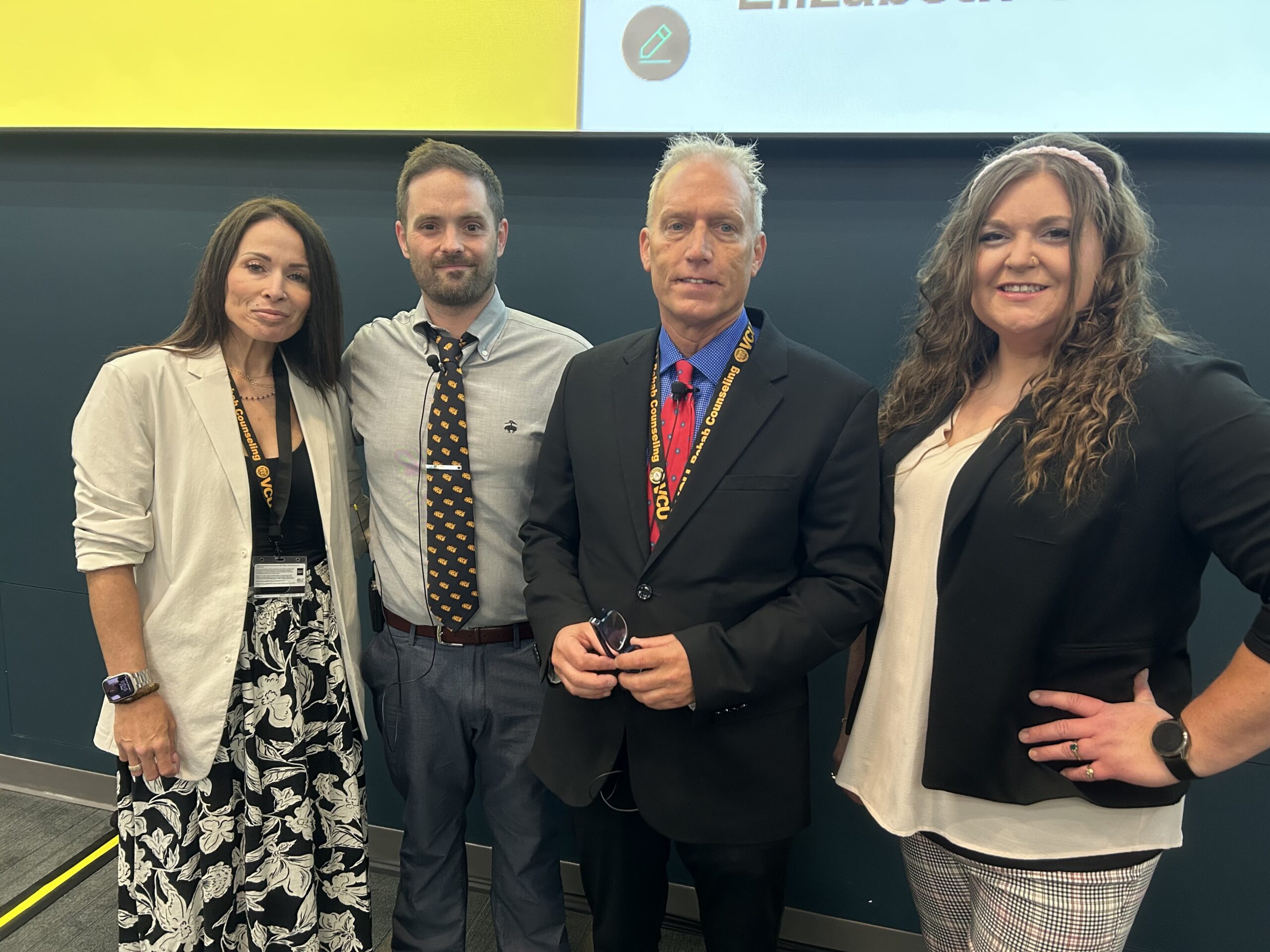
In late May, Lisa Cochran, Matthew Britt, Sean Fournia and Elizabeth Childress—all peer recovery specialists with the Virginia Partnership for Gambling and Health—spoke about the role of peer support at the 2025 Research to Recovery conference at VCU.
Hosted by VCU Rams in Recovery, the Virginia Department of Behavioral Health and Developmental Services, and the VCU Department of Rehabilitation Counseling, the three-day conference featured presentations and discussions on substance use, addiction and recovery. Sessions spanned from prevention and early intervention to treatment and recovery, with topics including harm reduction, medical and behavioral treatments, therapeutic techniques, and emerging research.
More than 500 people attended the conference, and approximately 100 attended VPGH’s breakout session.
The session opened with Britt explaining the similarities between substance use and non-substance addictions, particularly when it comes to the impact on the brain. Britt is five years into his own long-term recovery and shared his experience with “chasing the dopamine.”
“Gambling lights up the exact same reward system in the brain,” he said. “The craving for a quick win, the instant gratification—it’s the same kind of fix. With gambling, you’re not putting a chemical in your body, but your brain is reacting like you are. Folks can even feel withdrawal symptoms like anxiety, insomnia, irritability, and nausea when they try to stop.”
As more people struggle with problem gambling—right now, Matt said, more than 2.5 million adults meet the criteria for severe gambling disorder—peer support has become critical to helping them begin their recovery journey.
“We understand so deeply that we’re not bad people trying to get good, or sick people trying to get well. That’s why people with lived experience—like peer recovery specialists—have the unique ability to meet folks where they’re at and bring them back and offer a little bit deeper hope.”
The session also touched on how VPGH is leading the charge in Virginia to develop a recovery model that fully integrates peer support. VPGH’s team of peer recovery specialists are located throughout the state and are a first point of contact for individuals seeking support. They stay involved as someone moves from active addiction to recovery, including ongoing follow-ups for a year or more.
Childress shared that those one-year follow-up phone calls are her favorite to make. At the one-year mark, VPGH typically connects with 68% of support seekers—and 98% say they are no longer gambling, or that they have significantly decreased their gambling activity.
“I love making those phone calls because they know who I am, and [they want to] talk about how they’re living their life,” she said. “They’re healthy and they’ve paid off their debts or have made great progress. They are more involved with their families, doing better at work. They’re thriving without the control and compulsiveness of gambling in their lives.
“This is not just data, this is proof. This is proof that peer support specialists are not only essential for recovery navigation but are instrumental in the increase for treatment uptake and system effectiveness.”
Watch the full session
Other outreach
VPGH staff have been busy this summer speaking at conferences and events, met with local agencies and businesses, and distributed materials on how to seek support for problem gambling. The following is a sampling of recent community outreach.
- Jennifer Davis-Walton, Director of Gambling Services, attended the 2025 National Conference on Gambling Addiction and Responsible Gambling, hosted by the National Council on Problem Gambling (NCPG). Held in July in Columbus, Ohio, it is the oldest and largest annual national conference in the field. While there, Davis-Walton attended the National Association of Administrators for Disordered Gambling Services board dinner and member meeting where she was elected to serve as vice president of the board.
- In June, Elizabeth Childress, Peer Recovery Specialist, spoke about VPGH and the role of peer support at Breaking the Cycle: A Summit on Addressing Problem Gambling, hosted by the Southern Virginia Problem Gambling Collaborative in Danville, Virginia. Childress also joined a panel discussion with Bobbi Jo Brown of Danville-Pittsylvania Community Services, Kunal Patel of Caesars Virginia, and Anne Rogers of Virginia Department of Behavioral Health and Developmental Services.
- Azeem Majeed, Lead Peer Recovery Specialist, delivered a presentation in June to George Mason University’s Peer Recovery Support Workforce Program as part of their speaker series. Majeed spoke about “Addressing Problem Gaming and Gambling in Peer Support.”
- In April, Lisa Cochran, Certified Peer Recovery Specialist, attended the Winchester-Frederick County Behavioral Health Docket Advisory Committee in Winchester, Virginia. She spoke about the services VPGH can offer support seekers and connected with stakeholders about the intake and referral process.