One year in: Building the future of public health at VCU
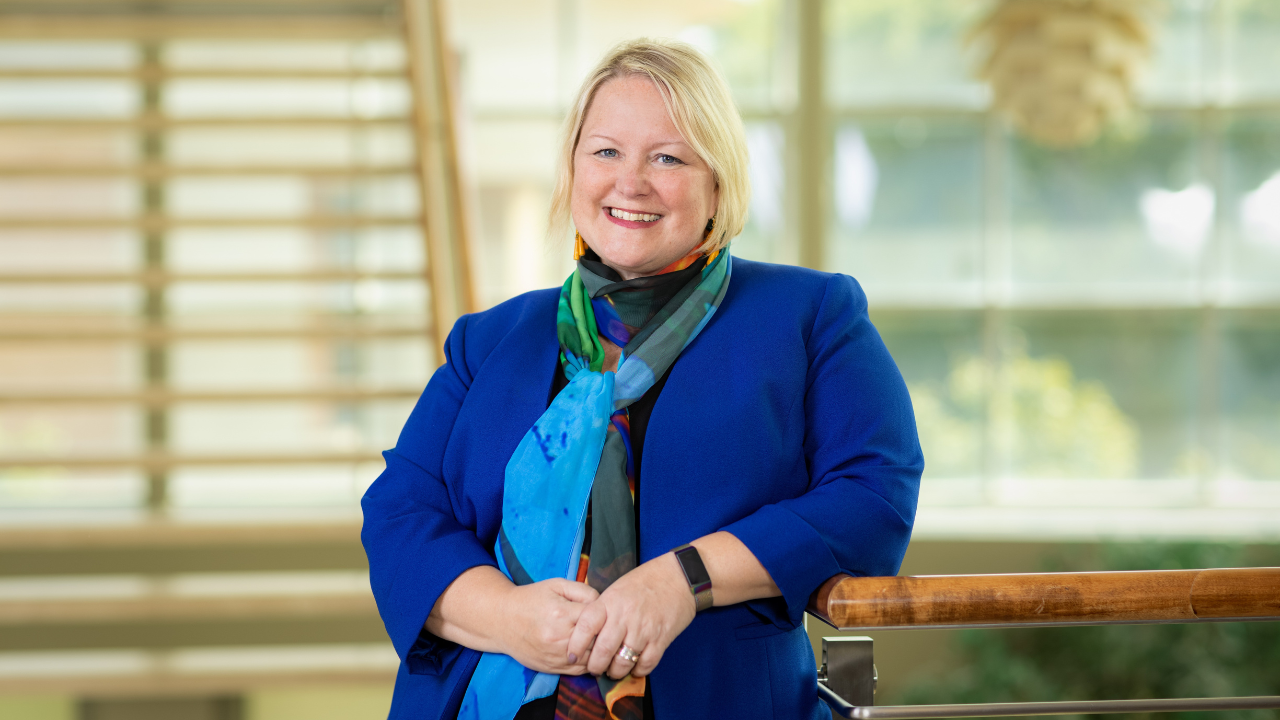
Dean Monica Swahn reflects on the School of Public Health’s growing momentum, VCU’s collaborative strengths and a vision for public health that is local, global and ready for the future.
On July 1, the VCU School of Public Health marked its third anniversary and Monica Swahn, Ph.D., M.P.H., completed her first full year as dean. We spoke with Swahn about the School’s progress, what she has learned about VCU and the opportunities ahead.
What are you most proud of from your first year at VCU?
I am most proud of the momentum we have created together and the foundation we have established for the School’s next phase of growth.
One of our most significant accomplishments was completing a new strategic plan, shaped by the ideas and aspirations of our faculty, staff, students and partners. It gives us a shared direction and clear priorities around student success, research excellence, workforce development, community impact and global engagement.
Together, these priorities reflect what I think of as Public Health 2.0, which I frame as a more interdisciplinary, innovative, technologically informed and globally connected approach to improving health. The complex challenges facing our communities cannot be solved by public health working alone. We need to connect expertise, perspectives and resources across disciplines and sectors.
During the past year, we also advanced our accreditation process, expanded our academic programs, strengthened our research enterprise, and deepened our partnerships across VCU, Richmond and Virginia. I am incredibly proud of what our relatively young School has accomplished while continuing to define who we are and what we want to become.
What was an unexpected challenge, and how did you approach it?
The greatest challenge was not any single issue. It was the complexity of building a School while also operating it.
We are developing programs, systems, leadership structures, partnerships and traditions while meeting the daily needs of our students, faculty and staff. There is no pause button while the foundation is being built.
That has required us to establish clear priorities, make decisions with the future in mind, and remain flexible when circumstances change. I have been fortunate to work with fantastic colleagues who care deeply about the School and are willing to create something new together.
VCU is deeply rooted in Richmond. How has the School strengthened its connection to the city and the Commonwealth?
Richmond is central to who we are. It is an urban community with tremendous strengths, but also persistent inequities in health, opportunity and life expectancy. Our responsibility is not simply to document those inequities. We must work alongside communities, policymakers and public agencies to address them.
Over the past year, we launched the Office for Medicaid Evaluation and appointed new leadership for the Center on Society and Health. These initiatives strengthen our ability to evaluate programs, inform public policy, and support state and local decision-makers.
We also became an institutional member of the Virginia Public Health Association and sponsored its annual meeting. In February, our Public Health Student Association partnered with the association to host a Legislative Advocacy Day. Students helped advocate for an amendment providing nearly $32 million in additional funding for Virginia’s core public health systems and services.
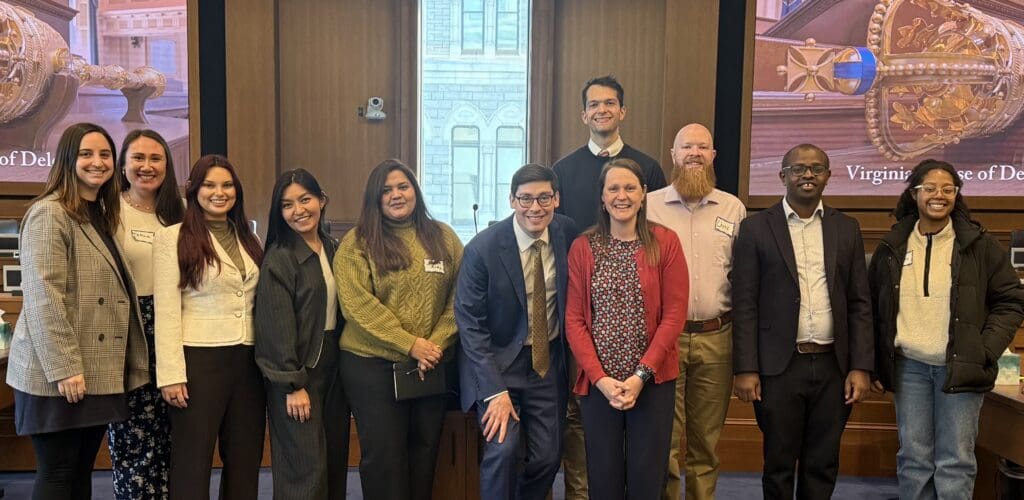
That experience was especially meaningful because it showed our students that public health leadership is not abstract. Their knowledge and voices can influence policy and strengthen the systems on which communities depend.
Building a strong research enterprise is crucial for a new school. What progress have you made?
One of our most important steps was appointing Nicholas Thomson, Ph.D., as the School’s first permanent associate dean for research. He will help shape our research strategy, strengthen the infrastructure supporting investigators and research teams, expand interdisciplinary partnerships and create new opportunities for faculty, staff and students.
We are building from a strong foundation. The School ranked 47th nationally in the 2025 Blue Ridge Institute for Medical Research rankings of schools of public health and 36th among public universities. Our annual research expenditures also increased by 4.6%, from $9.74 million to $10.19 million.
Our next step is to create an environment in which more strong ideas can succeed. That means supporting investigators at every career stage, strengthening grant-development resources, building interdisciplinary teams and connecting our faculty more intentionally with expertise across VCU and VCU Health.
Research excellence is not measured only by awards, expenditures or rankings. It is also reflected in the people we develop, the knowledge we produce and whether that work ultimately improves lives.
How are you preparing students for a changing public health workforce?
Workforce readiness must be embedded in everything we do. Our graduates need strong scientific and analytical skills, but they must also be able to communicate effectively, work across disciplines, use emerging technologies responsibly, and translate evidence into action.

I am especially proud of the progress we have made toward creating our Bachelor of Science in Public Health. The proposed program has received university approval and is now moving through the remaining external approval processes. Pending those approvals, our goal is to welcome the first class in fall 2027.
An undergraduate program will be transformative for our School. It will allow us to reach students earlier, introduce them to the breadth of public health careers, and create stronger pathways from undergraduate education to graduate and professional study.
We are also launching two undergraduate minors in fall 2026, including the new Public Health and the Arts minor developed in partnership with the VCU School of the Arts. This is exactly the kind of collaboration that drew me to VCU. We are combining public health with one of the university’s greatest areas of distinction and exploring how creativity, communication and artistic expression can help communities understand health information and imagine healthier futures.
We have also expanded our Master of Public Health program with two new concentrations and an online option, making the degree more accessible to working professionals and students beyond Richmond. In addition, we launched five workforce-focused digital badges drawn from our successful M.P.H. curriculum, allowing learners to build targeted skills aligned with evolving workforce needs.
What have you learned about the opportunities for collaboration across VCU?
One of the most exciting discoveries of my first year has been the extraordinary breadth of expertise that already exists here.
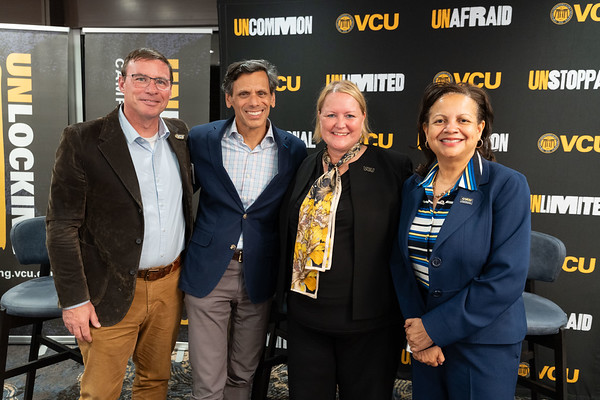
VCU brings together medicine, nursing, dentistry, pharmacy, health professions and public health within a major research university and academic health system. That creates tremendous opportunities to leverage existing infrastructure, share resources and expertise, and prepare students to work effectively across disciplines. We are one of about a dozen institutions in the U.S. to offer this breadth of health sciences.
And, public health can help connect those strengths. We bring a population-level perspective, expertise in prevention and equity, and the methods needed to understand which interventions work, for whom and under what conditions.
The Public Health and the Arts minor is another example of what becomes possible when we reach across the university and partner with some of the very best that VCU has to offer. There are similar opportunities to collaborate with engineering, business, social work, education, government and public affairs, the humanities and many other areas in which VCU excels.
We do not need to build every resource ourselves. We need to become exceptionally good at connecting people, ideas and infrastructure around consequential public health challenges.
What have you learned about VCU’s potential for global impact?
One of the most inspiring parts of my first year has been learning about the extraordinary global work already underway across VCU.
The Medicines for All Institute is a remarkable example of how innovation developed here in Richmond can improve health around the world. VCU reports that manufacturing innovations developed by the institute contributes to treatments used by 90% of people receiving HIV/AIDS care. That is an extraordinary illustration of scientific excellence translated into global impact.
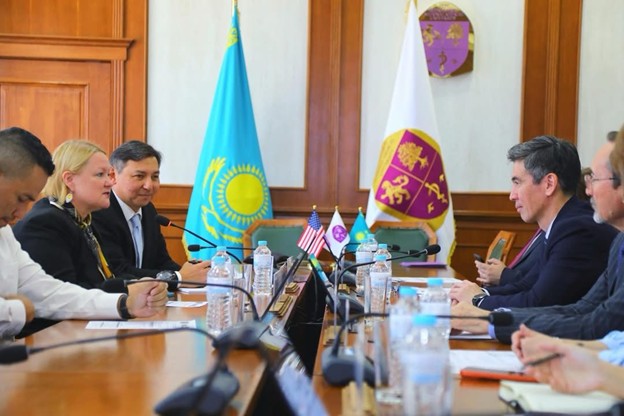
Also, the VCU–Bolashak International Scholarship Program is another example of this global reach, bringing health professionals from Kazakhstan to VCU for advanced clinical, public health and research training that strengthens capacity in their home country.
Collectively, these initiatives and others, reinforced my view that global engagement should be integral to our School’s mission. Public health is uniquely positioned to connect expertise across VCU and build equitable partnerships with institutions and communities around the world to address shared challenges.
Our strategic plan creates a pathway for expanding reciprocal global partnerships, bidirectional innovation, developing meaningful international research and learning opportunities, and bringing lessons from other settings back to Richmond and Virginia.
What is the School’s highest priority in the coming year?
Our immediate priority is completing the Council on Education for Public Health accreditation process. The site visit this fall will be a major milestone for our School.
Accreditation is more than a designation. It affirms the quality and coherence of our academic programs, research, governance, community engagement and student support. It also creates a strong foundation for the next stage of our development.
Success will mean emerging from the process as a stronger and more unified School, one that is ready to launch undergraduate education, expand its research portfolio, attract outstanding faculty and students, and increase its impact in Virginia and beyond.
What excites you most about the future?
We now have a strategic plan that defines where we are going. The next phase is about bringing that shared vision to life.
We have an opportunity to create a distinctive model for public health education, research and engagement, one that is deeply rooted in Richmond, connected to communities across Virginia, embedded within an exceptional academic health system and increasingly engaged with partners around the world.
Public Health 2.0 means preparing students for a rapidly changing workforce, bringing disciplines together to solve complex problems, embracing innovation responsibly and ensuring that research leads to meaningful improvements in people’s lives.
We have accomplished a great deal in three years, but we are still at the beginning of what this School can become. That is what makes this moment so exciting.
Categories Global Health, public health research