Biostatistics professor presents Lowell Reed Lecture at APHA 2024
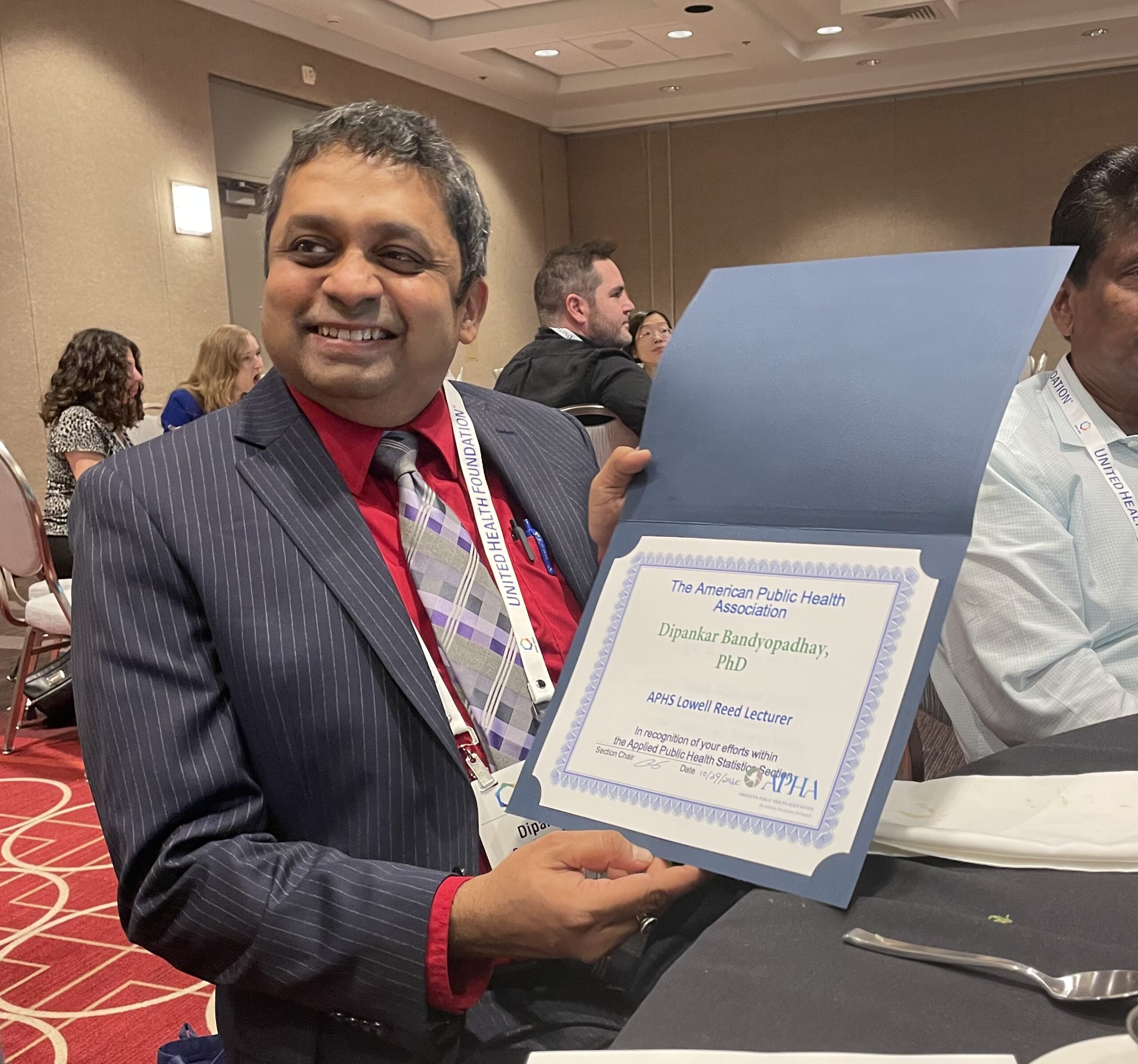
Dipankar Bandyopadhyay, Ph.D., professor of biostatistics, was named the Lowell Reed Lecturer of 2024 by the Applied Public Health Statistics Section of the American Public Health Association (APHA). With that honor, Bandyopadhyay presented at the 2024 APHA Annual meeting in October.
Patient-centered care
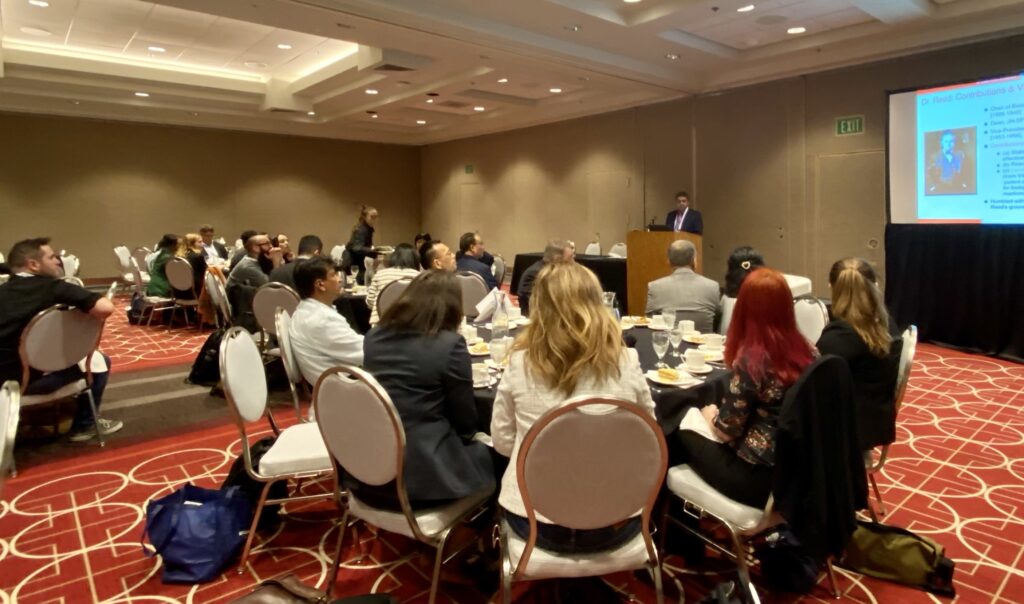
His talk, titled “Periodontal Disease: A Precision Public Health Perspective” was fitting of the conference theme “Building Trust in Public Health and Science.”
Oral healthcare costs continue to rise, highlighting the need for effective, patient-centered treatment strategies like dynamic treatment regimes (DTRs). While DTRs are well-studied in fields like psychiatry, their application in oral health was relatively unexplored until Bandyopadhyay’s research team began developing a theoretical framework over the past five years. This work focuses on monitoring periodontal disease progression and improving outcomes through innovations like sample size calculations for sequential multiple assignment randomized trials (SMART) and a DTR-based recall recommendation system to replace outdated 6-month clinic visits. This talk showcased how biostatistical data science can drive innovative solutions to modern public health challenges.
A significant honor
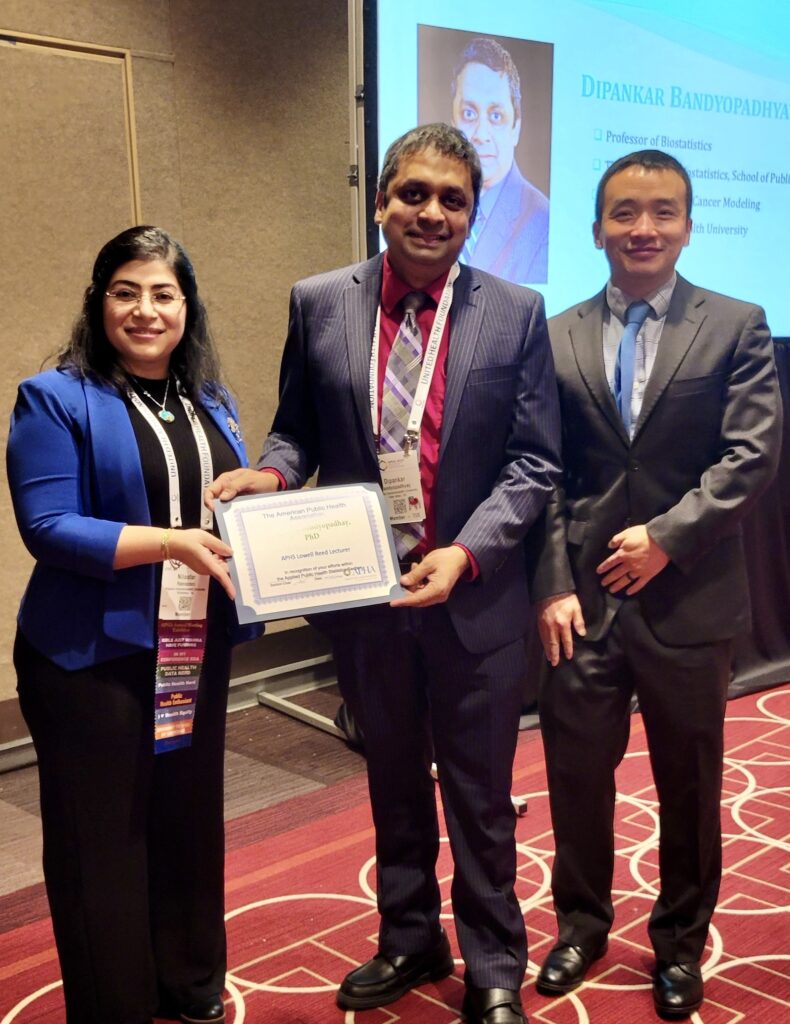
Each year, the Lowell Reed Lecture is given by a statistician who has contributed significantly to public health through research, teaching, and/or services, in honor of the accomplishments of Dr. Lowell Reed. He was the Chair of Biostatistics, and later, Dean of the Johns Hopkins School of Public Health and also served as Johns Hopkins University president. Reed is most noted for his discovery of the ED-50, a tool for toxicology, and the Reed-Frost epidemic model developed in collaboration with epidemiologist Wade Hampton Frost, chair of Epidemiology. Almost a decade later, Bandyopadhyay learned more about ED-50 while attending graduate school in the US. It was only recently that he learned it was discovered by Reed.
I consider this as a significant honor at this stage of my career.
The previous Lowell Reed lecturers are some of the top names in the disciplines of statistics, biostatistics, epidemiology, and public health, many of whom Bandyopadhyay learned from in his graduate school textbooks.
“I am truly grateful to the nomination team, and the Applied Public Health Statistics Committee of the APHA for considering me worthy of this,” Bandyopadhyay said.
Finding your focus
Prior to this, Bandyopadhyay hadn’t attended the APHA meetings, sticking mostly to statistics- or biostatistics-focused conferences.
“Attending the 2024 APHA was a very positive experience. I was thrilled with the variety of content and topics being presented. I learned not to restrict myself to biostatistical analysis and interpretation from the data in hand, but to look more deeply into the ‘human side’ of each problem, and get motivated to address the inherent public health issues.”
Bandyopadhyay explains biostatisticians who work on academic health campuses have the tendency to be spread thin, collaborating on a variety of disciplines. He feels it is important to have a focus area – he chose oral health some 18 years ago and stuck with it – and build a body of innovative published work in that area. This can help you focus, generate excitement around an issue, and have a greater impact on your field and career.
Prior to this honor, Bandyopadhyay was named the 2020 Gertrude M. Cox Lecturer, sponsored by the Washington Statistical Society (the largest and oldest chapter of the American Statistical Association) and RTI International.
Categories Awards, News
Comments
Comments are closed.