7 social work students’ research accepted for VCU’s Graduate Research Symposium
Seven graduate students from the VCU School of Social Work had their work accepted for the university’s 29th annual Graduate Research Symposium on April 22. Six of them – two Ph.D. students and four master’s students – are scheduled to present throughout the day.
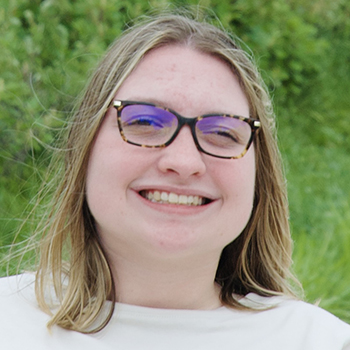
Emma Adcook, M.S.W. student
Presentation: Adapting Acuity Scales for Community Partners: The Importance of Community-Engaged Research
Given my lived experience with a physical disability, I strive to highlight a person’s strengths whenever possible. I was able to do that by including a wider response scale for the Katz Activities of Daily Living instrument. Additionally, I am passionate about community-engaged research; I love the premise of empowering community partners to enact change.
Abstract
Background: VCU’s School of Social Work Evaluation Lab collaborated with Circle Center, a community organization that provides adult day services, to review and offer recommendations on their current intake cognitive, psychiatric, and activities of daily living (ADL) acuity scales to reflect a more standardized measure. Methods: After completing a literature review of possible scales that measure psychiatric symptoms and ADLs, we created a list for the client, based on the scales that were most widely used and validated by the existing literature. The client selected the Katz Index of Independence in Activities of Daily Living (Katz ADL) and the Neuropsychiatric Inventory-Questionnaire (NPI-Q) to combine with their current scale to create an updated version. Results: Both scales were adapted to accommodate the items of interest. For example, the Katz ADL scale anchors were changed to a wider response scale to reflect greater independence when possible, while some NPI-Q items were removed. The final combined measure consisted of 17 items capturing constructs such as delusions, aggression, disinhibition, bathing, dressing, and transferring, that can be summed to create a total score indicating acuity.
Conclusion: The updated measure reflects a combination of gold standard measures, practice-informed questions, and lived experience, that can be easily integrated into practice. Overall, this is an example of a successful community partnership, highlighting the importance of balancing rigorous research with client needs. Community engaged research is important because it ensures that the community organization feels empowered to enact change.

Lisa Borntrager, Ph.D. student
Presentation: Complex Trauma, Internalized Homophobia and Suicide in Sexual Minority Adults: Does Level of Outness and Sexual Identity Centrality Matter?
It’s important to ensure that we are investigating the mechanisms of what makes certain groups more at risk of suicide, while exploring ways that social workers can help intervene. For LGB adults, we must investigate how complex trauma affects their trajectory towards suicide, especially during this current period of heightened political attacks. LGB adults deal with systemic and interpersonal trauma due to their oppressed identity within American society, which often lead to internalization. This has a tremendous effect on mental health and suicidality. Uncovering the paths towards higher suicidality is key to providing adequate intervention.
Abstract
Background: Suicide is a major cause of death in the United States (CDC, 2023), with LGB individuals at even greater risk of suicidality (Meyer, 2003; Hottes et al., 2016; Narang et al., 2018). Minority Stress Theory (MST) posits that distal and proximal stressors contribute to adverse health outcomes, including internalized homophobia (Meyer, 2003). Complex trauma has also been shown to have a strong relationship with suicidality (Herman, 1992; Charak et al., 2023; Maercker et al., 2022). This study seeks to examine if the relationship between complex trauma and suicide is mediated by internalized homophobia in sexual minority adults, and the extent to which level of outness and sexual identity centrality moderate the relationship between complex trauma and internalized homophobia.
Methods: This study utilized existing cross-sectional baseline data collected from 2016 to 2018. Data from 1,518 sexual minority adults were included in the sample. Data was analyzed with the structural equation model (SEM) approach using Mplus 8 (Muthén & Muthén, 2017). Three SEM models using Maximum Likelihood Robust were built. Fit indexes for model one showed an over-identified adequate model (χ 2=692.79, df=428, p<.001, CFI=.86, TLI=.85, SRMR=.079, RMSEA=.02).
Results: Results indicate that higher internalized homophobia significantly predicted higher suicidality. Additionally, higher complex trauma, lower levels of outness, and lower levels of sexual identity centrality significantly predicted higher internalized homophobia.
Conclusion: While the full mediation and moderation analyses were insignificant, this study makes a meaningful contribution to the MST literature and has implications for direct social work practice with sexual minority adults.

Sooyeon Jang, Ph.D. student
Presentation (accepted but not presenting): Does SNAP Mitigate the Effects of Income Volatility on Food Insecurity?
Drawing on both personal experiences and broader social concerns, I have developed a strong interest in poverty and in social welfare programs that help individuals escape it. While poverty is associated with numerous complex issues, I believe that economic hardship has the most far-reaching and compounding effects. For this reason, I am particularly interested in welfare programs that provide direct financial support. This study is situated within that broader interest. In particular, among low-income populations, unstable employment can lead to income volatility, which may have significant negative impacts on daily living conditions. I expected that such income instability would have especially harmful effects on participants in the Supplemental Nutrition Assistance Program (SNAP), and this expectation motivated the analysis. Additionally, as an international student, I believe that studying and understanding social welfare systems in the United States will be highly valuable for my future academic and professional development.
Abstract
Rising income volatility, driven by unstable work schedules among low-wage workers, has become an important factor shaping household well-being. Because food spending is often one of the most flexible parts of a household budget, fluctuations in income may increase the risk of food insecurity. This study examines whether participation in the Supplemental Nutrition Assistance Program (SNAP) helps buffer this effect among low-income households in Virginia using 2024 SIPP data. The findings indicate that although income instability is associated with greater food insecurity, SNAP participation does not significantly mitigate the impact of income volatility.

Liliana Morales, Ph.D. student
Presentation: Perspectives of Cultural and Family Influences from Latino College Students on Dating Violence, Dating Norms, and Healthy Relationships
My research has always focused on Latino communities, especially how acculturation, family, and cultural values shape people’s experiences. In the past, I looked at these ideas in different areas, but it wasn’t until I started working with Dr. (Adrienne) Baldwin White and her data that I became more interested in dating violence and gender-based violence. This shift still feels connected to what I’ve always cared about, I’m just now looking at how family and culture influence how people understand relationships, safety, and harm. Working with a Latino college student sample has been really eye-opening because it includes such rich perspectives on healthy relationships, sexual violence, and sexual harassment. This project has been a really meaningful learning experience for me, and I’m excited to keep building on it, write more papers, and continue highlighting the experiences of Latino students in my future work.
Abstract
Background: Latino college students face elevated risk for dating and sexual violence, yet their perspectives on dating violence, healthy relationships, and cultural influences remain understudied. Research shows cultural values (familismo, machismo, marianismo) and acculturation processes may shape relationship communication, help-seeking, and perceptions of harm. This study examines how Latino college students define dating violence and healthy relationships within college contexts where social and cultural norms intersect.
Methods: Qualitative data were drawn from a larger mixed-methods study on cultural norms and relationships among students. Participants (N = 445) completed an online survey and optional virtual interview. This analysis focused on Latino college students (n = 16), ages 18–25. Interviews were coded using inductive thematic analysis in Dedoose.
Results: Participants defined dating violence in multiple types of abuse including physical, verbal, psychological, and sexual abuse.They primarily conceptualized dating violence within committed or ongoing partnerships rather than casual or early-stage interactions. Cultural influences shaped these definitions through traditional gender roles, silence around violence, and the normalization of abuse, while some participants highlighted individual experiences, such as lived abuse or empowerment, as influential. These accounts suggest that family influence can function as both a risk and a protective factor depending on the messages communicated. Healthy relationships were described as involving mutual communication, consent, autonomy, emotional safety, emotional connection, security, and shared growth. Participants described cultural dating norms as including male-initiated pursuit, parental control around age restrictions, dating within the same culture, family involvement and marriage-oriented expectations. They also described expressing romantic interest through both direct approaches, such as openly communicating feelings, and gradual approaches, including building friendships over time. Participants’ responses reflect generational and cultural shifts, as many acknowledged traditional norms but ultimately rejected them in favor of more egalitarian definitions of dating violence and conceptualizations of dating norms.
Conclusions: These findings suggest Latino college students actively negotiate and reinterpret cultural messages through experiences, acculturation, and new environments. Prevention programs may be strengthened by creating space for students to reflect on conflicting cultural messages, discuss how family and community norms shape their views, and build skills to recognize harm across relationships. Gender-based violence prevention should acknowledge the complexity of students’ cultural worlds. Future research should examine how this meaning-making process operates across forms of gender-based violence and relates to help-seeking, violence outcomes, and prevention effectiveness.
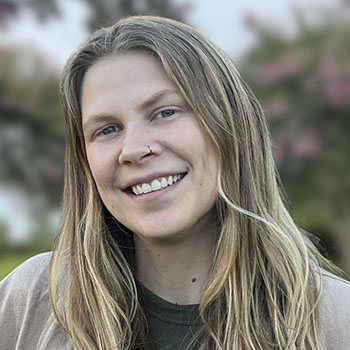
Cait Parker, M.S.W. student
Presentation: Factors Influencing Child Welfare Stipend Program Alumni Decisions to Leave Public Child Welfare
The child welfare system experiences high turnover, and I am curious about what factors influence retention. I want to contribute to understanding and sharing information that can better support child welfare workers, so in turn, they can best serve their population. Children in foster care often experience significant loss and frequent transitions, and being assigned to a new caseworker contributes to this problem. Given that children in foster care benefit from familiarity and consistent relationships, retaining caseworkers reduces additional disruptions. I am interested in how the Child Welfare Stipend Program (CWSP) prepares alumni for child welfare work and what factors influence their decisions to remain in or leave the child welfare workforce. I hope that my contributions can guide stakeholders in strengthening retention and improving workforce stability to better serve children involved in the child welfare system.
Abstract
Background: Turnover among child welfare workers is an ongoing issue. The Title IV-E Child Welfare Stipend Program (CWSP) is one program that aims to improve retention by creating a pipeline of well-trained, prepared child welfare workers. The purpose of this study was to examine preparedness for practice and retention among CWSP alumni in Virginia. We used quantitative and qualitative data from two time points of a longitudinal evaluation of the Virginia CWSP that surveyed 113 alumni who graduated in 2018-2025. We found that 86.2% of alumni worked in a local DSS agency immediately after graduation. Of those, 37.6% stayed in the same job, 16.5% moved jobs but remained working in local DSS agencies, and 27.5% left child welfare practice at time 2 (0-7 years post-graduation). Overall, 63.3% of alumni who responded to the time 2 survey were still working at a local DSS agency. Examining factors associated with retention at time 2, higher levels of preparation for practice were associated with still working in child welfare. The qualitative data provided emerging themes regarding alumni motivations to leave or stay in child welfare practice, such as work-life balance, enjoyment of the work, agency environment, along with opportunities for licensure and career advancement. Findings suggest that the majority of VA CWSP alumni remain working in local DSS agencies and that preparedness promotes retention.
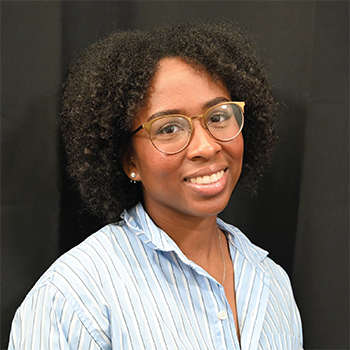
Alexis Payne, M.S.W. student
Presentation: Rage as a Methodology: Literature Review of How Black Women Scholars Conceptualize and Use Rage Transformatively
Before attending VCU, I sought a school of social work that would allow me to engage in research. My initial undergraduate research experience demonstrated its value as a tool for problem-solving and analyzing solutions. At that same time, a VCU student recommended Dr. (Nicole) Corley, sharing her work’s particular focus on Black women, which immediately drew my interest. Within my first semester, I was eager to work with her, and I have since valued all of the projects I have been involved in under her mentorship. This project on Black women’s rage has been especially meaningful in ways I did not anticipate, particularly given current social and political conditions that underscore the importance of work centering emotional expression and understanding rage as a transformative force for social change. I look forward to seeing how this literature review contributes to new possibilities for minoritized communities.
Abstract
Black women’s anger has long been misrepresented, despite its power as a tool for survival, healing, and liberation. Inspired by Audre Lorde (1984) and bell hooks (1996), this exploratory review centers Black women’s rage as a transformative response to systemic oppression and examines how it is conceptualized within academia, particularly in social work. Drawing on literature published between 2000 and February 2026 and guided by librarian-supported searches across VCU Libraries, Google Scholar, and ChatGPT, the review synthesizes scholarship on rage using iterative keyword and citation tracking, full-text analysis, and collaborative synthesis methods. Findings show that while scholarship on rage has grown over the past 10–15 years, with a strong theoretical and analytical base and emerging attention to Black women’s academic experiences, its practical application in social work research and practice remains limited. This work highlights the need to further develop rage as a methodological framework that centers Black women’s voices and challenges dominant narratives within academia.
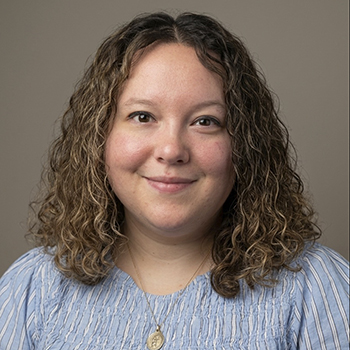
Lauren Slaughter, M.S.W. student
Presentation: A Changing Landscape: HIV/AIDS Training Needs for Providers Across Virginia
My current research focuses on assessing the training needs of HIV care providers across Virginia to expand access to care and knowledge. Looking ahead, I aim to use these research skills to bridge the gap between data and people, amplifying the stories of both clients and the dedicated individuals who serve them.
Abstract
Background: Funding cuts to the Ryan White HIV/AIDS Program last summer sparked this research. After my field placement (VCU’s HIV Education Program) and several partner agencies lost critical resources, my supervisor and program director (Rob Rodney, M.S.W.) launched a statewide needs assessment. I spearheaded the data analysis and developed programming recommendations for the team.
We shared these findings with other VHARCC sites to help them adapt their services to specific regional needs. With the support of our regional director (Dr. Laura Pedersen, M.D., M.P.H.), we are now preparing this research for national publication. Alongside my coursework, internship responsibilities, and the GRS, I am currently drafting the final manuscript.