Student Spotlight: Vimbai Dihwa
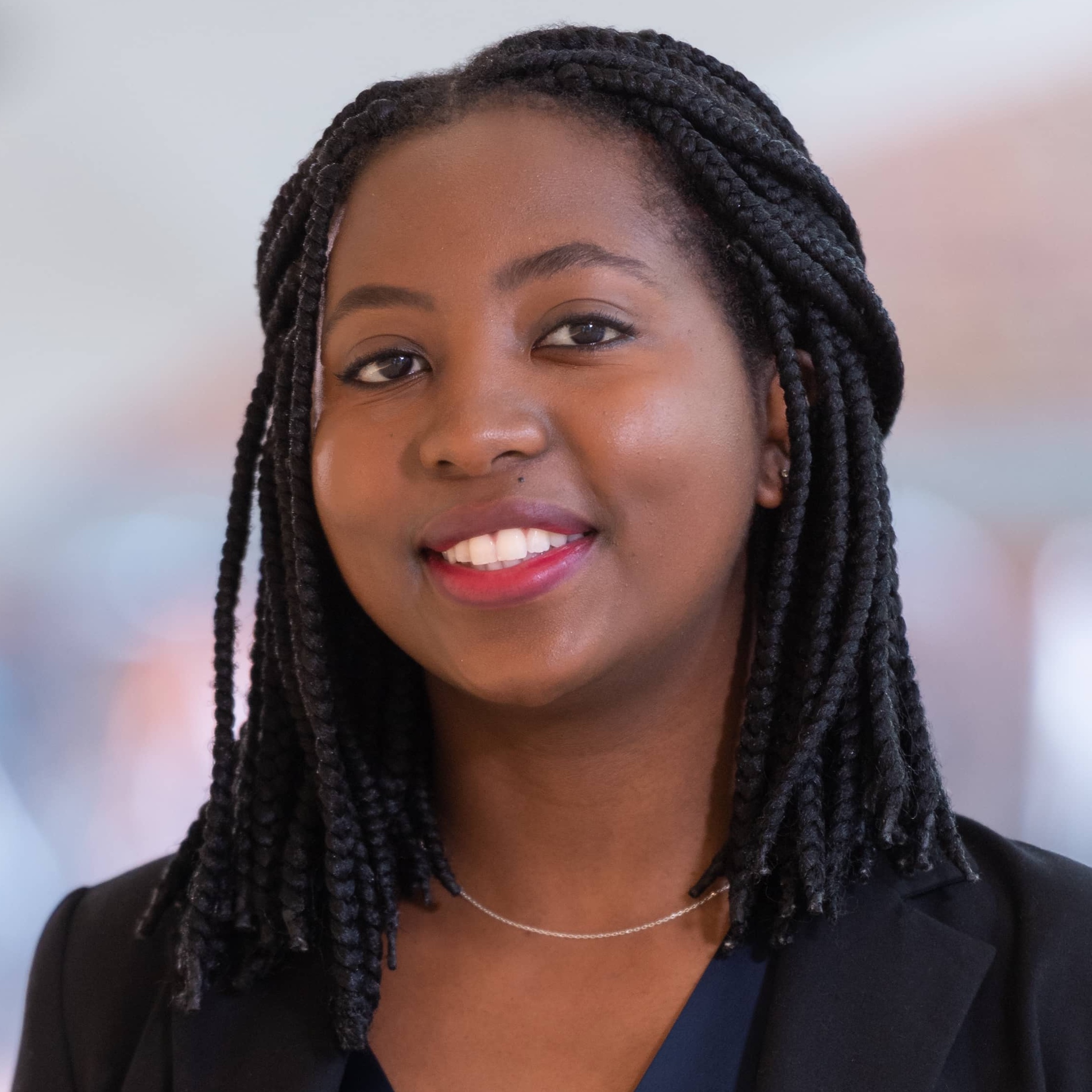
Vimbai Dihwa is a Ph.D. candidate in the Healthcare Policy & Research program in the Department of Health Policy. She received both her Bachelor’s Degree, in Biology with a Chemistry minor, and her Master of Business Administration from Rosemont College in Bryn Mawr, Pennsylvania. However, she originally comes from Zimbabwe and completed high school in Namibia, both countries in Southern Africa, and her experiences with the health care system there were a strong influence on her decision to study the field of health policy. She has previously interned with the World Health Organization and worked as a consultant within the United Nations system, and is now studying under the mentorship of Health Policy chair Peter Cunningham, Ph.D. Her passion for addressing disparities in access to care is one of the main elements that drives her research. We spoke last month about what her time at VCU has taught her about collaboration, having the courage to rely on your community, and finding joy in the most challenging aspects of her studies.
What originally brought you to the field of health policy?
I’ve always really loved biology and the health sciences. It took me a while to figure out my place in that. When I was in high school and college I was interested in the clinical side of things, but even then my dream was always to do that so I could be able to work in policy. At the time I was mostly focusing on international organizations — I’ve always had an eye for the broader picture of health. I studied biology and graduated from undergrad in 2015. I did my masters in business, with a focus in health care. After that, I got to intern at WHO [the World Health Organization], which was an amazing experience. But it also showed me, “OK, these are the skills I have, and these are the limits to my knowledge and what I understand.” I was really passionate about my internship, and the contract work I was doing after that. I wanted to do it well! That’s what drove me to get more education. I figured I could learn as I go, but it would be better to get as many skills as I can so I will be able to do my work more effectively. That’s how I ended up in Health Policy, but I think conceptually, I’ve always been here. This is a great fit for me, but [for a long time] I didn’t even know that health services research existed as a field.
What led you to VCU in particular?
When I was looking at schools, I was looking up all of the different programs that existed within the field of health policy. I really, really loved the work that our team does with Dr. Cunningham and Dr. Barnes, because not a lot of schools had that combination: the academic aspect, but also working so closely with state [government] departments. When I was looking, those were my focuses. I wanted to go to a program where it wasn’t just the typical ivory tower situation – where you’re studying, but you’re disconnected from what’s happening on the ground. Ultimately, when it came down to my last few choices, VCU won me over because of that.
Tell me about your research focus for your dissertation. What is your specific focus, and what is the importance of it to the wider world?
I am really passionate about health services research, especially the access piece. I grew up in Zimbabwe, and even there, depending on what type of insurance you have, it affects who can access care, and what type of care you can access. That’s been an ongoing thread in all of my work, and has shown up heavily in my dissertation, where I’m looking at access to care during times of national crisis, focusing on disparities and unmet needs. That’s the bulk of my research – even as a graduate research assistant, most of my work has been on access to care. In the broader world, I feel like this is important, because I don’t know if people realize this, but if everybody doesn’t have access to care, that eventually affects everyone. It affects the overall cost of care in the whole country. It’s not just about individuals, it’s the fact that broadly the whole system needs to work well together. And for that to happen, there shouldn’t be gaps. There shouldn’t be disparities in who gets to access care and to what extent they access it, because then we never fully address public health crises.
That’s why this is important to me. I think health is a right. I think people differ in how they see health, either as a commodity or a right. I definitely fall on the side of basic care being a part of the human experience. We are all susceptible to some kind of health issue at some point, and everybody should know that they can go somewhere and get treatment when they need that. Whether or not they can access that should not be determined by anything they cannot control, like their race, or their gender identity, or whether they happen to have been raised in an urban or a rural community, or been born in the global South. Whatever the factor is, I feel like it’s a no-brainer that those factors should not be affecting whether or not you get to access care. That’s where my passion lies, and that comes out very strongly in my dissertation.
What in your research has surprised you?
There have been two big surprises during the program. There’s the gap between information and what ends up happening in the practical sense, in terms of health policy. Before I joined the program, I thought, “Oh, maybe when things don’t change, it’s because people who are making these policies don’t know what this research says! So in public health we need to inform more.” And I think that piece has surprised me – that sometimes the information is out there, but there are so many other factors at play, like political leanings, or funding, that also effect to what extent that knowledge gets translated into decisions. That’s another driver and motivation in my career – the idea of evidence-based policies. That whenever those policies do finally get made or get changed, it should be based on evidence, and it’s still our job to continue producing work that can support to those policy changes, even if not all of our work ends up leading to that.
The second has been the joy of learning hard things, which sounds… [laughs] it’s something that surprised me about myself. I thought the biggest motivator would be the outcome — publishing and things like that. That is joyful in and of itself, but the ability to see something and know that I don’t know what is happening, but trusting that I have the tools to learn it, is something that I definitely cherish about this program. I was in classes that at the beginning, and was like, “There’s no way. I have no idea what’s happening.” [laughs] Going through that learning process and coming to a point where it’s like, “Oh wait, I get it. I actually enjoy this now!” has been really lovely and kind of empowering going forward.
Even now, when I face challenges in my dissertation data, to know that I have seen that shift in me as a learner and a researcher, it’s like, “I don’t have to know everything, but I do have the capacity to learn things.” I think that’s important. Our world is ever-evolving, so beyond technical skills like coding or data analysis, it’s also important for us as researchers and human beings to be open to learning new things, and to know that even if things evolve, you have the capacity to change and to show up in a better way.
You mentioned facing challenges – tell me about a big challenge you’ve had to overcome in the course of your research.
I’ve been going through the process of accessing restricted data, and I think that has been the most challenging. I can’t even believe I’m saying this, because there has been course work that was difficult, but this has been particularly challenging, because of the extent to which it falls out of my control. I think that’s a common thing in research, so as much as I have not enjoyed this particular experience, I think it’s teaching me a valuable lesson in persistence. Especially in public health, with these things we say we really care about. In the past few years, we’ve seen what has happened with COVID-19 and all these different public health challenges, and the importance of persistence as researchers and public health advocates despite bureaucracy and changes like, “You need to do this for this policy to pass, or you need to do this for your research to work.” I think that paradigm shift has helped me absorb the shifts of requirements in a better way. I’ve realized that this is an important skill to have anyway, because we live in a world where the things we want to do, even if they make sense, might be challenged.
What advice would you give students who are considering going into a PhD program?
I would advise students to… [long pause] strengthen their capacity to seek help. To reframe the perspective of seeking help. A lot of people who start PhDs have already been academically inclined, and you’re doing this because you’re like, “Yeah! A PhD – I can do it!” But I think a lot of things that happen in the PhD format are so new, and they’re pushing you in a short time frame to learn things and do things you’ve never done. This is advice I wish someone had given me – and they did, a little bit — but just the idea of reframing help as being you tapping into your resources. Being able to know that there are people who are happy to help you, and you too will be happy to help others when the time comes. It’s part of the academic research process, and it’s what makes researchers better. It’s that “iron sharpening iron” situation, where you will seek help, and by people explaining things to you, that helps them solidify their knowledge. And at some point, you start explaining things, and that helps you solidify your knowledge too. I think that’s really important, even in classes, when people are like “I don’t know what’s going on, but I don’t want to look silly for asking this question.” That’s something I love about the academic environment. It’s not a perfect environment, but you not knowing something is not necessarily a reflection of your capacity to know.
Can you tell me about a memorable partnership you’ve been involved with through your research?
Yes. As soon as you asked that, I thought of 20 different things! [laughs]
You can tell me any and all that you want. [laughs]
My favorite collaboration was probably my first within our team. I worked with Dr. Heather Saunders, who has since graduated. She was the first senior student I worked with on a project, and I really liked the collaboration because it reminded me that while we’re coming in and learning things, we also come in with skills already. This is also important for new students. I loved the collaboration because there was a lot I couldn’t contribute to the team, because I was just starting out. But in the same light, I was coming in with work experience and a different perspective that not everybody has. Growing the courage to share that, while simultaneously holding what I don’t know, was a new experience that I enjoyed.
I wanted to know about your hobbies, passions, and interests outside school. What are you into doing in your spare time?
My spare time, when I have any!
When you have any. [both laugh]
I really like being outdoors, going dancing with friends… indoor rock climbing is really amazing. I haven’t had a lot of time for that lately, but that is fun when I get to do it, because I have a slight fear of heights, so it’s hard to think about anything else when I’m halfway up a wall trying to figure out what to do. I’ve really enjoyed the James River since moving to Richmond, especially during the warmer months, being able to go walk and be in nature but not too far from home. I like traveling as well, and I look forward to getting back to that when I’m no longer on assignment [laughs]. I like traveling far and near, seeing little places nearby. Because I feel like when we live where we live, it’s easy to think “this is the world,” so it’s nice to be reminded of the differences in context that people live in, for better or worse. To think “Oh wow, I could volunteer more, or do more,” or “This is really nice, it’s peaceful and not everything’s falling apart.”
It helps to be reminded of that sometimes. So was there anything else you wanted to talk about that we haven’t addressed?
I don’t know where this would fit, I guess it’s for incoming students. With collaborations – it’s a very team-oriented field. Even though you’re doing most of your work as an individual, a lot of it is about learning from other people and sharing knowledge, fostering that. I really enjoy going to conferences and talking to other people in the program. Being like “hey, what are you doing? What’s going on?” Not only that, I think in our team it’s really special, because not everybody is on the academia side of things, so even learning from [research coordinator] Maggie [Grant] or you [administrative assistant Marilyn Drew Necci, at your service] in meetings, and hearing perspectives that are not necessarily in our book base, for lack of a better term, and knowing there’s a space for that.
I think that’s something that’s really special in health services, when you can bring your whole life experience. I can bring my academic knowledge, but also, I’m a person! I’m a Black woman immigrant. I can bring that information into my work, because I can look at something and think, “Wait, maybe this is happening because of this reason,” and see that in a way that someone who doesn’t have that experience might not see it. But they can also bring their experience if it’s different from mine, so I like that. Being surrounded by people who have different life experiences, [offering] a lens on it that helps show the bigger picture.
One last thing – community support. I would not be able to do this without my family, my friends, my boyfriend, other students in this program, or even my advisor [Dr. Cunningham] reaching out when things are difficult to make sure that I am OK. Especially people who are not in academia. I used to feel like, “Oh, I don’t know if they’ll understand, I don’t want to stress out my parents, or my family,” but it’s really a joy to be able to share this experience with them. And they show up and are supportive. They remind me that this is not everything. It’s very important, but it’s not your whole world; it’s not your whole worth as a human being. I think leaning into that community support is really important. Otherwise, this becomes really difficult to complete.
Categories Department News, Student news