Alumni Spotlight: Muloongo Simuzingili, Ph.D. ’21
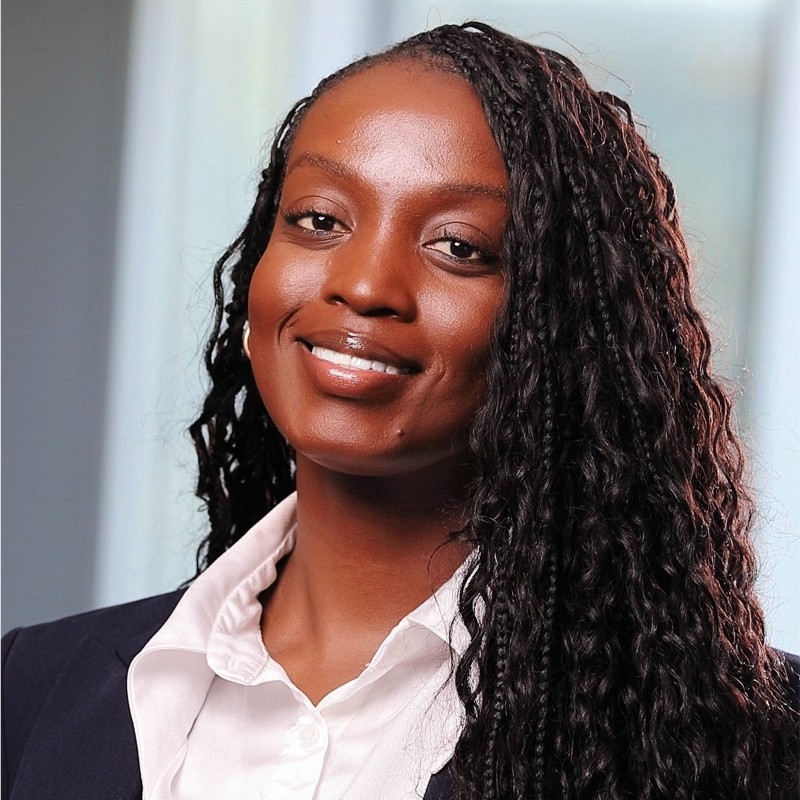
Muloongo Simuzingili, Ph.D. ’21, is an alum of the Healthcare Policy and Research program within the Department of Health Policy. She is currently an Associate Principal Scientist & Health Economist with Merck, but has also worked with The World Bank and the Centers For Disease Control and Prevention since completing her education. However, her story starts well before she came to VCU, when she was studying for her Master’s Degree at the University of Cape Town in South Africa. Working first with the non-profit Southern Africa Labour and Development Research Unit in Cape Town and then with the Civil Society for Poverty Reduction in her native country, Zambia, led her to shift her attention from macroeconomics toward public health. She explains that process below, and how it led her to VCU, where she was surprised to find a community bringing together scholars from all over the world with backgrounds in many different fields. Indeed, she attributes a great deal of her success to the fact that she was surrounded by a community that encompassed many different experiences, and to the wide variety of skills she learned and experiences she had during her time in the Healthcare Policy and Research program.
I wanted to start out by asking you what originally brought you to the world of health policy. I was looking at your LinkedIn and I see that you were doing labor research in South Africa and poverty reduction work in Zambia. Then you came here. What was the path that led you from what you were doing in South Africa and Zambia into the Health Policy Ph.D. program?
I’m originally from Zambia, and after I completed my masters at the University of Cape Town, I went to work as a macroeconomist. Unfortunately I wasn’t able to stay in South Africa, where I initially thought I wanted to work. I had to go back to my home country — which actually turned out to be a good thing for me, because while I was there, I ended up working with different non-governmental organizations. For example, the Civil Society for Poverty Reduction. In working there, even if I wasn’t doing what I originally thought I was going to do during my undergraduate and Master’s program, I got exposed to working in different social sectors, such as agriculture, social protection, and health.
I was trained in micro- and macroeconomics for my Master’s – my thesis was in macroeconomics. One thing I realized while I was in that job is that there was a lot of research that I wanted to do for the organization, but I couldn’t, because I still didn’t have enough tools. At first it was like, “I have a Master’s, I should be able to do this.” But I just hadn’t had enough training yet. That was one thing that made me realize I needed to do a Ph.D. and gain more technical skills, because I needed to be able to plan surveys. I was doing a lot of work that involved talking to policy makers, and I wanted to come from an informed place. Sometimes in such spaces, there’s a lot of rhetoric that we say. “We need to allocate this amount of money to the health sector.” But I wanted to answer this question: “If we actually allocated this amount of money to the health sector, how much exactly are we going to improve health outcomes?” I had a resource governance position, overseeing how the government is spending their money, so when I would go into local communities and see how poor the health conditions and outcomes were, I was like, “Clearly what we are doing is not working.” I wanted to answer the question of how we can best allocate resources so that they provide the best outcome for low-income people and for the health of vulnerable populations.
When I was doing my masters at UCT, I connected with a couple of professors, and one of them, Prof. Amos Peters, knew somebody at VCU. And when I was having these conversations with him, he said, “I know of a good program that you could do in health policy. Some of these questions you’re thinking about, I think you can answer in that program.” And I wasn’t really sure, because at first, I didn’t know if I wanted to narrow down to health. I thought it would limit me, because I still, in the back of my mind, wanted to be a big-shot economist working in a central bank or something. But I was so moved by some of the things I was seeing through my experiences in this job, that I gave it a shot and applied. At that point, I was like “I don’t think they’re going to take me. Why would they just pick somebody they don’t know from Africa? Why would they accept me?” And he encouraged me, and said, “The program is looking for skill sets like yours, and with the practical things you’ve experienced, you’ll be able to contribute something to the program.” I applied, and that’s how I got in.
It was pretty much me realizing that I needed more technical skills, having questions I wanted to answer in health, and thinking I could gain from going to the program. Also, my professor encouraged me. He had already spoken to some of the professors, and he said, “There are people who could mentor you who would be interested in the topics you’re interested in.” So I reached out to some of the professors, and they were very helpful in giving me the support and encouraging me to apply.
You said you didn’t expect anybody to be interested in somebody they’d never heard of from Africa. Were you then surprised to get here and find out how many international students pass through this program on a regular basis?
[laughs] Yes, I was surprised! You hear about there being funding for [students], and I was like, “Why would they want to fund somebody from outside [the United States]?” It was definitely very surprising how diverse it was. There were so many people from different backgrounds, not just in country or nationality but in training. You come in with different experiences, and you get a little bit of everything from so many different aspects that fuse together to show the best methods and the best ways we can study these questions and provide the best answers. That’s one thing I really love about the program: being able to get diverse backgrounds and different methodologies, and use that.
How do you feel like what you did in the program set you on the path to the jobs you have now? How does your current job fits into your experience and training?
When I first came into the program my mind was only set on one way of answering questions. Being exposed to different methodologies and borrowing from the economics literature, borrowing from the epidemiology literature, I wanted to experiment with a lot of different things. I’m so happy that my supervisor, Dr. [Andrew] Barnes, was very supportive of the ideas I had of exploring different things. My dissertation (“Policies Addressing Barriers to Low-Income Women and Children’s Health Care Utilization in the United States and Kenya: The Role of Physician Payments and Cash Transfer Programs”) was a combination of different areas of work. On one hand, I looked at the US health system. I was looking at Medicaid and women’s reproductive health, and how physician payments affect substance abuse treatments. But I was also looking at an African context. I was studying Kenya data, and looking at health care utilization among women and children, applying behavioral economics topics and methodologies in there. In my final chapter, I was also looking at cost effectiveness analysis of the same program being applied in a low-income context in Kenya.
I did all these different things using different methods and different data. That allowed me, when I’m applying for particular positions, to draw on any of these experiences from my dissertation. Because I was very interested in economic evaluation and cost effectiveness modeling work, I started out by applying for a fellowship in a consulting firm — it was called Pharmerit at the time, now it’s called OPEN Health — where I worked as a health economics and outcomes research fellow. And I did that for a bit before I graduated from the HCPR program. It gave me a sense of what I liked and a feel of what it was like being in an industry like that. I applied for a different fellowship while I was in that, and [afterward] I went into another fellowship with the World Bank, an international NGO that looks at international and development health. So I got to experience working in that.
At the same time, when I was applying for the CDC, I was able to apply the work from my first chapter, where I was looking at US population health. I was able to leverage that experience as well as experience from my GRA, which was a lot of public health policy analysis work. The way I shaped my dissertation is what helped me to be able to apply for the different roles.
In my current role at Merck, it leverages from my last chapter of my dissertation, which was doing an economic evaluation. Primarily at Merck I do cost effectiveness analysis for pneumococcal vaccines for adults in the US, Spain, Switzerland, and other countries. That’s another strength I bring to Merck, as now there’s a higher push to seeing the overall health impact — how is this affecting disparities? How is this improving health equity? The training in the HCPR program helped me to be able to do that.
What do you like the most about what you’re doing at Merck now?
What I like about my current role at Merck is the methods. It’s a highly technical field. I’m doing cost effectiveness modeling, and sometimes I sit in meetings and we’re talking about data, and we’re discussing how to improve the model and how to improve the research to collect the inputs. It’s not just drawing on mathematical modeling, it’s also using my background in econometrics or policy analysis to be able to refine some of the questions, to be able to get at the right input that goes into the model. And sometimes I’m sitting there thinking, “This can’t be work because this is so fun!” I do enjoy the work, because I’m directly applying everything I learned during my Ph.D. into my program, and it’s coming in not just in the main area, but in other aspects as well. The smallest things, like the course work that I did, or the epidemiology that I did — I’m using all of that, and having to learn much more, so I like that.
I like that I get to publish. Being in industry I didn’t think publications would be something I’d focus on, but similar to my training for my GRA, the skill set that I learned in being able to write up my own manuscripts, do the research, and package it in a way that I think would be good to submit to journals [has been useful], because sometimes I’ve not only had to do that for my own personal work, but for other people’s work, where I have to give feedback on how they’re writing. I feel like with the writing, the manuscripts, being able to publish, I’m still continuing to be in that academic space, even if I’m working in industry, and I do like that. I like that I’m using exactly what I was trained for. I’m doing exactly what I did in my dissertation — I’m directly applying it. A lot of what I did in my course work has been very necessary. The skillset to be able to manage, write out those manuscripts, and work with other people to have all those publications out is something I really do enjoy. Also, I feel lucky that my team is really good and very helpful. Coming from different backgrounds, different training, everything is still fusing together for the common goal, which is improving the livelihoods of people. I think that’s at the center of all that we’ve been doing, and I really appreciate that.
What would you tell the current HCPR students from your perspective as an alum?
I would tell them that every single thing we’re taught, especially in the methods class, is so important. I feel like we sometimes underestimate what we are getting, because we think maybe it’s obvious, or you’re not going to use it, but you become a resource once you step out there. Our program really does train you in so many different things. The number of spaces I can sit in meetings and understand what’s going on – every single thing that I’ve done has been so useful to be able to have conversations, even if I’m not the one directly working on it. For example, I’m not a mathematician and I’m not the go-to mathematical modeler — though I do like a particular type of modeling — but because of the training I’ve had, I can sit in those spaces and contribute to those conversations. I can sit with epidemiologists, I can sit with clinicians, and know the types of conversations that I’m supposed to have. Also, the whole thing of being a health policy class. Policy is at the forefront of what we’re doing, because if we’re trying to make recommendations, being able to change that technical language into something policy makers can actually understand is also very, very important. I feel like during my time we did that a couple of times, and it kept being emphasized: write this policy brief, a one-pager. We do a lot of that – one-page slides to send to the CDC and say, “OK, this is exactly why we’re saying what we want to do.” I think those things are very important. Every single course, especially the methods, and that training to be able to communicate to a non-technical audience – that’s very important.
What is something you know today that you wish you knew when you started the HCPR program?
I wish I knew that there’d still be more opportunity to build on the research that I started, because I think sometimes there’s a tendency to lock ourselves into wanting to do the best and be the best. But we really underestimate the impact of even a single course paper that you write, and how you can use that to sell yourself, and show the skill sets that you have. I think I had that mindset of sometimes getting boiled down into wanting to be the best. And then coming out into this world, and I’m seeing that even the little I was doing was so meaningful and so impactful… maybe not to underestimate the work I’m doing, because there is a bigger impact and a bigger purpose for it. That’s something that I’d tell myself.
Final question: outside your job, what are your hobbies, pastimes, and passions?
I do like to travel. I went to Italy, France, and Spain over the summer. I’m now a plant mom, so I love taking care of my babies. I have two plants, Dora and Marley. I started practicing guitar — I have a guitar as well. I work out a lot, I’m in the gym quite a bit. I’m really into fitness. I love going out to try new restaurants. I’m in Pennsylvania, and there’s a good food scene in Philly, so that’s been really good. This Friday I’m going to a supper club where I get to try a Lebanese-French fusion tasting menu.
Was there anything else you wanted to talk about that we didn’t cover?
Not really, just to appreciate the professors. I think there’s just been a good selection of professors, at least when I was there — but I’m sure that still exists. They were very helpful and very supportive. And I think one thing to tell students is that when you have an idea and you’re not really sure about how to implement it, you should just voice it out. I had a lot of ideas, and I feel like my professors were always very open, willing to listen to what I had and implement those ideas into research ideas that can actually be studied and presented in an understandable way. I’m just thankful to the training I got from the program. I can’t speak highly enough of the program, it’s such an incredible program. I definitely have gotten more than I expected coming in.
Categories Alumni news