Alumni Spotlight: Robert Tyler Braun, Ph.D. ’18
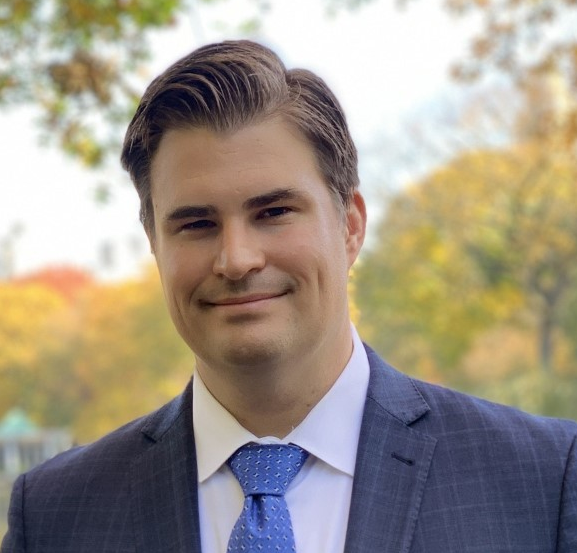
Robert Tyler Braun, Ph.D. ’18, is an alum of the Healthcare Policy and Research program within the Department of Health Policy. He’s currently an Assistant Professor in the Department of Population Health Sciences at Weill Cornell Medical College, where his research focuses on the effect of mergers and acquisitions on patient quality, cost, and utilization of long term care organizations and physician practices. He’s been studying the effects of private equity’s move into the health care industry in the United States for nearly a decade, since before it was nearly as much of a hot topic as it is today. His work in the field has attracted quite a bit of attention – indeed, one of his studies was even cited by President Joe Biden during the 2023 State of the Union Address. Our conversation with Dr. Braun ended up delving pretty deeply into the subject of private equity’s influence on today’s health care industry, and it was a very educational detour. We also learned a great deal about Dr. Braun’s experiences since graduating from the HCPR program six years ago, and the way his time at VCU helped pave the way for everything he’s done since.
From what I have seen, you have been with Weill Medical College at Cornell University since you graduated. What was your experience, going from freshly graduated into the postdoc program, up to where you are now as an assistant professor? What was that path like?
I graduated from VCU in 2018, and came in as a postdoc in August or September of 2018. Luckily, my dissertation committee at VCU included Peter Cunningham; Askar Chukmaitov; Gloria Bazzoli, who’s retired now, from the health administration department; and Len Nichols, who’s at George Mason. My dissertation was on spillovers in Medicare and Medicare Advantage in the hospital readmissions reduction program (“Spillover Theory: Unintended Consequences of Provisions in the Affordable Care Act”). Pretty tough topic to try to tackle, but I successfully defended my dissertation, and there was a postdoc opening at Cornell, and I applied. Larry Casalino, who was the division chief [of the Health Policy and Economics Division at Weill Cornell] at the time, knew Peter Cunningham and Gloria Bazzoli very well. And he like “Hey, what’s the deal with this guy?” They were like, “Oh, he’s great, you should hire him as a postdoc.”
So I came in as a postdoc at Cornell, and I started a research portfolio on private equity firms acquiring physician groups, nursing homes, hospices, and other types of health care organizations. At that time in 2018, no one knew what private equity was. I noticed that this trend was going on, and I wrote a couple of papers that got a lot of buzz. Private equity became a lot more mainstream in the field of health care. I kind of became the point person on private equity in the health care organization. Joe Biden even mentioned one of my studies during the state of the union address, so that kind of catapulted me a little bit. During my postdoc, though, I’m in a soft money environment, and in a soft money environment like a medical school, in order to become a tenure track professor, you have to get grants. The postdoc position gave me two years of guarded time where I didn’t have to get grants. I was able to develop my research portfolio, which was around private equity firms.
So I had two years of protected time. During that time, I started writing a K01 grant, which is an early-stage training grant, on private equity firms and publicly traded companies acquiring hospice agencies. I submitted it to National Institute on Aging. During my waiting time, I continued to write papers, publish, and become well regarded. On first submission I was able to get a K01, which a lot of people can’t do. I’m pretty proud of that. So that promoted me to instructor [at Weill Cornell Medical]. While I was instructor, I also got a lot of other grants based on this research portfolio from Arnold Ventures, looking at real estate investment trusts investing in nursing homes [or] physician management companies acquiring neonatology [and] anesthesiology practices. That catapulted me after two years from instructor to assistant professor. I’m in year three of my assistant professorship now, I’m tenure-track, and during that time I also wrote an R01 and just got that, so I’m actually up for promotion to associate professor, hopefully by next September. During this time, I had the benefit of being in the right place at the right time, my research becoming hot, having great dissertation advisors to help me get to Cornell, and having great mentors at Cornell to get me to the position I’m in now.
I read a MarketWatch article that gave a layman’s view of what you’re doing, and it talked about real estate investment trusts and how they affect hiring decisions made by companies they own. Tell me a little more about this research. What are you seeing with the overall trend of private equity’s involvement in for-profit health care?
You can’t paint private equity with a broad brush. There are good actors, there are bad actors, and there are some that fall in the middle. I will say from a physician standpoint, in outpatient specialties like dermatology and ophthalmology, you don’t really see big differences. Let me set it up this way: If I’m a physician, and I’m near retirement, who am I going to want to sell to? This is my retirement, my financial windfall. Do I want to sell to a hospital? They’re probably not going to pay as much for my practice, and I become an employee of that hospital system, so I have administrators telling me what to do. I can sell to another large independent physician practice, but there aren’t many of those around anymore. Or I can sell to a private equity firm. And that private equity firm comes in, says “Just keep practicing medicine the way you always do, we’ll just take care of the back-end office functions. And if you join our big platform practice, we might be able to get you higher payments, because you’re joining a larger practice. And then when we go to sell in 3 to 7 years, you’ll get a return on sale of that equity – a second bite of the apple.” They’re also going to pay you more for the practice. So as a physician, of course I’m going to sell to private equity. It’s just the logical thing to do. I have to lay that context out there so people understand that.
What we’ve found in dermatology is that typically prices that are negotiated by the insurer and the physician practice increase around 7 to 14 percent — not a lot. We don’t see any real changes in utilization. You’d expect if you’re a for-profit driven organization, you might do more biopsies and excisions, because they’re high-volume and can be very profitable, but we didn’t see that. Where you do see the big changes is in replacing physicians with advanced practitioners, because they cost less. So when a physician leaves or retires, they’re probably going to hire an advanced practitioner. And that has quality concerns, but in claims-based data, it’s hard to discern if quality got worse or got better. That’s my first study.
In my second study, we looked at ophthalmology practices getting acquired. People don’t realize it, but macular degeneration injection drugs, which are injections you put in your eyes if you’re diabetic or have eye problems, they encompass around 15% of per-piece budget. And they’re very profitable. There’s three different main macular degeneration injection drugs, from the high cost to the low-cost generic. The generics are just as clinically effective as the most expensive drugs. What we find is that after private equity acquires them, although it didn’t reach statistical significance, the trends suggest that the physicians in these private-equity owned practices will switch from the generics to the more expensive drugs. And then we see the amount of patients a physician or ophthalmologist sees increases quite a bit as well.
In inpatient, neonatology and anesthesiology, when a physician management company, which can be typically private-equity backed, acquires a neonatology or an anesthesiology practice, prices go up a lot. Because you have to think of it in this context: these inpatient physician specialty practices have admitting privileges into the hospital. They’re not typically employees of the hospital. They can threaten to go out of network and create a surprise bill. The hospital is in network, but the doctors practice is out of network. A lot of times these patients can’t choose what anesthesiologist they see. So they use that as negotiating leverage to increase prices. And what we see is in neonatology, prices increase upwards of 70 percent (study: “Physician Management Companies and Neonatology Prices, Utilization, and Clinical Outcomes”), and you see a similar trend with anesthesiology. So in the inpatient space, the prices negotiated between the insurance and the physician practice go way up.
And then in nursing homes… nursing homes are in a dire situation. They are financially operating with negative margins. This is because 80% of nursing homes are typically Medicaid patients. The remaining patients are usually Medicare or Medicare Advantage. The Medicare patients are the most profitable; the Medicaid patients they typically lose a couple of dollars per patient, and these are long stay patients. Because of that, as well as more regulation and cost of labor going up, nursing homes have become a lot more unprofitable. So if I want to keep the lights on and not close, I’ve got to get an infusion of capital. First thing you can do is go to your local bank and try to get a loan, but if you’re operating at a negative margin, you’re not going to get a loan from that bank. Two, you can go to the HUD 232 loan program, but that loan can only be used to modernize your facilities or build new wings in your nursing home. It can’t be used for operating expenses. Or you go to a real estate investment trust and sell your property to the REIT. Or you sell to a private equity firm. The private equity’s fiduciary duty is to make profit for their shareholders, take that distressed asset and make it profitable, so that they can sell it. So there can be this misalignment between profitability and patient care. It’s not that private equity is bad, they’re just doing what they’re designed to do. What is the largest operating expense of a nursing home? It’s staffing. So you’re going to cut staffing to levels that make you profitable. And there’s a direct correlation between quality of care and staffing in nursing homes. So when you see these private equity firms that were coming in and acquiring them, they were decreasing staffing and quality would go down. So you don’t realize what you’re getting into 3 to 7 years down the road, but that’s just the reality of it. I could go into hospice too, but I think you get the general idea.
Yeah, it’s really interesting stuff! I hear about private equity in the news, and such things, but that’s a more detailed breakdown than I’ve gotten anywhere else, so I really appreciate you sharing that. Tell me this: I see that your primary teaching is in the executive MBA MS health care leadership program, and that seems like it would be training people who are going into hospital administration and such things. How does the research you’re doing correspond with the teaching you’re doing? Do they ever end up in tension? Does one feed into the other?
No, the background on the executive MBA program is that it’s a lot of Wall Street executives, hospital CEOs, nursing home CEOs, Pharma CEOs, and most of them are 20 years older than me. [laughs] So I get tested a lot, but by the end of the class they’re like, “Oh wow, he really knows his stuff.” I will say that there’s never any tension; I basically lay it out there, provide the context of how these things happen, how they make profit, and they make their own decisions on whether that’s good or bad. I don’t give my input one way or the other. I show you how the math and the finances work, and you make your own decision. Us, as academics, we sit in our ivory towers and think about theory, but these people work in the real world, so I try to keep the class as real-world as possible. For example, I’ll give a balance sheet, an income statement, and a cash flow statement of all the nursing homes in the United States, and I say “OK, CMS has deemed you to be one of the worst nursing homes in the United States,” which is called the Special Focus Facility list. “And your goal is to get off that list, and I’m giving you all of these quality measures of each individual nursing home, their financials, and their staffing. You have to get off that list — and you have to improve quality, and you can’t cut staffing — while also trying to become profitable. How are you going to do it?” And then they go through this whole exercise, of how you do it. It merges a lot of the research I do with the real-world application of it, without giving biases one way or the other.
To bring it back to the HCPR program, how did the education you went through in the program prepare you for what you’re doing now?
When I came into the program, I was 23, and I grew a lot during my time in the program. I have to credit a lot of that to Andrew Barnes and Peter Cunningham. Without them I wouldn’t be where I’m at today. I got a lot of one-on one attention from a pedagogical standpoint, but also from a personal standpoint. I was a little rough around the edges when I came in. Their [attention] from both a personal and a pedagogical standpoint was, bar none, the best. I would say I took major influences from the econometrics courses I took with Dave Harless, who I understand is now retired. Lindsay Sabik’s health economics course really taught me how to think about theory and health econ — she’s at the University of Pittsburgh now. And Peter Cunningham’s class on survey methods was really useful too during that time. Our cohort was a very close-knit group. It was me, Mandar [Bodas], and Steve Masiano, and we really helped each other. I’m not sure you get that at other programs that are a lot bigger. The small program and the one-on-one attention as well as faculty really caring about you really formed me into what I am today.
What would you, in the position you’re in now, tell a current HCPR student?
Surround themselves with the smartest people that have similar research interests as you. You become who you surround yourself with. I think that is the most important thing. You might not have all the answers now about what type of research you want to do. That’s ok, but find people that have interests in the same vein as you, and try to find those accomplished researchers. Just reach out to them, because most of the time they’re going to say yes, I’d love to have coffee, or have a Zoom meeting. Me doing that has helped me so much in my career. And two, if you want to go into academia, I would say right away, learn how to write grants. I think that is very crucial going forward. When you go on the market, make sure you display that you have a research portfolio that you want to carry on, and you want to write grants based on this type of thing. That will significantly improve your job prospects going forward.
You’re not the first person to tell me that in one of these interviews! [laughs] What do you know now that you wish you knew when you were starting the HCPR program?
That it’s a marathon not a sprint. [laughs] In this type of profession, there’s a lot of delayed satisfaction. You’re going to have your ups and downs, but stay true to yourself and focused on the goal, and with great mentorship from the program, things will be OK. It will work out. I would say that’s the big thing I’ve had to learn: that things don’t come instantly, and if you’re patient and work hard, most of the time it’s going to work out.
What are your hobbies, pastimes, and passions outside of work?
I love to golf. I try to play at least twice a week when my wife lets me. I used to be really into woodworking. If you go into Andrew Barnes’s office or Peter Cunningham’s office, you’ll see a big VCU wooden plaque, and there’s a California flag in Andrew’s office [that I made]. But because I moved to New York City, I can’t really do that anymore. I’d say most of the time I spend golfing, hanging out with my wife, and enjoying the restaurants and entertainment here in New York.
Did you have anything else that you wanted to cover that we haven’t touched on already?
No, not really, just tell everyone I said hello. I love seeing them, I try to come down and visit anytime I can. I think we might have just missed each other when you were hired. I was down in March.
Yup, I got hired in April.
Next time I come in, I’ll make sure to come by and say hi!
Categories Alumni news