Alumni Spotlight: Steven Masiano, Ph.D. ’18
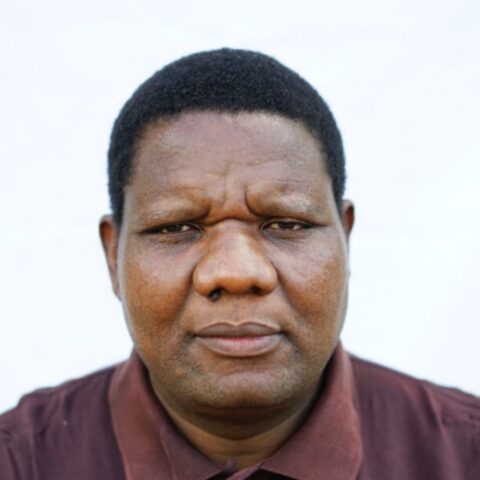
Steven Masiano, Ph.D. ’18, is an alum of the Healthcare Policy and Research program within the Department of Health Policy. He had a long and fascinating path to his current dual appointment in the Department of Quantitative Health Sciences at the Cleveland Clinic, and as an assistant professor at Case Western Reserve University. As he explains below, it all started when he was still in his native Malawi, working in statistical economics at the Malawi Central Bank. From the news media – and from his wife, who is a nurse – he kept hearing of issues within the Malawi health care system. He decided to see what he could do to address the problem by getting a job with the Malawi Ministry of Health, and quickly learned that he needed more education before he could really address the problem. Since then, in addition to his time at in the Department of Health Policy, he’s studied at Brandeis University in Boston, taken part in a Baylor College of Medicine post-doc program that gave him the opportunity to return to Malawi and work on HIV research, and made his way to Cleveland and his current dual appointment. Throughout, it’s been his commitment to utilizing quantitative analysis to improve health care in Malawi, the United States, and around the world that has motivated him to achieve and succeed in his career in health policy – and the Healthcare Policy and Research program played a key role in getting him to where he is today.
You started out your path, before you came to the US, with some work in health systems in Malawi. Was that what made you want to come to HCPR and get your Ph.D. here?
Yes, most definitely, that was a continuation of something I had studied. My path in health care started in 2009, while I was in Malawi. I was working at Malawi Central Bank, but I wanted to try to improve health service delivery after seeing a lot of issues in the media. My wife, who is a nurse, kept telling me about the issues she was facing in her workplace. In my view, it seemed to me [in] most of these issues, while there are financial challenges, that management was a problem. I thought that this was an area where I could make a difference compared to where I was at the time. In terms of undergraduate training, I received my degree in economics in Malawi, while I was working at Malawi Central Bank in statistical economics. I made that transition in 2009, to join the Malawi Ministry of Health as an administrator. I was posted into one of the districts in Malawi; Malawi has 28 districts, and each district has its own health office. The system there, because government health facilities are so dominant, they rely on government funding. While there are private hospitals, those are mainly in the cities. Because the majority of the population is poor, they have to rely on the government. At the point of delivery, health care is free in Malawi. At that point, I was like “OK, let’s see if this is something that can give me gratification over time.”
When I joined in 2009, in one of the districts working as an administrator there, I quickly realized that in terms of data utilization and decision making, everything was all over the place. But also I realized that, even if I have the data now, do I actually have the skills to analyze and understand the data? I said, “Maybe I don’t.” That’s when I decided that I had to seek post-graduate education, in order to beef up my skills in data analysis and statistical modeling, but more than that, how you can write scientifically, to communicate your findings on the studies that you’re doing. I applied for a Fulbright Scholarship, and fortunately I was successful, and had the opportunity to do a Master’s in Health Policy and Management at Brandeis University in Boston. So that’s how my path into health care started. I got my Master’s in 2013, returned to Malawi, but then I was like “OK, it seems with the Master’s Degree, it was just a little bit of a scratch on the surface of what I wanted to do. Maybe I should start looking for opportunities to do a Ph.D.” So that’s how I came to VCU.
How did your education here at VCU prepare you for what you’ve done since graduation?
It’s interesting that you ask that question, because at that time, I really didn’t know where I was going to go with my Ph.D. Sincerely, that’s what I can tell you. Toward the end of my Ph.D., around January 2018, when I was like, “OK, I can graduate in the summer or in the fall. What job opportunities do I have to start looking at?” there were a lot of other factors as well. When I came to VCU, I came with my family — my wife and two kids. We lived there for four and a half years, and by that time, we were homesick. At that time, the political environment was not as conducive in terms of prospects for sponsorship on an H1B, and so forth. I came on an F1 visa at that time, so it should not have been very difficult to transition visas. But there were few opportunities available at that time that would sponsor one directly for an H1B visa. Coupled with the fact that we were missing home, we thought maybe we should just go back to Malawi.
But then, because it had been more than four years, and I had resigned from my position in government, we needed to find a landing spot. Fortunately for me, there was an opportunity with the Baylor College of Medicine to do a post-doctoral fellowship in implementation science. I spoke with my advisor at the time, Dr. April Kimmel, on what implementation science was about, because I wasn’t very sure. I had always taken myself as someone who is good at numbers, who is good at doing stuff related to quantitative analysis, but I wasn’t sure if that was something I was going to get in implementation science if I did that post-doctoral fellowship. But one thing that appealed to me about that opportunity was not just that it was in Malawi, but as a subject area, it was in HIV research. That’s an area I was already familiar with, and with Dr. Kimmel, most of the graduate research assistantship that I did under her was in HIV research. So having spoken with her, and also doing a little bit more reading, I came to the conclusion that it was something I really wanted to do, and took it from there. I just made sure that in the opportunity described was something that was close to what I was thinking during the interviews for the post-doctoral fellowship.
When I was given the offer and went to Malawi, I realized that there was so much more I could do within implementation research, and the good thing is that the organization at Baylor College gave me a lot of latitude in terms of what I could do and the methods I could use. Almost all the key aspects of the study that I did at VCU — including survey methodology, statistical modeling, the courses we did with Dr. Bassam Dahman, advanced methods in statistics, as well as in things like research design — they were all hand in glove with what I ended up doing during my post-doctoral fellowship. And I’m not saying this lightly: it helped me to shine at the workplace. Because I had the relevant skills, and importantly, I was fresh. I had just done my dissertation (“Family Planning and HIV Interventions among Women in Low-income Settings”), and most of the things that they wanted me to do at the workplace, in addition to the mentoring that I was getting from the directors at the Baylor College of Medicine, made so much sense to me, and I felt very well prepared. And having done the post-doctoral fellowship for two and a half years, I started looking for the opportunities that I had felt were going to be available towards the end of my Ph.D. while at VCU, and all those opportunities now became available. I ended up having three or four offers. But I came to the Cleveland Clinic, where now I’m working as a quantitative methodologist in the implementation research science. Without the Ph.D., it was not possible to get the post-doctoral fellowship in implementation science. And without that fellowship, it was not possible for me to get the role that I now have at the Cleveland Clinic.
Tell me about your job at the Cleveland Clinic. What’s it like, and what do you find most rewarding about it?
I have a double appointment, actually; I’m a quantitative methodologist at the Cleveland Clinic, but also an assistant professor at Case Western Reserve University. The teaching part is not much, just here and there as needed. On a day-to-day basis, my role is guiding methods for any kind of research that we’re doing. But beyond that, because you’re not always submitting grants and thinking big-picture, I also do statistical modeling and data analysis for the Healthcare Delivery & Implementation Science Center at the Cleveland Clinic, which I’m affiliated with. What I do is look at the data, life trends, provide any guidance to the center on other studies… for example, right now, we’re looking at medications among older adults with type 2 diabetes, and their experiences during hospitalization — their medication regimens and whether that happened. We are using the electronic health record to do that. We’ve submitted grants to Patient Centered Outcomes Research Institute, where we are proposing to use a shared medical appointment for patients or clients that have hypertension and have weight issues. As part of that, I’ll be doing costing and cost effectiveness analysis, and so on and so forth. While I’m still new in my role, and the center is still new, and we’re trying to get our footing in terms of the work we’re doing and what we’ll be doing in the future, what I find most rewarding about my role right now is having people count on you. That if we want this, we can go to Steven. We just had a manuscript accepted, my first manuscript at the Cleveland Clinic, where we’re looking at readmission rates among patients who received a certain intervention, and those that did not receive that intervention, during the hospitalization period. What’s gratifying is that, although I was new to electronic health records – at VCU, I had the opportunity to work with Medicaid claims data, but the electronic health record is something different altogether — we did not receive any queries from reviewers or other senior co-authors on the paper about “Why did you do this, how did you do this, etc.” It was all work that was commended in terms of the methods and statistical analysis. It’s gratifying that the skills that I acquired from VCU and along the way are being appreciated now.
What would you tell current HCPR students from your perspective today?
Take everything seriously. [laughs] Like, I know students will have preferences, to say, “I like this subject, I like that,” or “I don’t like this course, I like that course.” Some of this may come from just having a vibe with one professor vs. another. What I will say is that taking everything seriously is important, because you just don’t know what you will end up doing. Because when you have a Ph.D., and you get into a new environment, the challenge is that people think you know everything. Which is not true. It’s not about how much you know already, but about how your thought process is prepared to tackle these new challenges. It’s in that context that I say you have to take everything seriously, because every bit of information might be useful, and you don’t know when you will need it. You might be put in a situation where you are the only person who is expected to do that work, and you have to do it well. But if you ignored something that was important during your training, then you have nowhere to start from. In my case, I knew that I had these elective courses, but I had to think seriously about what I really wanted to do. So I ended up taking advanced Ph.D. courses in Epidemiology while at VCU, to supplement some of the methods and statistical training I was getting within the department. It’s not just about saying, “I have an option to get an elective and I have to just get something that’s easy to fulfill the requirement.” That approach won’t help. You need to get something that will help you along the way, and you need to be very strategic. You can specialize later on, and say, “Right now, this is what I am focusing on.” But at this point, you don’t have a job, and you don’t know what will be required of you in the future.
What do you know now that you wish you knew when you started the HCPR program?
That the Ph.D. is not the end of the road. When I was starting my Ph.D. in 2014, I was like, “Once I finish my Ph.D., then all gates will open. I’ll do what I want.” That’s not the case. That’s actually just the beginning. With a Ph.D. you are beginning to specialize, but I wouldn’t say, in today’s market, you are fully specialized at that point. You still may have to do a post-doctoral fellowship, as I did. Even right now, I’m working in costing and cost effectiveness analysis within implementation research — which means that over time, while I’m gaining more skills in this area, I will be losing skills in other areas. That’s just the reality of the situation now. And even for you to get an appointment as an assistant professor these days, it’s challenging to get it directly from college as a fresh Ph.D. You might go on to do a post-doctoral fellowship, as I did. And what I can say, knowing that the Ph.D. is only the beginning of a long road — at the beginning, that’s something I did not fully comprehend at that time. But the additional question is, is it a good thing or a bad thing that what I know now, I didn’t know then? I would say it’s a good thing I didn’t know. Because knowing what I know now, if I had known it then, maybe I wouldn’t do the Ph.D.
[laughs] I got you.
Because for the Ph.D., I did it for four and a half years. I did the post-doctoral fellowship in two and a half years. That’s seven years. That’s eight years for some people. So you have to leave your job, spend eight years in school, and you’re talking about someone who already has a Master’s Degree. What can they do in eight years in terms of professional advancement? Because you can have the graduate assistantship – which, in our case, Dr. Andrew Barnes emphasized to us that we should take the graduate assistantship as our job. A formal job, instead of just treating it as one of those things, as maybe some of us, or other students were beginning to treat it at that time. Think of what you can do in eight years, if you are not in school and are in a proper job in those eight years? I would say that it’s a good thing that I did not know what I now know.
What are your hobbies, passions, and pastimes outside of your career?
Watching soccer, talking to family, friends, and relatives. But also just trying to give yourself some time to reflect on your life, trying to enjoy some quality time with your family.
Categories Alumni news