Building Healthier Communities Through Data: Dr. Roy Sabo’s Contributions to Public Health in Virginia

Public health policy and advocacy can take many forms — from direct community engagement to the analytical work that shapes data-driven decision-making. Dr. Roy Sabo’s role in public health policy development has often been an indirect but powerful one, focused on measurement, modeling, and tool creation that guide effective interventions and inform policy decisions.
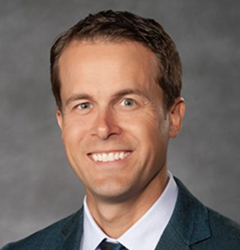
Dr. Sabo is the Wright Center’s Director of Biostatistics, Epidemiology and Research Design, and the Interim Associate Dean for Faculty Affairs in the School of Public Health at VCU.
Turning Data Into Policy
One of Dr. Sabo’s most notable contributions was in the redevelopment of the Healthy Places Index (Maizlish et al., 2019, Public Health Reports). Collaborating with colleagues from the VCU Center for Society and Health, Dr. Sabo helped design a sophisticated regression model to enhance the index’s ability to measure community well-being at the area level.
This project required extensive collaboration and negotiation among multiple stakeholder groups, and it represented one of the first times that his statistical work was rapidly translated into action. The revised index is now used throughout California to inform policies that promote health equity — a tangible demonstration of how robust data analytics can drive real-world policy outcomes.
Partnering Through Research
While Dr. Sabo’s work is often centered on data and modeling rather than direct community outreach; his teams and collaborators are deeply engaged with local and state health departments. At the Wright Center, many projects are designed to strengthen those partnerships and provide evidence-based guidance.
One example is the Center’s collaboration with the Virginia Opioid Abatement Authority, through which researchers provide analytic insights to communities across the Commonwealth. Dr. Sabo’s team helps conduct “temperature checks” to assess how different regions are addressing the opioid crisis, identify areas of progress, and highlight models of success that others can learn from.
Mentoring the Next Generation of Public Health Professionals
Dr. Sabo is also deeply invested in efforts to support and train emerging public health professionals. Using biostatistical models and data science to enhance community engagement has proven to be one of the most rewarding aspects of this work.
Community-driven research is inherently iterative and collaborative. He emphasizes that understanding communities requires listening first — ensuring that the data being analyzed reflect the realities, priorities, and concerns of those most affected. This approach has not only reshaped the way his team approaches quantitative analysis but also informs how the next generation of public health professionals is being trained to think about data in a human-centered way.
Looking Ahead: Building Infrastructure for the Future
Rather than focusing on a single health issue, Dr. Sabo’s overarching goal is to enable others who are addressing them. This includes building the data infrastructure and analytical capabilities needed to support statewide public health research.
Through initiatives like the All Payers Claims Database and the Primary Care Clinician Database, the Wright Center is developing systems that will allow future researchers to explore new questions and insights that are currently beyond reach. These efforts aim to create a sustainable foundation for long-term innovation and impact in public health research across Virginia.
The Value of Local Health Research
He believes that no matter how interconnected the world becomes, health begins locally. Investing in local health research ensures that communities have the tools and knowledge to improve their own well-being.
As Dr. Sabo notes, “If we don’t contribute to the health of our homes, we can’t be surprised if it doesn’t turn out the way we would hope.”
The ongoing work at the Wright Center and Dr. Sabo’s contributions to its data-driven mission, reflect a deep commitment to ensuring that every community in Virginia has access to the insights and evidence needed to thrive.
Categories Research