VCU Emerging Leaders Program Heads into its 20th Year of Building Community and Developing Student Leaders
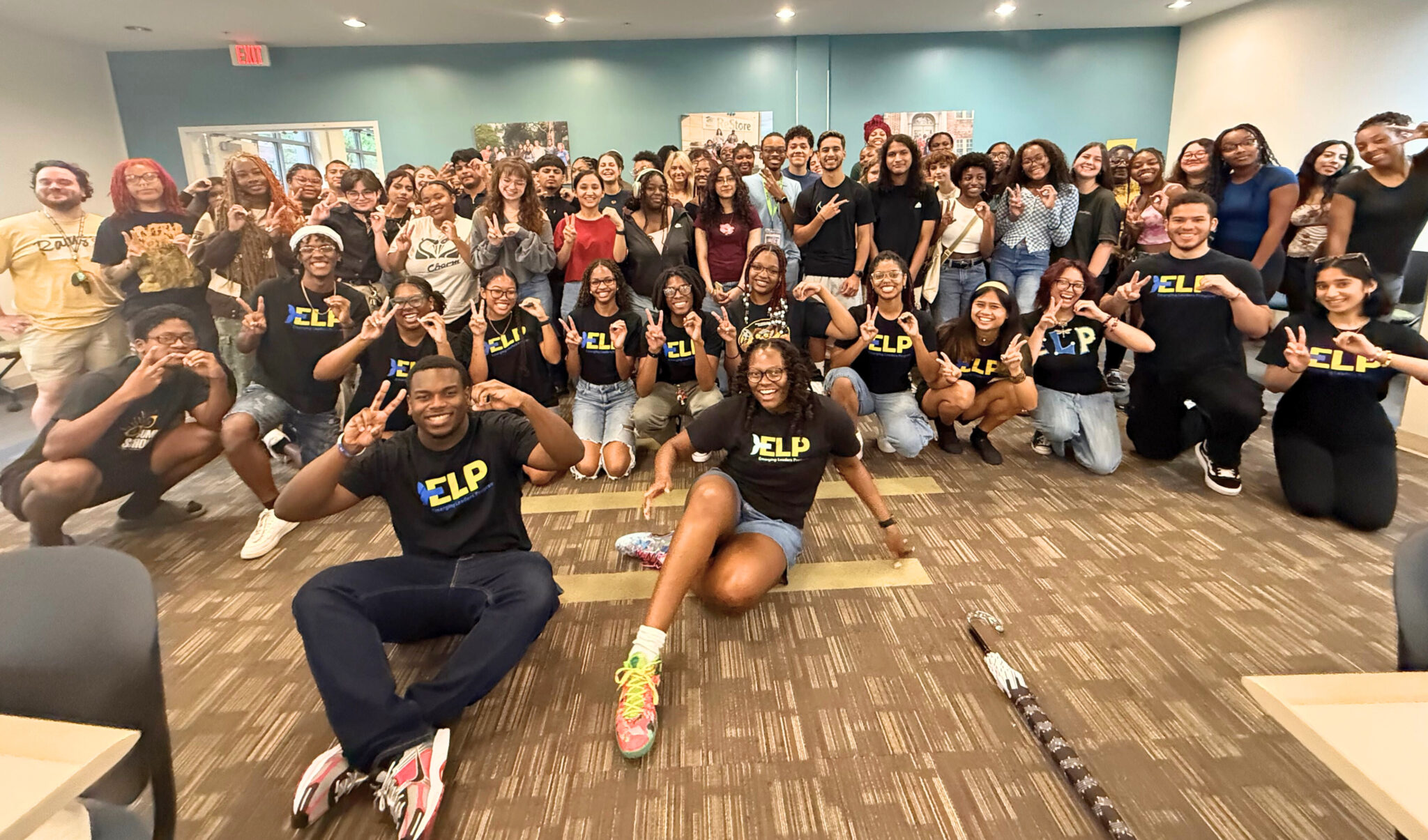
For the past two decades, the VCU Emerging Leaders Program (ELP) has been shaping the next generation of leaders through a unique blend of leadership exploration, hands-on experience, and community building. A highly selective, one-year leadership development and scholarship program, ELP is designed to help first-year students grow into strong, confident leaders on campus and beyond.
Students in the program take part in required leadership courses and co-curricular activities, contributing thousands of leadership and volunteer hours each year to VCU and the Richmond community. Through meaningful dialogue, practical application, and supportive peer mentorship, participants build skills that extend far beyond the classroom. At its heart, ELP fosters a vibrant community where students learn, lead, and thrive together.
Launched in 2006 by the Division of Student Affairs, ELP initially focused on recruiting high-achieving, in-state students with demonstrated leadership potential. In 2015, the program became part of the Office of Student Leadership and Engaged Learning, where it has continued to grow its reach and impact. Along the way, ELP has established key partnerships with Residential Life and Housing, the Friends of the Library Booksale, and the Grace E. Harris Leadership Institute—collaborations that have further enriched the student experience.
Today, the program is guided by Coordinator Gabriel Driver, Assistant Director of Student Leadership Marci Logsdon, and two student directors—third-year participants who have successfully completed both the mentee and mentor experience.
While ELP has evolved over the years, its foundations remain the same: leadership learning, peer mentorship, and the building of a supportive community. Since its founding, there have been 800 ELP alumni who continue to carry forward the skills, connections, friendships, and confidence they gained as Emerging Leaders at VCU.
Evolution
The Evolution of Leadership Learning through Community Building
Since its inception, the Emerging Leaders Program (ELP) has grown from a space for leadership instruction into a dynamic, community-centered environment where leadership is experienced, practiced, and refined in real time. Central to this evolution has been the recognition that leadership is not an individual pursuit, but a collective and relational process. Within the ELP, community building serves as both the context and catalyst for leadership development, creating an environment where students learn from shared experiences, collaborate to solve challenges, and cultivate a sense of belonging and mutual responsibility.
This community-focused approach transforms leadership learning from a theoretical exercise into a lived experience. Students engage deeply with complex interpersonal dynamics, applying empathy, communication, and inclusivity as guiding principles. Through these interactions, they develop emotional intelligence, trust, and a nuanced understanding of diverse perspectives. These qualities equip our participants to lead with integrity and authenticity. Over time, the program has shifted from simply teaching leadership concepts to fostering an ongoing, participatory process of growth, collaboration, and mutual respect, forming the foundation for lifelong leadership practice.
From Participation to Emergence: The Role of Peer Mentorship
As the program has matured, peer mentorship has emerged as a defining feature of the ELP’s growth model. Mentorship in ELP is informed by the Appreciative Advising Model. It’s been adapted as the Appreciative Advising/Mentoring Model to best serve our population. The evolution of a participant’s leadership capacity is intentionally scaffolded through mentorship relationships, ensuring that developmental milestones are observed, reflected upon, and assessed using both qualitative and quantitative measures. This structure prepares participants not only to thrive within the program but also to take on greater leadership responsibilities beyond it.
The leadership development trajectory unfolds across four progressive stages:
- Self-Awareness and Reflection – Participants begin by exploring their leadership identity, often with limited clarity on their strengths and growth areas. Through guided reflection with a mentor, they develop the ability to articulate these elements, building a foundation for intentional growth.
- Application of Leadership Theories – As they advance, participants begin translating theory into practice, navigating real-world scenarios such as group dynamics, conflict resolution, and collaborative decision-making. Peer mentors help them adapt theoretical models to fit diverse contexts.
- Interpersonal Skills and Peer Influence – Leadership becomes increasingly relational. Participants refine their ability to communicate effectively, listen actively, and foster trust. These are skills that enable them to influence peers and create positive team environments.
- Independent Leadership and Mentoring – In the final stage, participants are more likely to step confidently into leadership roles, often serving as mentors themselves. They demonstrate autonomy, strategic decision-making, and the ability to inspire and guide others.
The Leadership Emergence Framework
To ensure consistency and evidence-based evaluation, the ELP seeks to establish a Leadership Emergence Tracker. This framework assesses self-reflection, theoretical application, peer collaboration, mentorship contributions, and post-program leadership engagement. By applying this rubric throughout the participant’s journey, the program not only documents growth but also reinforces a culture of continuous development.
A Program in Constant Growth
The ELP’s evolution reflects its commitment to developing leaders who are not only skilled in theory and technique but also grounded in the values of community, empathy, and service. Through its integration of community building, structured mentorship, and evidence-based assessment, the program continues to refine its model, ensuring that leadership learning remains a relevant, experiential, applicable lived experience—one that extends far beyond the bounds of the program itself.
ELP20 …and beyond
Looking ahead, the Emerging Leaders Program is poised for intentional growth and refinement, with several initiatives designed to deepen its impact on student learning and leadership development. Planned curricular enhancements will integrate additional student affairs concepts, such as resilience and intersectionality, to equip students with the critical perspectives and skills needed to navigate complex personal, academic, and professional contexts.
In parallel, program expansion efforts will focus on reaching a broader and more diverse participant base while exploring opportunities to scale the program to serve a larger audience. The integration of new learning tools and technologies will further enhance the delivery of content, making the program more accessible, engaging, and relevant to a variety of learning styles.
Strengthening community partnerships and service-learning components will be another priority, enabling students to engage directly with external organizations and community partners. These connections will provide meaningful, hands-on learning experiences that reinforce classroom concepts and foster civic responsibility.
Ongoing assessment and evaluation will remain central to the program’s evolution. Plans are in place to refine assessment processes to ensure that learning outcomes are consistently met, while also allowing the program to adapt responsively to student needs and feedback.
Sustainability is also a core focus, with long-term goals that include securing stable funding, nurturing strategic partnerships, and maintaining strong alignment with the broader mission of VCU student affairs and the university. These steps will ensure that the program not only endures but continues to thrive in the years to come.
In conclusion, the Emerging Leaders Program has achieved significant milestones in fostering holistic student development, with measurable outcomes that affirm its value in cultivating the next generation of leaders. Looking to the future, the program is positioned to expand its influence within the student affairs landscape, with the anticipated impact of advancing students’ leadership capacity while contributing meaningfully to the institution’s overarching goals for student success.
For more information about the VCU Emerging Leaders Program, visit oslel.vcu.edu.
Categories Annual Report Stories 2024-25