Celebrating Women’s History Month: the POWER Project
The theme of this year’s Women’s History Month is “Leading the Change: Women Shaping a Sustainable Future.”
This year, Women’s History Month recognizes women who are leading the way toward lasting changes for global challenges, including those beyond environmental concerns.
As an exemplar of this theme, we are highlighting the POWER project (Academic PI Jessica LaRose), a community-engaged research project funded by the National Cancer Institute as part of the VA-ACCERT Center. This women-led research effort partners with residents of income-based housing in Virginia to address social drivers of health and promote physical activity and nutrition quality.
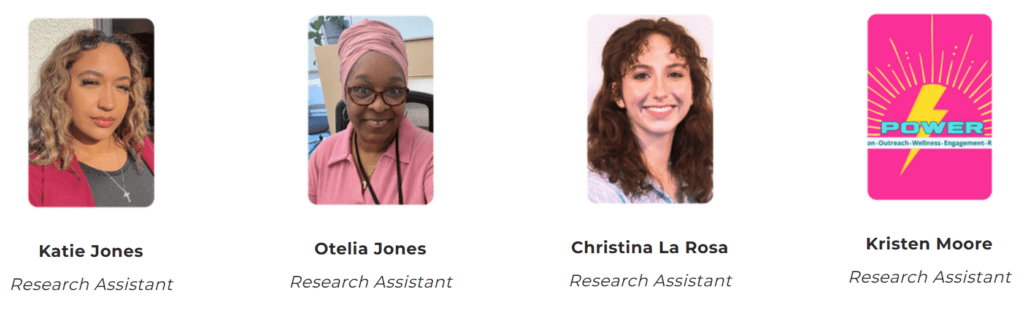
The POWER team:



This month, the POWER team is launching Phase I of their efforts, conducting surveys, photovoice, focus groups, and environmental scans in order to help better understand resident experiences as well as the physical environments of income-based housing communities. Phase II will apply the findings of Phase I to develop a multilevel intervention aimed at mitigating cancer risk for income-based housing residents by promoting nutrition quality and physical activity. This program will include digital support and resources, community-based activities, as well as changes to the physical environment of housing communities that will have a lasting effect on access to nutritious foods and opportunities for safe physical activity.
Overall, our goal is to create a program that is helpful and sustainable–becoming a free community resource and not just a research study.
– POWER Project website
Visit the POWER Project website for more information and links to community resources.
Categories Faculty News