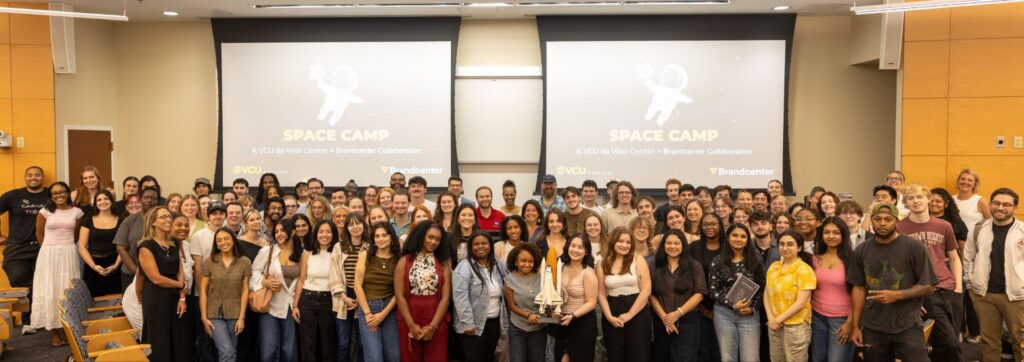
VCU Space Camp 2026: VCU Brandcenter students pitch patent refresh to NASA with the da Vinci Center

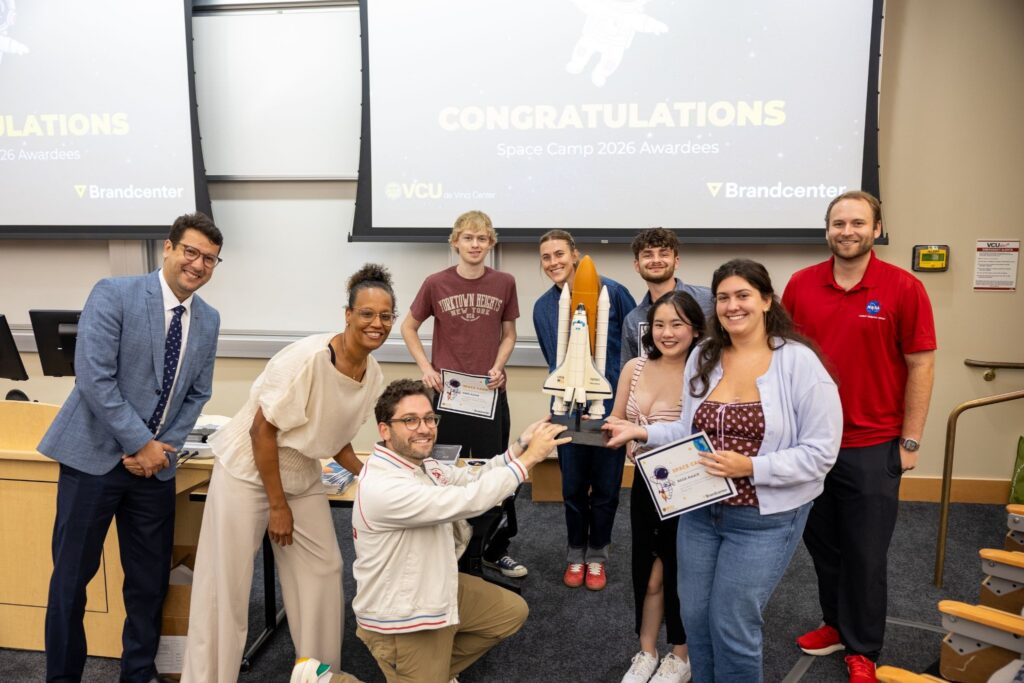
The da Vinci Center for Innovation and the VCU Brandcenter kicked off the fall semester with a first-of-its-kind collaboration with NASA Langley Research Center’s Tech Transfer Program. In a single day, teams of students were handed real NASA-patented technologies and asked to imagine what these inventions could become right here on Earth. The result was a fast and high-pressure creative sprint that asked aspiring art-directors, strategists and copywriters to work side by side, translate complex NASA hardware into ideas everyday consumers could use and then pitch those ideas to NASA representatives in the room.
The workshop was the product of months of coordination between the da Vinci Center and NASA Langley, and organizers said the payoff was watching students from very different disciplines find common ground fast.
“I’m so grateful for the collaboration across VCU and with NASA that made this experience possible,” said Lloyd Young, executive director of the VCU da Vinci Center for Innovation. “Bringing people together to give students opportunities to work on real-world challenges, collaborate across disciplines and have some fun along the way is what this work is all about.”
Jess Collins, director of curriculum and instruction and strategy chair at the VCU Brandcenter, said the design jam was intentionally built around ambiguity.
“We wanted students to know what it’s like to get handed something totally new and have to figure out the human side of it, no roadmap, no context, just dig in,” Collins said. “But honestly, that’s most of what creative problem-solving really is out in the world: staring at something unfamiliar and finding the human angle anyway. And to do this with NASA technology? That’s so interesting and different and fun. What could be a better first project for our students?”
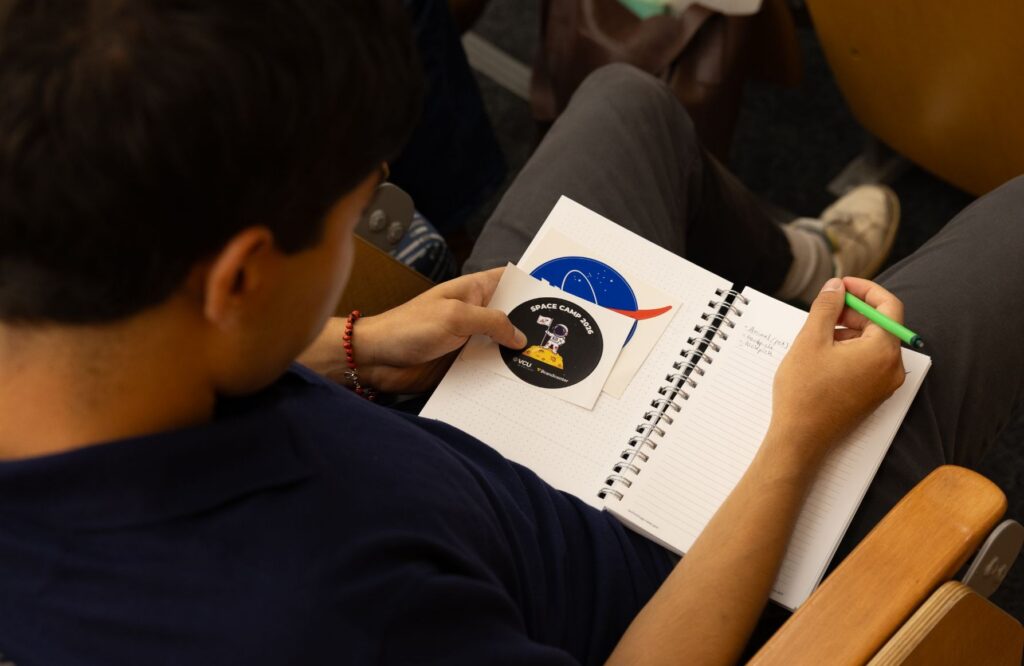
The technologies on the table ranged widely and were organized into three groups. Multiple student teams were assigned to each group, tasked with dreaming up different solutions for the same technology.
One group focused on a flexible radiation-shielding material. Another was built around a tiny optical sensor originally designed to monitor fluid quality in the International Space Station’s wastewater system. The third focused on a non-conductive composite joint connector engineered to hold modular structures together on the Martian surface.
In each case, students were told to set aside the original space application entirely and imagine something new for it on Earth. Four teams were awarded prizes for their ingenuity and pitching skills.
Launching into grad school
For these new students, the workshop landed during their very first week of graduate school.
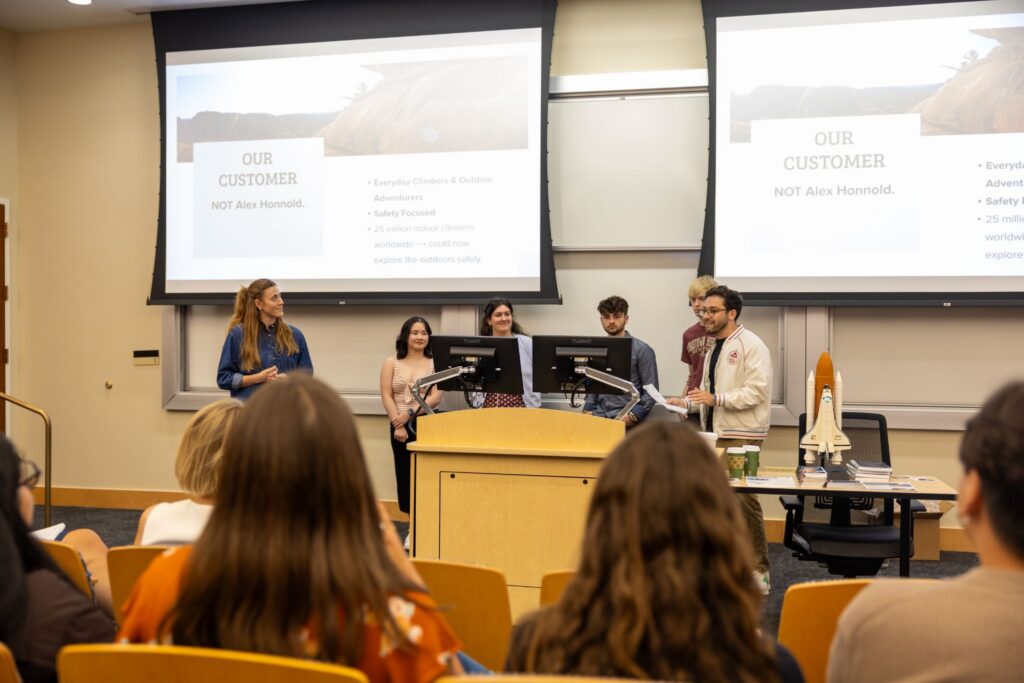
“A bit of a fever dream,” said Anika Gorham, a first-year strategy student on Team Daedalus. “I kept looking over at them sitting in the audience, thinking they were professors or other school-affiliated personnel. Then my brain would recalibrate and say, oh wait no, no that’s NASA. You’re presenting to NASA right now.”
Gorham’s team leaned into open brainstorming before narrowing their focus, starting with a simple prompt.
“We immediately started brainstorming some pretty out there stuff with our NASA technology, just to get the creative juices flowing,” Gorham said. “We then went around, in a circle, sharing answers to the question ‘What breaks often?’ After some time and dialogue, we landed on our idea and went with it. We were able to all lean into each other’s focuses, and it was a great blend of strategy and creativity.”
Teammate Brad Weddington, a first-year copywriter, said the win was made even sweeter by his lifelong love of space.
“Honestly, it couldn’t have been a better start! I am obsessed with Space and all things related!” Weddington said. “I was a bit surprised and so very honored when our group was selected. I called my mom immediately after and was like, ‘Mom! We won NASA!’ even though it was just a mock pitch.”
Team-based collaboration
Team Daedalus worked with a NASA-patented bolt, and their pitch came together once the group agreed to aim it at everyday consumers.
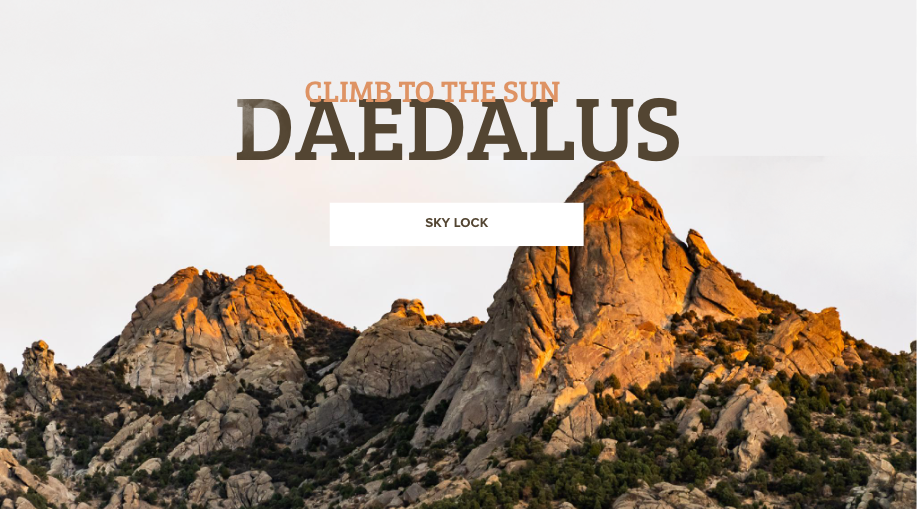
“One of our members mentioned they were into rock climbing and felt it could apply, and after that, it just clicked,” Weddington said. “We decided to really hone in on the scientific capabilities when designing our product, as we felt they were the selling point.”
The experience also reshaped how Weddington thinks about presenting ideas.
“Sometimes less is more,” he said. “I was personally worried that our presentation was lacking in detail and information compared to others. So when it was so well received, it forced me to reevaluate my assumptions.”
Across the room, Team Mother Knows was working through its own version of the same challenge. Bettye Tish, a first-year copywriting student, said the format pushed her out of her comfort zone from day one.
“The idea of being ‘thrown to the wolves’ was daunting at first, but everyone was so encouraging and supportive,” Tish said. “It was an invigorating way to kick off these 60 weeks at Brandcenter.”
Tish said her team spent nearly the entire session refining its pitch before time ran out.
“Our team’s idea came to life with lots of brainstorming. We talked until the last hour of working in order to get our concept as strong as possible first,” she said.
The pressure of a hard deadline also taught her something she plans to carry through the program.
“This experience taught me that there are two types of projects: ‘perfect’ and ‘done,'” Tish said. “The pursuit of the first makes the latter impossible. Get something as good as you can be, then let it go.”
For Tish’s teammate Sam Amparan, a first-year strategy student, the workshop was the perfect, if nerve-wracking, close to orientation week.
“It was surreal and stressful in the most exciting way,” Amparan said. “I felt equally proud and nervous to do a cool activity to end week one. Hearing from incredible professionals and my classmates made it feel like I was where I belong.”
Innovating to save the world
Team Mother Knows reframed its early ideas around a single guiding question.
“We started off brainstorming random ideas and then reframed a couple by asking, ‘How can we use this to save the world?'” Amparan said. “We started looking at who could be affected and how our idea can help.”
Amparan said stepping up to present alongside her team proved she could handle more pressure than she expected.
“The experience taught me that I handle pressure a lot better than I imagined,” she said. “I thought I would be too nervous to help my team, or even to present in front of a crowd with amazing people. Turns out it was just the push and reassurance I needed to start my Brandcenter journey.”